
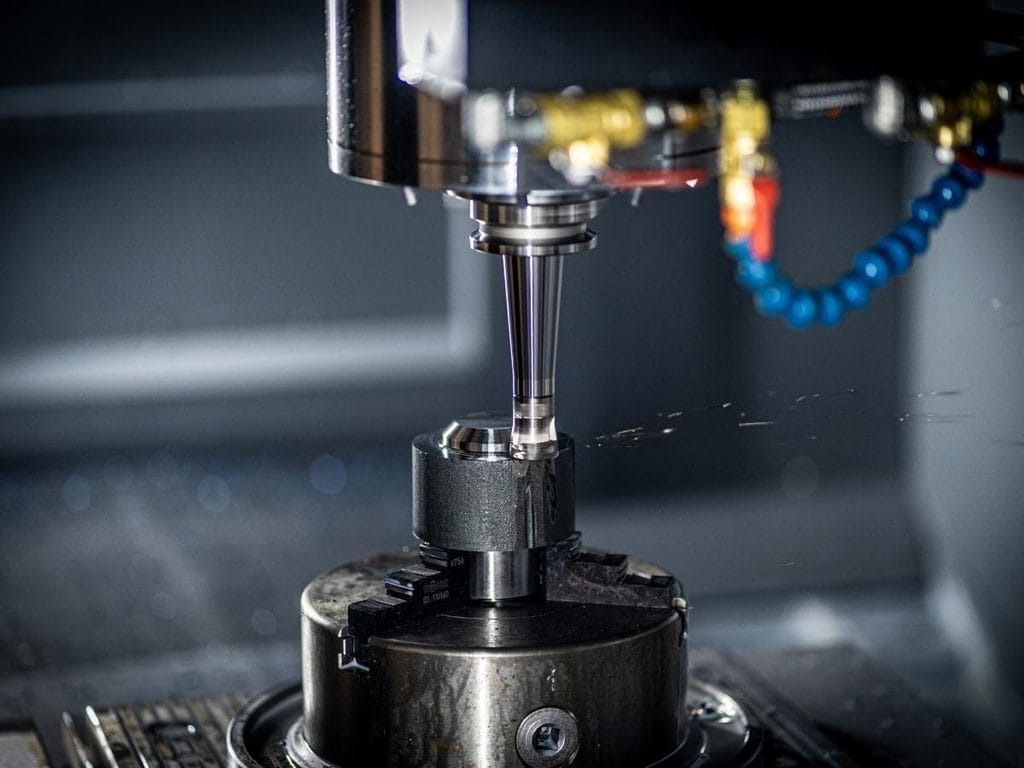
Getting one working prototype is a major milestone for a hardware startup, but producing dozens or hundreds of reliable parts is a different challenge. A prototype can prove that an idea works, but it does not always prove that the design is ready for repeat production.
Teams have to balance development speed, manufacturing costs, product quality, and limited budgets as they move toward the market. MachMaster, a reliable precision CNC machining manufacturer from China, is one example of a supplier that works with companies on CNC-machined prototypes and production parts. More broadly, CNC machining gives startups a flexible way to test designs, address manufacturing issues, and make production decisions without committing too early.
- Turn Your Digital Design Into Something You Can Actually Test
- Fix Manufacturing Problems Before They Become Expensive
- Use Small Production Runs to Test More Than the Product
- Keep More Capital Available for Growing the Business
- Know When It Is Time to Scale or Change Processes
- Choose a Manufacturing Partner That Can Grow With You
- Scale With Evidence, Not Assumptions
Turn Your Digital Design Into Something You Can Actually Test
A CAD model can show how a part should look and fit, but it cannot always reveal what happens when the design becomes a physical product. A machined prototype gives hardware teams a chance to check fit, function, assembly, mounting points, and compatibility with other components.
Using materials similar to those planned for production can make these tests more meaningful. For example, prototypes made from aluminum, steel, or engineering plastics can provide a better indication of how a finished component may behave. Physical testing can also reveal assembly or interaction issues between parts that are difficult to identify from a digital model alone.
Finding these problems early gives engineers time to make changes before larger quantities are produced. The result is less uncertainty when the product moves closer to production.
Fix Manufacturing Problems Before They Become Expensive
Design for manufacturability (DFM) means considering how easily and cost-effectively a part can be produced while the design is still being developed. A part may work perfectly in theory but still be unnecessarily difficult or expensive to machine.
Features such as unnecessarily tight tolerances, deep pockets, thin walls, or sharp internal corners can require additional machining time, setups, tooling, or processes depending on the part. Reviewing these details early gives engineers and manufacturers an opportunity to make practical adjustments without changing the product’s intended function.
For example, a tolerance that is tighter than the application actually requires may add cost without providing a meaningful performance benefit. Addressing these issues during design can reduce machining costs, material waste, and production delays while making parts easier to reproduce consistently. For startups, solving manufacturing problems early is usually easier than redesigning parts after production has already begun.
Use Small Production Runs to Test More Than the Product
Once a prototype works, producing a small batch can reveal issues that a single part cannot. Low-volume CNC production gives startups a practical bridge between prototyping and larger-scale manufacturing, whether they need units for beta testing, customer trials, early orders, or assembly checks.
Making multiple parts allows teams to see whether dimensions remain consistent and whether components can be assembled efficiently. It can also reveal unexpected variations in surface finish, packaging requirements, or production lead times. These details matter when a company moves from making a few units to fulfilling actual customer demand.
A pilot run should therefore be treated as a step toward production rather than simply a larger prototype order. Using finalized drawings, specified materials, and clear inspection requirements helps teams identify remaining problems before production volumes increase.
Keep More Capital Available for Growing the Business
For an early-stage hardware company, investing in CNC equipment may not make sense when production volumes are still uncertain. The cost goes beyond the machines themselves. Startups also need to consider operators, tooling, inspection equipment, maintenance, facilities, and software.
Outsourcing CNC machining can give startups access to manufacturing capacity without requiring them to take on the full upfront investment and operational burden themselves. This can also make production easier to adjust as demand changes.
Instead of committing capital to manufacturing infrastructure too early, startups can direct more resources toward engineering, product testing, certification, sales, and customer development. This approach allows the company to build manufacturing capacity around actual demand rather than forecasts that may change as the product enters the market.
Know When It Is Time to Scale or Change Processes
CNC machining does not have to remain the production method forever, but there is also no need to move away from it too early. As demand grows, startups can compare CNC machining with processes such as injection molding or die casting based on production volume, tooling costs, lead times, part complexity, and overall unit economics.
For specialized products or lower-volume production, CNC machining may remain practical even as the business grows. For other products, a different manufacturing process may become more economical as volumes increase. The right decision depends on the specific part and actual production data rather than simply assuming that scaling requires a new process.
Waiting until the numbers support a change can help startups avoid unnecessary tooling investments while choosing a process that makes sense for both the product and the market.
Choose a Manufacturing Partner That Can Grow With You
Choosing a manufacturing partner involves more than comparing unit prices. Startups should also consider DFM support, quality control, communication, lead-time consistency, and the supplier’s ability to handle small batches as well as repeat production.
Keeping manufacturing knowledge, design revisions, and inspection requirements consistent can make each production stage easier to manage. A company such as MachMaster provides CNC machining alongside injection molding and surface finishing, which illustrates how a supplier can support different manufacturing requirements as a product develops.
The important consideration is whether a supplier can maintain consistent quality and communication as requirements change, rather than simply offering the lowest price for the first batch.
Scale With Evidence, Not Assumptions
Moving from prototype to production does not have to happen all at once. Startups can test the design, improve its manufacturability, validate it through small production runs, and scale when demand supports it. CNC machining provides flexibility during this process, allowing companies to learn from physical parts before making larger commitments.
The goal is not simply to find the cheapest way to make a component. A better manufacturing strategy balances cost, quality, speed, and risk while giving the business room to adjust as the product and market develop. This is where an experienced supplier such as MachMaster may fit into the process, particularly when a startup needs to move between prototyping and repeat production.




A little discussion goes a long way.
Ask a question, share your experience, or help someone find an answer.
There is room for your perspective.
No discussions match this view yet.
Your voice belongs here
Keep it useful. Keep it kind.