
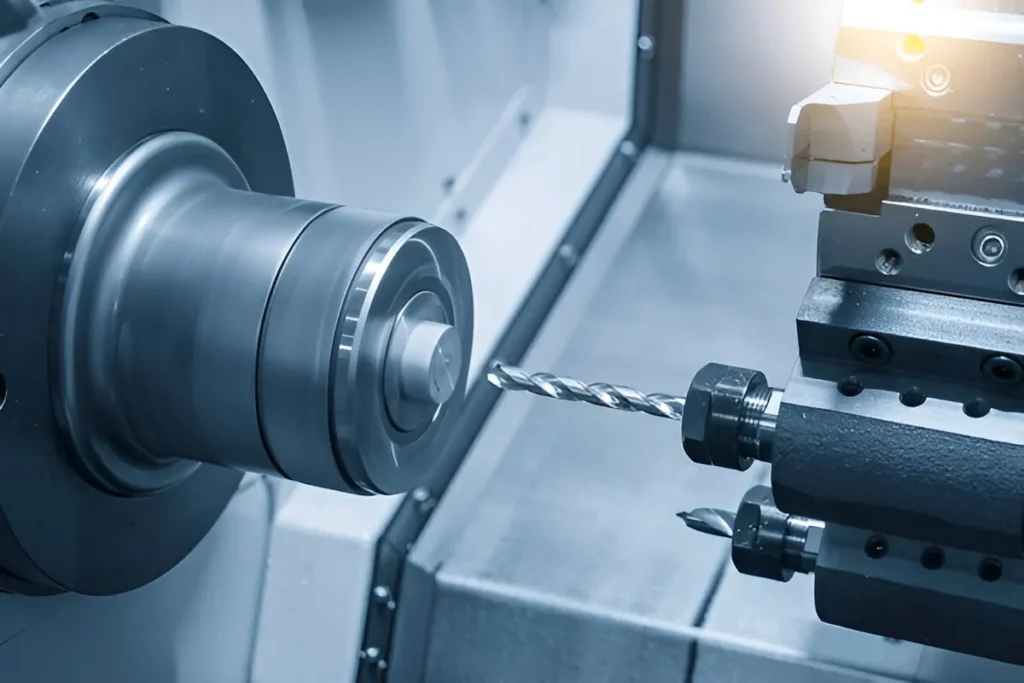
CNC acrylic machining services are today a basic necessity to businesses that require high-quality and precise plastic parts. It is used to fabricate such products as instruments used in the medical and aerospace industries, through the combination of the properties of acrylic with precise computer control.
The knowledge of the characteristics, programs, and certain aspects regarding the specifications when it comes to certain acrylic machining services avenues can assist a company in simplifying its operations.
To get more detailed information, you should view China Acrylic Machining Services – Baetro.
- Acrylic Machining
- What is Acrylic CNC Machining?
- Benefits of Acrylic Machining Services
- Common Applications of Acrylic Plastic
- Industries Utilizing Acrylic Machining Services
- Aerospace Applications
- Medical Industry Uses
- Automotive and Retail Sectors
- Choosing the Right Acrylic Machining Provider
- Experience and Expertise
- Importance of Certifications
- Evaluating Equipment Quality
- Analyzing Customer Feedback
- Comparison of Acrylic Machining Techniques
- CNC Cutting: Pros and Cons
- Laser Cutting: Benefits and Drawbacks
- Milling for Acrylic: Pros and Cons
- Maximizing Your Acrylic Machining Investment
- Summary of Key Points
- Looking Ahead: Innovations in Acrylic Machining
- Final Thoughts on Service Provider Selection
Acrylic Machining
What is Acrylic CNC Machining?
Acrylic CNC machining denotes the turning, shaping, and forming of acrylic plastic components through computer numerically controlled (CNC) machines. Here, the cutting operation is done on solid blocks (or sheets or rods) of acrylic to remove material.
It begins by coming up with a digital blueprint that summarizes dimensions, tolerances, and finishes. These delicate designs are tackled using the CNC machines with the use of cutting tools mounted on a spindle, and precision of a few thousandths of an inch is met.
Computer-controlled systems like CNC machines ensure control of quality within various batches of production and curtail the variability caused by operators during the machining process.
Some of the acrylics employed in CNC machining are the polymethyl methacrylate (PMMA) whose optical clarity is high, it is resistant to chemicals and it also has good dimensional stability.
These qualities make acrylic the perfect candidate material in a situation where the engineering application requires multifunctional properties with an attractive appearance.
Benefits of Acrylic Machining Services
The services of machining have certain benefits compared to conventional ways of production. CNC operations guarantee accuracy (dimensionally) between 0.005 inches to 0.001 inches, depending on the complexity and requirements of the piece.
The major strength is cost effectiveness, particularly in the mid and high volume manufacturing runs. The CAD/CAM machining technique is cost effective to fabricate prototypes and small runs compared to injection molding, which involves costly tools.
The speed of production is favorable in cases of prototyping and turnaround times. With the assistance of CNC machines, complex geometries that would require multiple processes of traditional manufacturing have become possible to achieve with a single setup.
Additive processes also increase efficiency by means of minimal wastage of materials. Accurate cutting processes save material wastage and modern nesting programs set out parts so as to reduce scrap material thereby decreasing the cost of production.
Acrylic surfaces are of optical polish to standard polished surfaces. Such versatility has allowed the removal of many secondary finishing tasks in many applications.
Common Applications of Acrylic Plastic
CNC Machining gives a sense of life to precisely crafted shapes of acrylic materials in different industries today. Acrylic is used in transparent applications in optics, as lenses, light guides, and display covers.
Acrylic can be found in making shelter enclosures and housings due to its hardness and its tolerance to other harsh chemicals. These parts protect delicate machines and yet they can be viewed without obstruction in case of monitoring and servicing.
Acrylic is used in the point-of-purchase displays and signage due to its optical clarity and also due to its being easily machined. Complex shapes can be produced and they can be made to suit a particular marketing and branding requirements.
Chemical compatibility, as well as transparency, are attributes of acrylic, which can be used to monitor a chemical process. Thus, the tanks, reservoirs, and flow meters are made using acrylic.
The aesthetic properties of acrylic, which are superior, and the fact that it is weather resistant, make it suitable to use as both interior and exterior decoration, and also to use as an architectural component.
Industries Utilizing Acrylic Machining Services
Aerospace Applications
The Aerospace industry employs such acrylic components as window assembly, instrument panel, and cockpit display. All these parts utilize the lightweight nature and optical characteristics of acrylic.
In case of aerospace applications, such certification mandates the application of a given grade of material or a given manufacturing process that usually encompasses rigid procedures.
The required quality systems are quality systems that comply with AS 9100 standards, with all traceability documentation that is mandated for the acrylic machining services within this industry.
Medical Industry Uses
Diagnostic equipment components such as housings and fluid handling equipment and surgical tools are all made of surgical-grade acrylic. These elements of medical devices need being bi-compatible and sterilization compatible along with dimensional control.
This should be adequately certified and documented and a filing system maintained does not leave any margin of error. In the design of medical equipment, it has FDA rules up to ISO 13485 quality standards of the industry. Like the rest of the world that provides components of machinery, there is the need to have committed acrylic machining suppliers.
Automotive and Retail Sectors
Charged interior trim as well as lighting parts and instrument cluster fits optically should be transparent and physically should be transparent. This may not sound high technology but as the size requirements of the automotive industry is to GISL then such must be produced in high volume usually needing automated machining and SPC.
In display cases and product fixtures, retail apostrophes need promotional articles that are belonging to the season and must look good visually as well as the purpose of being functional to be marketed. Delivering on punctual deadlines are important.
Choosing the Right Acrylic Machining Provider
Experience and Expertise
It is possible to qualify any prospective providers of acrylic machining services through the technical competencies and range of experience they have in the sector. Firms that are conversant with acrylic machining processes understand the nature of the material, the most appropriate cutting practices, and possible challenges that might come in the course of processing.
Technical ability involves proper usage of tool, cutting speed, feeding rate, as well as the coolants that will not overstress the material or crack it. Skilled suppliers can also recommend manufacturing focused design changes which reduce costs.
Importance of Certifications
Quality certifications of a provider illustrate systematic quality management practices and constant improvements followed by the provider. The attainment of such basic quality management systems is reflected by the ISO 9001 certification, whereas more specialized mechanisms, such as the AS9100 or the ISO 13485 certification, note that a particular field is being handled with expertise.
Auditing and documentation in certification maintenance offer stability in business operations over time and guarantee the quality realization of this process. Certifications that are relevant stand a higher chance of being possessed by providers that have policies in place on how to handle non-conforming materials and complaints raised by customers.
Evaluating Equipment Quality
The modernity of CNC equipment and the level of sophistication determine the accuracy of machining, and also dictate the productivity of acrylic machining processes. High-speed spindles, high-precision positioning systems ,and better control software produce better surface finishes and precision dimensions.
Investments in measuring equipment and precision tools should be significant thus it is necessary to introduce equipment maintenance programs and calibration procedures, which will promote their continued functioning. The suppliers ought to exhibit frequent calibration certificates and maintenance schedules of vital measuring equipment.
Analyzing Customer Feedback
Case studies and customer reviews provide such information as the history of a service provider and its capacity to resolve issues. The customer loyalty, especially a long-term one, is a sign of eventual quality and providing services.
Active customer reference check can give details regarding how satisfied they are with regards to a service provider in terms of timeline adherence, quality consistency and availability of responsiveness towards technical matters or other special needs.
Comparison of Acrylic Machining Techniques
CNC Cutting: Pros and Cons
CNC cutting process is subject to milling, turning, drilling, and other systems where the material is removed by mechanical shearing. Advantages include deep machining of 3-dimensional machining areas, smooth surfaces, and accurate dimensional tolerance.
The relatively slow processing speeds when compared to other methods of production and the possibility of wear of the tools used to affect the surface grade when used over a period of time are mentioned as the drawbacks of CNC cutting.
Laser Cutting: Benefits and Drawbacks
Besides the high processing speeds, laser cutting also has narrow kerf widths, which causes low wastage of materials. Makes no pressure on the material thus there is no wear and distress on the material and thus is highly suitable when the material is highly thin.
Limitations of the method still exist; some of the prospects are heat zones, which may cause the acrylic materials to become stressed and restricted in thickness.
Milling for Acrylic: Pros and Cons
Through milling processes, the precision of surface contour and related; geometrical features of intricacy can be created. Machining with multi-axis allows the possible machining of undercuts and compound angles in single set ups.
The extent of time taken to fulfill simple geometry is a disadvantage that is observed to be longer when compared with simple geometry, and also markings that can be made by tools that will require secondary processes with the use of fine finishing operations to change the grade of finishing.
Maximizing Your Acrylic Machining Investment
Summary of Key Points
With an acrylic CNC machining provider, you can get neat and cost-effective parts production in a wide variety of industries. Due to the combination of material properties and CNC precision technologies employed, the quality and dimensional accuracy of the needed components are up to the requirements of a selected industry.
An effective project related to the machining of acrylics highly relies on the choice of provider in terms of the technical capabilities, quality certifications, and experience in the industry.
The knowledge on the various machining methods and their merits and demerits are useful in the selection of the most suitable process to be used in a given application.
Looking Ahead: Innovations in Acrylic Machining
Automation enhances the acrylic machining processes through a persistent rise in the efficiency and a fall in expenses. Automation of quality control roles, coupled with robotic loading advanced technologies, allows to cut on manpower involved in quality control functions as well as maintain the required standards.
Application of sophisticated materials as cutting tools and coatings has positive effects on the life span of the cutting tool and also the surface finish quality. The lower operating costs are related to faster production cycles developed as a result of shorter cycle time per part because of these developments.
Final Thoughts on Service Provider Selection
A well-established acrylic machining provider is of invaluable importance to use his expertise to ensure the highly vetted legislative frameworks and quality resources.
The pre-assessment, along with the checks of the providers by the due diligence on the strategic points, which include the certifications, equipment, documented abilities, and received feedback on the customers, leads to the achievement of the projects that were initiated.
A long term provider-client relationship enables an optimal operation and cost model that can deliver long term cost efficiencies. Continuous conversation also allows to monitor the results achieved and establish new ones to improve it, which neutralizes the effects of stagnantly performing.




A little discussion goes a long way.
Ask a question, share your experience, or help someone find an answer.
There is room for your perspective.
No discussions match this view yet.
Your voice belongs here
Keep it useful. Keep it kind.