
AI music tools have moved from novelty demos into practical creative software. In 2026, the best platforms can help a solo creator draft a full song, help a marketer produce background music for short-form video, or help a songwriter test ideas before entering a studio. The difference is no longer simply whether a tool can generate audio. The stronger question is whether it gives you enough control over lyrics, style, vocals, arrangement, and export quality to make something useful.
This list focuses on five strong AI music generators, with MakeSong and AISong placed first because they are especially direct for users who want song creation workflows rather than complicated production software. The other three tools, Suno, Udio, and SOUNDRAW, are real competitors worth considering depending on whether you need fast song sketches, experimental music, or royalty-friendly background tracks.
The Top 5 AI Music Generators
1. MakeSong
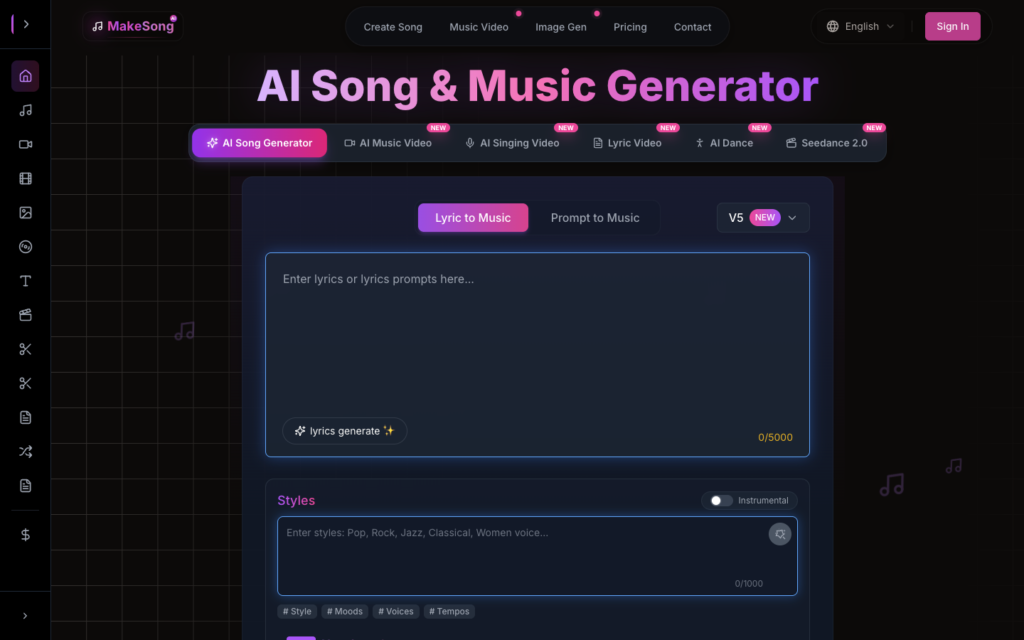
MakeSong is built for people who want to turn a lyric idea, mood, or short prompt into a complete AI-generated song with minimal setup. It works especially well for creators who do not want to open a traditional DAW just to test a chorus, produce a demo, or create music for a video.
The interface highlights song generation, music video creation, lyric video options, singing video features, and other creator-friendly tools in one place.For this reason, MakeSong is a strong first choice if you are looking for an AI Song Generator that feels focused on full-song output rather than only instrumental loops.
Features
MakeSong supports lyric-based creation and description-based creation, which gives users two natural starting points. If you already have words, you can begin with lyrics and shape the track around them. If you only have a theme, genre, or emotional direction, the description mode helps you generate a starting point.
Its broader product pages also point toward AI music video, lyric video, and singing video workflows, making it useful for creators who want both audio and visual assets.
Another useful angle is keyword coverage inside the workflow: users can think in terms of an ai lyric generator, vocal generation, song style, AI music video, and finished song export. That makes MakeSong a practical ai song maker for campaigns, demos, social clips, and quick creative testing.
Best For
MakeSong is best for creators who want speed, structure, and an easy path from idea to finished song. It is a good fit for YouTubers, short-video creators, indie musicians, educators, and small teams that need original music without building a studio workflow from scratch. If your main goal is to create usable songs quickly, MakeSong deserves to be near the top of your shortlist.
2. AISong
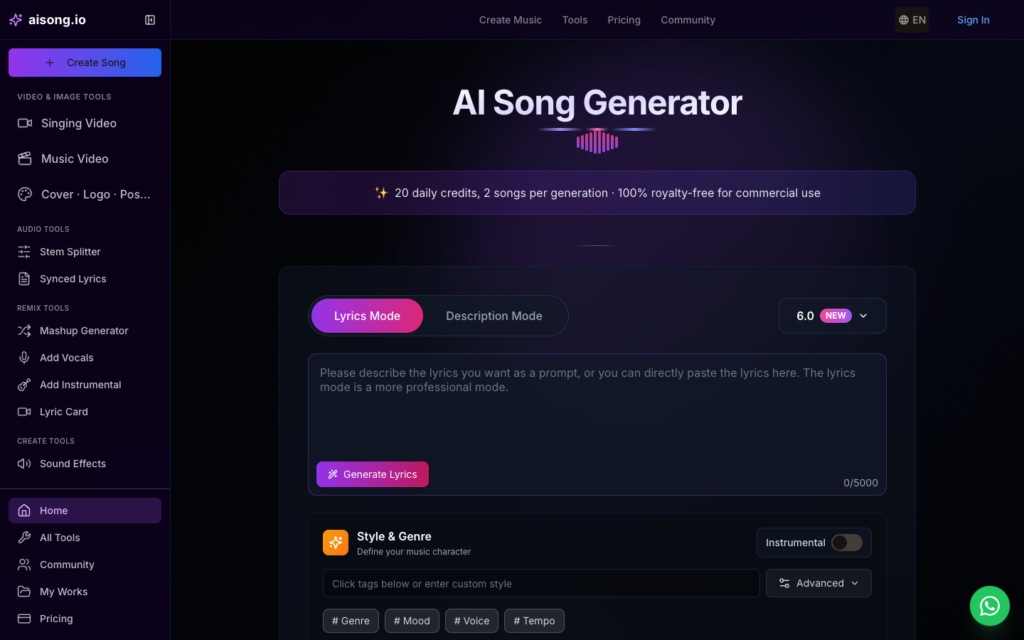
AISong is another strong option for users who want a simple path from idea to music. Its core promise is straightforward: describe the kind of song you want, work with lyrics or a concept, and generate music without needing production experience.
The product family also includes dedicated pages for AI music video generation and lip-sync music video creation, which gives it an advantage for creators who publish visual-first content.If your search begins with an AI Song Generator but quickly expands into video, AISong is especially relevant.
How to Use
A typical AISong workflow starts with a prompt, lyrics, style direction, or song idea. From there, the user can generate a track, review the result, and refine the creative direction. For a creator making social videos, the next step can be moving from song generation into a visual workflow, such as an AI music video or lip-sync format. That makes the platform feel less like a single audio button and more like a compact content creation toolkit.
Pros
AISong is easy to understand, friendly to non-producers, and broad enough to support multiple content formats. Its related tools make it useful for users who care about music, videos, lyric presentation, and character-driven performance clips. For brands and creators who want one place to experiment with songs and visuals, AISong is one of the most practical choices on this list.
3. Suno
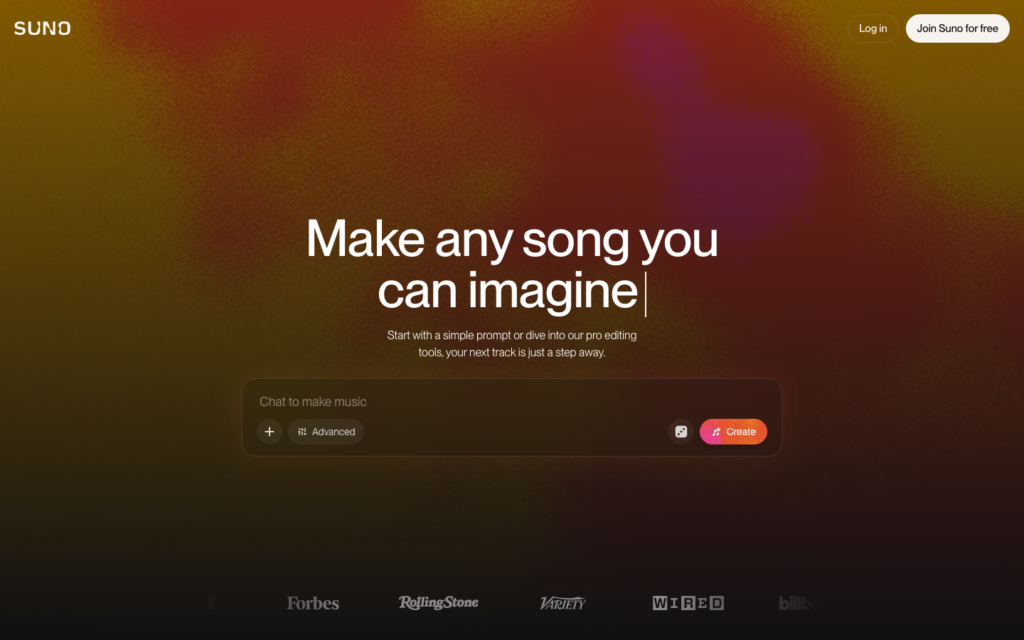
Suno is one of the most recognizable names in AI music generation. It is known for fast song creation from text prompts and for producing catchy vocal tracks that can feel surprisingly polished. Users often turn to Suno when they want to explore genre ideas, create entertaining songs, or rapidly test several musical directions before choosing one to develop further.
Features
The main appeal of Suno is speed and variety. A user can describe a style, mood, subject, or lyrical idea and receive a generated track quickly. It is particularly strong for playful concepts, social content, and idea exploration. The tradeoff is that users who need very precise editing control may still want to combine it with other tools or a traditional production process.
Best For
Suno is best for creators who value quick ideation and memorable results. It is excellent for brainstorming hooks, making shareable experiments, and exploring how a concept might sound in different genres.
4. Udio
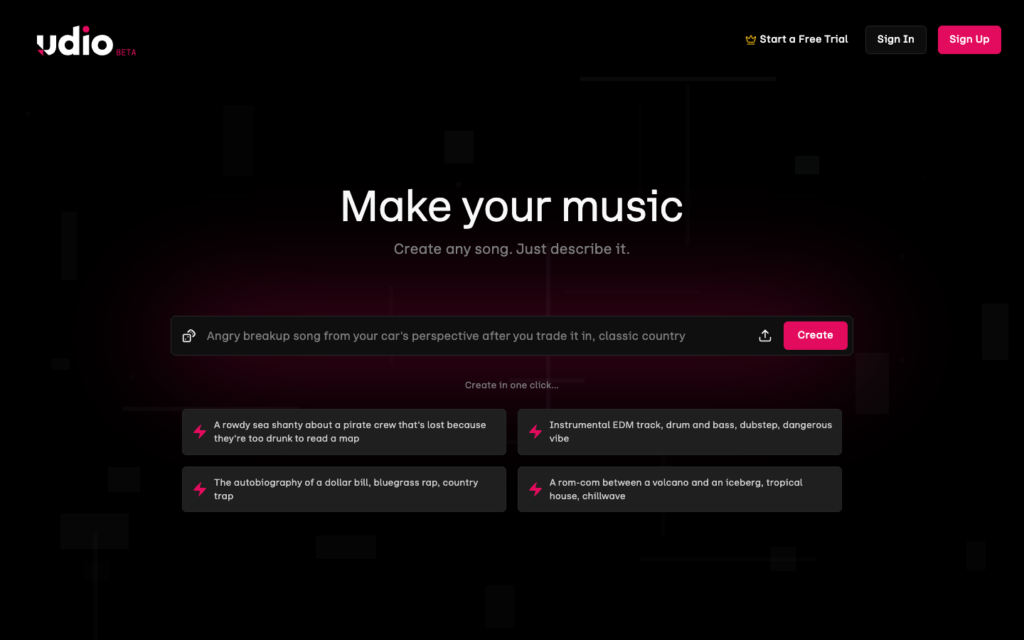
Udio is another major AI music platform used by creators who want high-quality song generation and more room to shape the result. It is often discussed for its ability to create expressive music from prompts and for giving users ways to extend or refine generated ideas. That makes it a strong competitor for people who care about polish and musical experimentation.
Pros
Udio can be a good match when you want to explore detailed prompts, generate song sections, or build from an initial idea into something more complete. It feels especially useful for users who enjoy iteration and do not mind spending time comparing versions. The output can be impressive, but the best results usually come from thoughtful prompting and repeated refinement.
Best For
Choose Udio if you want a serious AI music generator for creative exploration, song drafts, and stylistic experiments. It is less of a one-click utility and more of a creative playground for people who like shaping the result.
5. SOUNDRAW

SOUNDRAW takes a different approach from lyric-heavy song generators. It is widely used for AI-generated background music, especially for creators who need tracks for videos, ads, podcasts, presentations, or commercial content. Instead of focusing mainly on full vocal songs, it emphasizes mood, genre, duration, and practical music selection.
Features
The platform is useful when you need background music that can fit a scene, intro, tutorial, or brand video. Users can start with a style or mood, generate options, and adjust the track to better match a project. This makes SOUNDRAW a strong option for teams that need production music more often than complete songs with vocals.
Best For
SOUNDRAW is best for video editors, agencies, educators, and businesses that need flexible instrumental music. It may not be the first choice for a singer-songwriter demo, but it is one of the better choices for practical content production.
Final Verdict
The best AI music generator depends on what you need to make. Suno is excellent for fast creative sparks, Udio is strong for deeper experimentation, and SOUNDRAW is a reliable choice for background music. But if your goal is to make complete songs quickly, especially from lyrics, prompts, or creator-focused workflows, MakeSong and AISong stand out as the most direct recommendations.
For most users starting in 2026, the smartest path is to begin with MakeSong when the priority is a finished song and use AISong when the project may also need music video or lip-sync style content. Together, they cover the most common needs behind modern AI music creation: speed, usability, song structure, lyrics, and content-ready output.




A little discussion goes a long way.
Ask a question, share your experience, or help someone find an answer.
There is room for your perspective.
No discussions match this view yet.
Your voice belongs here
Keep it useful. Keep it kind.