
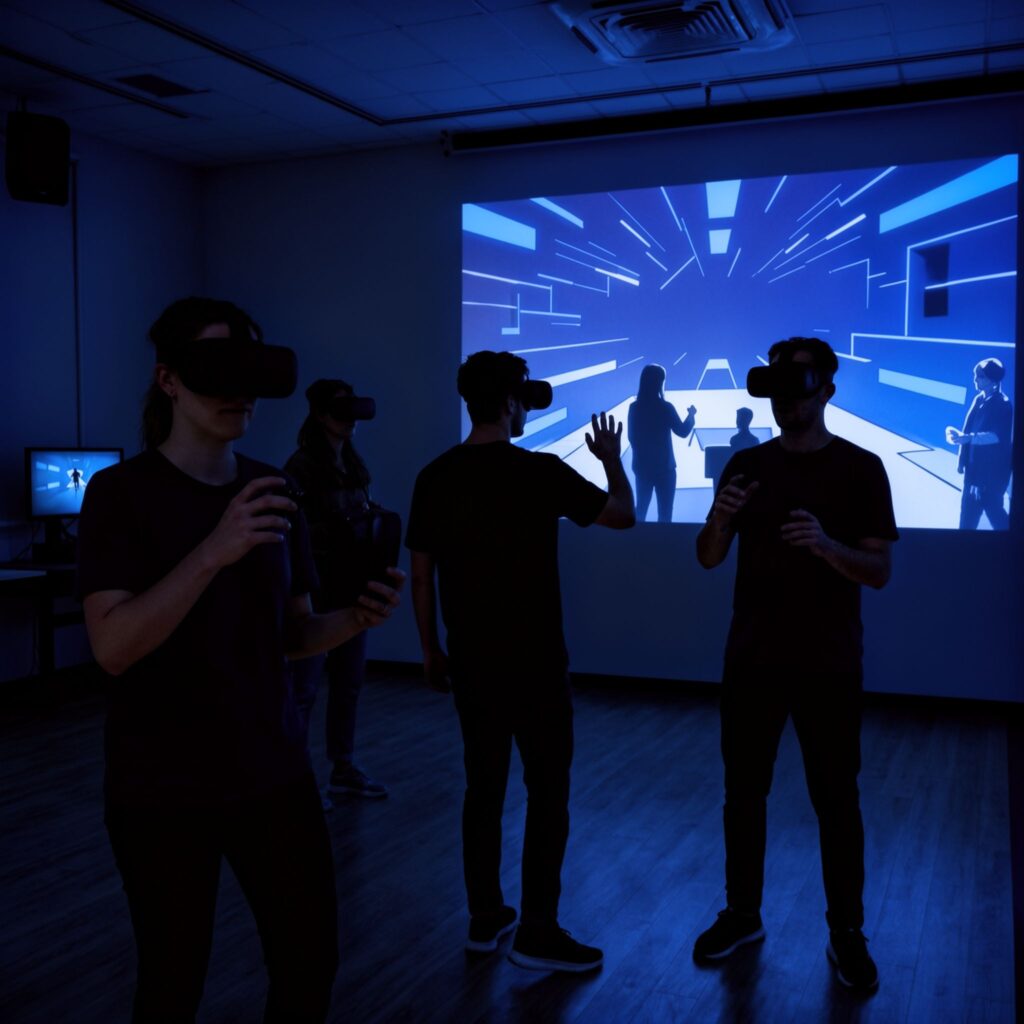
When VR GO dropped Lost Observatory back in February 2022, the immersive-gaming scene wasn’t quite sure what to make of it. Four years later, the augmented-reality escape room out of Odesa has become a reference point for what AR can actually pull off outside a headset, a physical room where digital constellations, encrypted clues, and a long-dead astronomer’s ghost share the same space as your team. It was one of the first builds anywhere to fully integrate AR into a physical escape room, and that head start still shows.
The game blends the physical room with a digital layer: through AR devices, players see puzzles, star charts, and encrypted clues overlaid on the actual environment. The setting is an abandoned observatory, and your squad steps into the role of investigators trying to crack the mystery of why the place went dark in the first place.
VR GO: A Studio That Refuses to Ship Cookie-Cutter Builds
VR GO is one of the leading VR/AR studios operating in Ukraine, and since opening they’ve consistently built out their own slate of immersive formats, leaning hard into original concepts and unconventional uses of the tech. Lost Observatory is the studio’s flagship and easily their most ambitious project to date.
Every puzzle is tuned the way a great single-player director tunes a level: layered storytelling, an astronomy-driven aesthetic, and a difficulty curve that’s hand-balanced rather than templated. VR GO deliberately steers away from the formulaic design that fills most of the location-based entertainment space, and the result is something genuinely hard to find anywhere else.
Lost Observatory has pulled in steady, enthusiastic interest since the doors opened, from locals and traveling players alike. Reviews consistently single out the AR layer as a real step-change in immersion, with the standout moment being when a virtual night sky unfurls right inside the physical room. It’s the kind of “wait, what?” beat AR has been promising since the first HoloLens demos and has rarely actually delivered.
A Global Fanbase, Built Without a Storefront
Here’s the unusual part: there’s no Steam page, no console release, no app-store listing, and Lost Observatory has still pulled players in from across Europe, North America, and Asia. Plenty of international fans of immersive games specifically build a stop at the observatory into their trips to Ukraine. The reviews and breakdowns they post to social media keep cycling new visitors into the door, often turning a single playthrough into a steady pipeline of new bookings.
The VR GO team says regular visitors often show up having already studied the mechanics, clips dissected on social media, breakdowns in Discord servers, strats traded around the way speedrun routing gets traded for any other cult title. For a location-based AR experience to grow that kind of meta around it is genuinely rare, and the studio takes it as confirmation that Lost Observatory has long since outgrown its hometown.
How the Game Actually Plays
Sessions run roughly 60 minutes for teams of 2 to 6, basically a co-op-night sweet spot, except your party is in the same room and there’s a ghost story wrapped around the whole thing. Puzzles ramp through astronomy, cryptography, and spatial reasoning, and the AR layer is where things get unusual: you’re working a virtual telescope, charting constellations that bloom into your peripheral vision, and crossing paths with the apparition of an astronomer who vanished from this observatory long before your team got there, all of it anchored to a real physical space.
What’s Next
VR GO confirms another AR title is in the pipeline and targeted for release by the end of 2026. Building out their own slate of immersive formats remains the studio’s top priority, and the team is dropping hints that the next project will lean even harder into the kind of in-room theatrics that made the first one stick.
Lost Observatory is a textbook example of what an original idea plus unconventional use of tech can do, namely, build a loyal fanbase nowhere near your zip code. Whether you’re an escape-room enthusiast, a VR/AR sicko tracking what the format can really deliver, or someone who just wants a co-op night that doesn’t involve a controller, it’s the rare project worth booking travel around.




A little discussion goes a long way.
Ask a question, share your experience, or help someone find an answer.
There is room for your perspective.
No discussions match this view yet.
Your voice belongs here
Keep it useful. Keep it kind.