
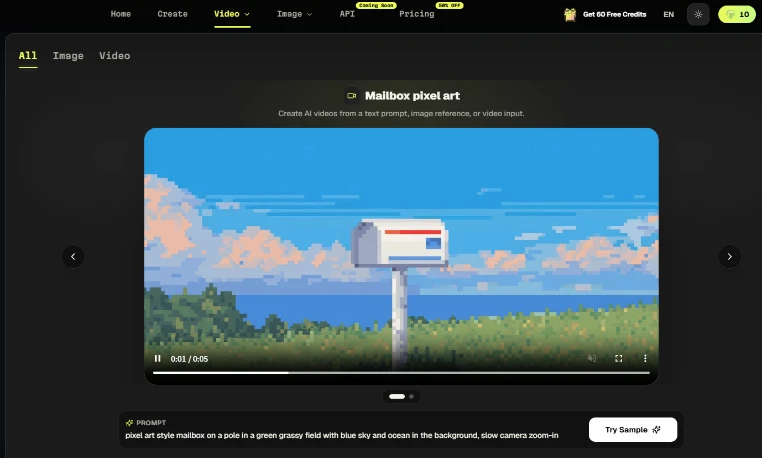
A browser-based video generator can make a simple idea feel like a dozen decisions at once. There is a model choice, a prompt, a still image, perhaps a motion reference, perhaps audio, and then the temptation to judge everything from one preview. A useful Seedance API test starts smaller: write down the one question the clip must answer before opening the create panel.
That discipline matters because the current SeeAPI workspace accepts text, image, video, and audio references for Seedance 2.0. It can also generate synchronized speech, ambient sound, and effects. Those options are valuable, but adding all of them to the first attempt makes a bad result hard to diagnose. A muddy face, an awkward camera move, and a late sound cue may come from three different inputs. Testing one visible decision at a time turns a mysterious failure into something a creator can actually fix.
- Define One Failure Before Opening The Create Panel
- Decide Whether Motion Or Meaning Is Under Review
- Follow 3 Steps Online Test Flow
- Step 1: Choose The Smallest Useful Input
- Step 2: Write One Observable Motion Request
- Step 3: Review The File Outside The Workspace
- Keep Search Facts Separate From Generated Movement
- Put Every Rejected Clip Beside Its Reason
- Stop When The Question Already Has An Answer
Define One Failure Before Opening The Create Panel
Start with the delivery problem, not the feature list. A tutorial maker may need a product screen to remain readable during a push-in. A game creator may need a character to keep the same jacket while turning. A small business owner may only need a still product photo to gain a slow, clean camera move. Each job has a different failure that can be seen without a committee.
Write the rejection rule in ordinary language. “Reject if the label bends,” “reject if the face changes,” or “reject if the camera moves before the subject settles” is more useful than “make it cinematic.” The first set can be checked on the exported clip. The second invites another round of adjectives, another generation, and another unexplained bill.
Decide Whether Motion Or Meaning Is Under Review
Motion tests ask whether an object travels, turns, or reacts in the intended way. Meaning tests ask whether the clip still communicates the right fact. These are not interchangeable. A smooth pan across a laptop can pass the motion test while failing the meaning test because the screen text becomes unreadable. If the first question is motion, use a clean image and keep the prompt short. If the first question is meaning, preserve the words or symbols that carry the message and reject any result that rewrites them.
This distinction saves review time. Without it, one person praises lighting while another complains about the product name. Both observations may be true, but they do not answer the same question. Mark the test type before generating so the reviewer knows what has authority to stop the clip.
Follow 3 Steps Online Test Flow
The public workflow is straightforward: choose a Seedance option, write a video prompt, add an image or video reference when the job needs one, then generate and compare. Keep the first pass faithful to that sequence. Do not invent an integration step while API access is unavailable for production. The web workspace is the real tool available today, so the test should end with a downloadable, reviewable result rather than a diagram of a future pipeline.
Step 1: Choose The Smallest Useful Input
Use only the asset required to answer the question. For a label-stability test, one approved product image is enough. For a camera-path test, a short reference video may be useful. Seedance 2.0 currently allows up to nine images or three videos, with a maximum of fifteen seconds of reference video in total, but a maximum is not a target. Filling every slot creates more possible conflicts and makes it harder to know which file controlled the result.
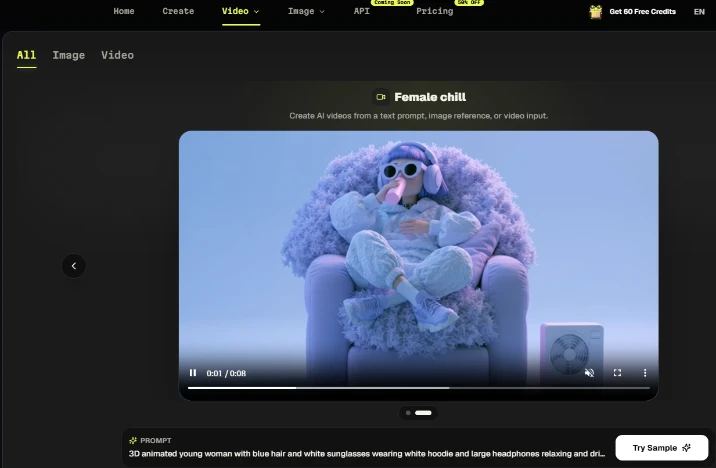
Inspect the source before upload. A soft logo edge will usually become harder to judge once it moves. A reference clip with a sudden handheld bump can transfer the wrong lesson to the generated motion. Fix obvious source problems first; otherwise the generation is being asked to hide evidence instead of animate it.
Step 2: Write One Observable Motion Request
Name the subject, one action, and one camera behavior. “The bottle remains upright while the camera makes a slow push-in” gives the reviewer something visible to check. A long paragraph that asks for confidence, luxury, excitement, viral energy, and perfect branding gives the model several directions but gives the reviewer no clean pass rule.
The same rule applies when audio is enabled. Ask for one audible event that belongs to the scene, such as a soft room tone or one spoken line. Do not use the first pass to request dialogue, music, footsteps, weather, and an impact sound together. If lip movement is late, you need to know whether the dialogue cue failed, not wonder which of five audio ideas pulled the timing apart.
Step 3: Review The File Outside The Workspace
Previewing inside the generator is only the first check. Put the first export beside the original, then open it at the size and on the device where it will be used. Pause at the beginning, middle, and end. Compare the subject to the source image. Listen once with headphones and once through a phone speaker if audio matters. A result that looks clean in a small browser preview can reveal a bending label, a drifting face, or a buried voice when viewed in the real delivery context.
Record the rejection in one sentence before trying again. A clip is discarded as soon as it breaks the written rule, even if another part looks polished. That sentence is the bridge between the failed file and the next prompt. If the note only says “not good,” the next person repeats the same work. If it says “logo narrows during the last second,” the next attempt has a specific corner to protect.
Keep Search Facts Separate From Generated Movement
Seedance 2.0 in the workspace includes an option for web-search-enhanced prompts. That can help gather current context, but it does not turn generated video into a verified source. If a clip is meant to explain a recent device launch or a policy change, collect the facts in a plain text note first. Decide which facts belong in narration, captions, or a separate article. Then use video generation for motion and illustration.
This separation prevents an expensive kind of rework. When a date or specification is baked into moving pixels and later proves wrong, the team may have to regenerate the whole scene. When the same fact lives in an editable caption layer, the correction takes minutes. The broader AI API idea is useful only after that content boundary is clear; a unified account does not make generated facts automatically reliable.
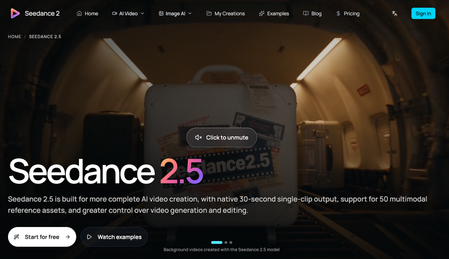
SeeAPI also shows Seedance 2.5 as coming soon and advertises a one-for-one return of eligible Seedance 2 credits after launch for signed-in users. Treat that as a current promotion, not a reason to widen the test. A returned credit cannot recover the afternoon spent reviewing an unfocused brief.
Put Every Rejected Clip Beside Its Reason
A small rejection folder is more useful than a huge gallery of attractive previews. Keep the source file, prompt, generated result, and one-line rejection together. Its purpose is to stop the next editor from repeating a known dead end.
- Keep the original image or reference clip beside the output.
- Write the single question the generation was meant to answer.
- Mark the first visible frame where the result fails.
- State whether the next attempt changes the source, prompt, or model option.
That record has a real cost benefit. A new teammate can see that a busy background caused the product edge to swim, or that a fast camera move hid the label. Without the note, the same failure returns under a new filename. With it, the next attempt begins from evidence instead of taste.
Stop When The Question Already Has An Answer
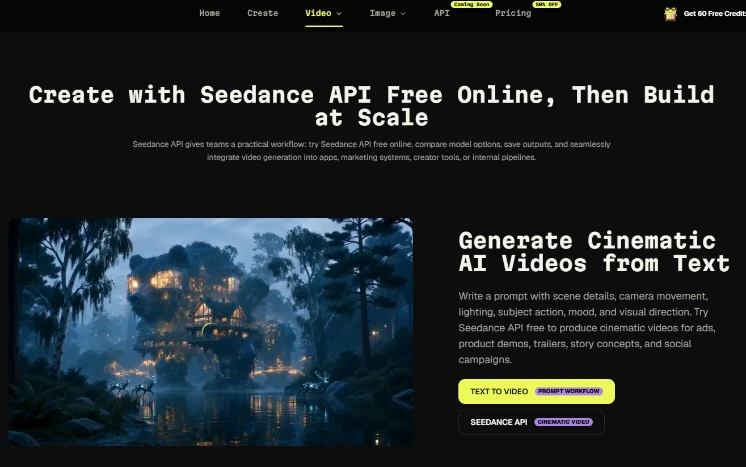
SeeAPI works best for this kind of focused test when the creator is willing to stop. If the camera path holds and that was the question, save the result and move on. Do not keep generating because another version might look more expensive. If the face changes twice from the same weak source, repair or replace the source instead of polishing the prompt.
The practical win comes from a short line between question and evidence: one input set, one observable request, one real-device review, and one recorded decision. That is enough to make browser-based video testing teach the next attempt rather than merely produce another file.



A little discussion goes a long way.
Ask a question, share your experience, or help someone find an answer.
There is room for your perspective.
No discussions match this view yet.
Your voice belongs here
Keep it useful. Keep it kind.