
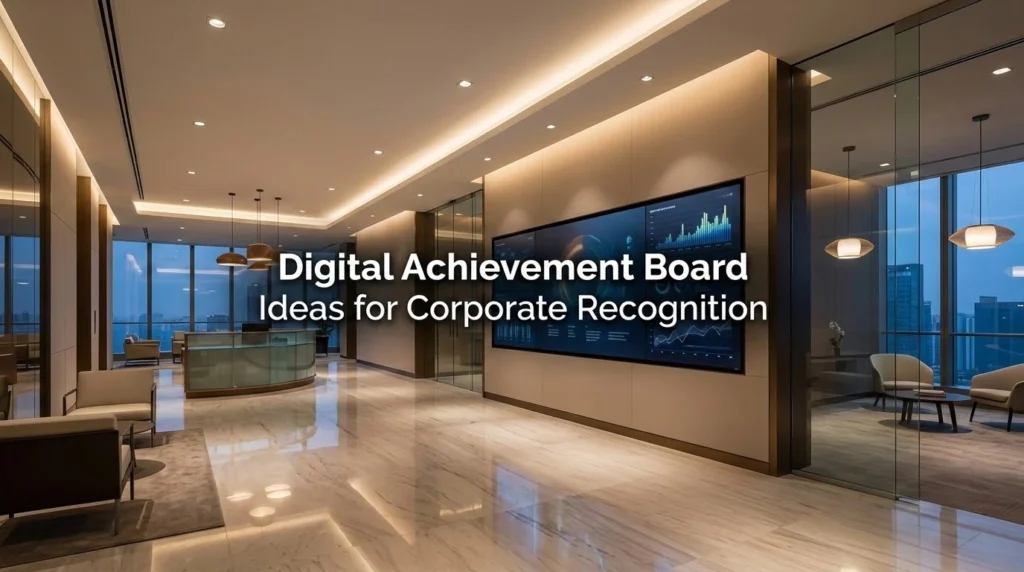
The Problem with Physical Plaques
Corporate recognition has a space problem. Walk into almost any established office building and you will immediately spot the same outdated setup. Brass plaques gather dust in a poorly lit hallway. Framed certificates hang on a wall, mostly featuring people who left the company three years ago. A massive wooden board takes up valuable lobby real estate with names engraved so small you have to squint to read them.
When companies invest in recognizing their team, the underlying intention is correct. People absolutely want to feel valued for their hard work. But tying that recognition to physical hardware creates immediate logistical limitations. You eventually run out of wall space. You have to wait weeks for a vendor to engrave a new metal plate, figure out the shipping, and manually install it. You spend money on displays that only the people walking past that specific hallway will ever see.
Moving past static halls of fame and wooden trophies changes the entire approach. You remove the constraints of physical walls, tight budgets, and single locations. Instead of a static piece of wood, you deploy a dynamic experience that HR or facility management can update instantly. The real goal is to create an environment that actually engages employees and impresses visitors the moment they walk through the doors.
Highlighting Top Performers Without the Clutter
Recognizing standout employees is the most common use case for corporate displays. The standard approach involves swapping out an eight by ten photo in a cheap frame near the elevator. We can definitely do better than that.
Implementing a digital achievement board lets you celebrate your top performers with actual depth. Instead of just a name and a headshot, you can include a brief Q&A, a short video clip of them in action, or a bulleted list of their specific contributions to a major project. When an employee hits a significant milestone like ten years with the company, their profile can expand to show their career progression and different roles over time. You are building a corporate legacy that never graduates or leaves the building.
This approach also solves the remote work disconnect. Because modern software runs on a cloud database, a display in your Chicago headquarters can show the same recognition content as the display in your Austin branch. You can even make the interface accessible via mobile devices. Everyone gets to participate in the celebration regardless of their zip code. It professionalizes your image for prospective hires who might be browsing your company history from a phone before an interview.
Tracking Team Metrics and Company Milestones
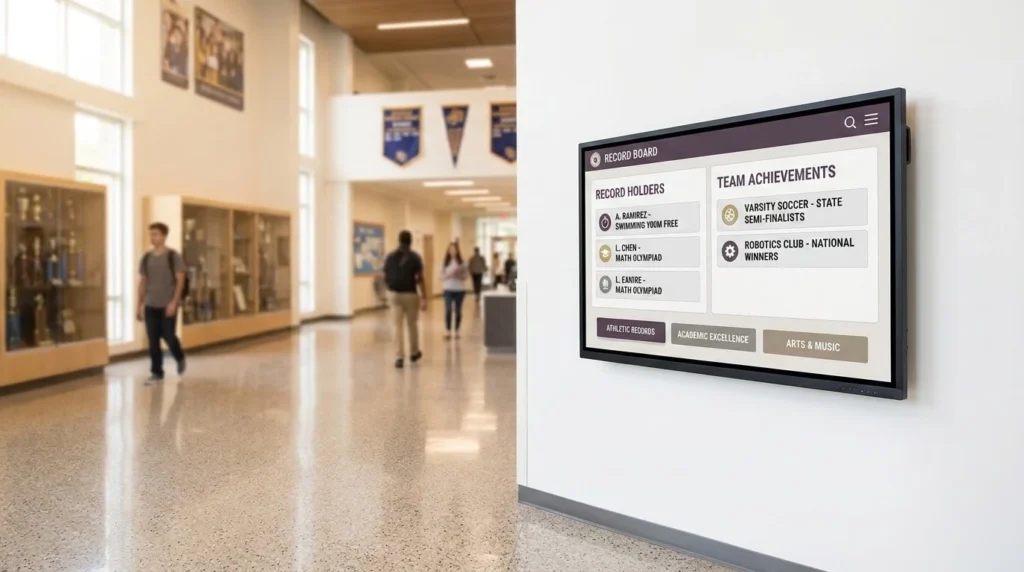
Individual recognition is great. But highlighting collective success builds a stronger culture. Teams working on complex, long term projects rarely get a brass plaque in the lobby. They deserve visibility too.
You can use an interactive setup to display team records, quarterly goals, and major project completions. A sales team hitting a new revenue milestone or an engineering team deploying a massive software update deserves front and center placement. By putting a digital record board in a common area or break room, you turn abstract company goals into highly visible targets. People naturally pay attention to leaderboards, active metrics, and progress bars.
You can also map out the entire history of your business. Decades of company history often get locked away in a filing cabinet or buried deep on a clunky corporate intranet site. Bringing that history to life through an interactive timeline shows new hires exactly what they are part of. You can feature photos of the original office, old product prototypes, and the major turning points that defined the brand. It builds a sense of identity that a static poster simply cannot match. Schools have rich histories that should not be forgotten, and corporate entities operate the exact same way.
Showcasing Corporate Philanthropy and Partnerships
Many companies dedicate significant time and money to charitable causes and community outreach. Yet these efforts often go unnoticed by the average employee or daily visitor.
Interactive screens provide a clean, organized way to highlight donor campaigns, community service days, and major partnerships. If your team spent a weekend volunteering at a local food bank, you can upload a photo gallery and a short summary of the impact. It gives visitors a clear picture of your company values while reminding employees of the good work they do outside of normal business hours. Centralizing these announcements keeps community engagement high.
This is also a highly effective way to recognize major corporate sponsors or partners. If your organization relies on key business relationships, giving those partners prime placement on a digital showcase is a solid relationship building move. You can easily categorize and filter these sections. Visitors can tap the screen to explore different charitable initiatives or read up on specific vendor partnerships without feeling overwhelmed by a wall of text.
Managing the Hardware and Software Realities
The biggest hesitation I’ve seen from operations teams is the fear of broken technology. We’ve all seen a blank monitor in a corporate lobby or a touchscreen that takes five seconds to register a single tap.
Investing in expensive hardware that becomes obsolete in two years is a valid concern. The trick is to separate the display hardware from the content management system. You need software that doesn’t require an IT degree to update or maintain. If a department head wants to add a new award winner, they should be able to log into a simple web portal, upload a photo, type a few sentences, and hit publish. The update should push to the screen instantly.
Speed really matters here. A high performance database ensures that even if you have hundreds of photos and videos loaded into the system, the end user experiences zero lag. You want an intuitive interface where scrolling and tapping feels exactly like using a modern smartphone or tablet. If the software is buggy or slow, people will simply stop interacting with it altogether.
Making Recognition Mean Something
Upgrading your physical space isn’t just about corporate aesthetics. It’s about modernizing how you communicate value to the people who keep the business running every single day.
Traditional displays eventually blend into the background. People walk past them without a second thought because the information never changes. By moving to a dynamic platform, you keep the content fresh, relevant, and visually engaging. You gain unmatched flexibility to change your messaging as the company evolves and grows.
Start small if you need to. Pick one high traffic area in your building. Decide what kind of recognition matters most to your team right now. Get the software in place, upload your initial batch of content, and watch how people interact with it. You’ll quickly see that celebrating achievements interactively beats a static metal plate every time. It delivers real return on investment when your team actually feels seen.



A little discussion goes a long way.
Ask a question, share your experience, or help someone find an answer.
There is room for your perspective.
No discussions match this view yet.
Your voice belongs here
Keep it useful. Keep it kind.