
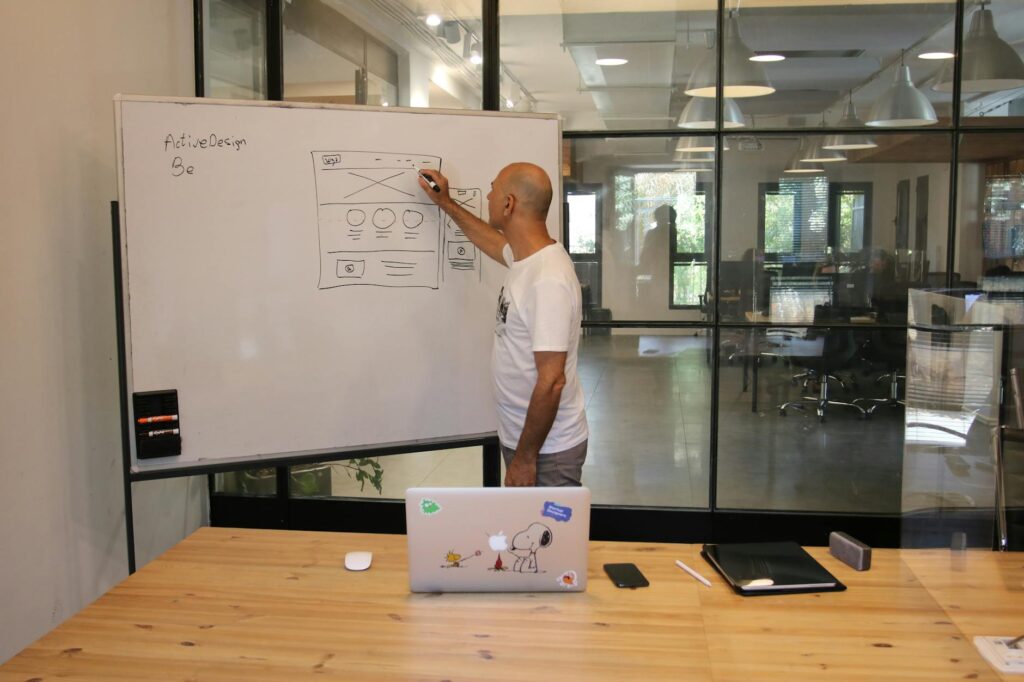
Innovation is a high-stakes gamble for any organization, but the greatest risk isn’t technical failure—it’s building a product that nobody wants. For leadership, the challenge lies in balancing the drive for market disruption with the need for fiscal responsibility.
High-level product development requires more than just code; it requires a rigorous discovery phase where assumptions are tested before a single line of backend logic is written. This is where strategic design becomes a risk-mitigation engine, transforming abstract ideas into validated prototypes that provide clear evidence of market viability.
Bridging the Gap Between Concept and Market Fit
The distance between a visionary idea and a functional product is often filled with expensive assumptions. Without a structured approach to user experience, teams often fall into the trap of “feature creep,” adding complexity that obscures the core value proposition.
A design-led approach shifts the focus back to the user’s pain points, utilizing rapid prototyping and iterative testing to prune unnecessary elements early in the cycle. This process ensures that the development budget is allocated to features that have a proven impact on the bottom line.
Engaging with specialized UX/UI Design services allows C-level executives to see a tangible representation of their vision long before the final launch. These consultants don’t just create layouts; they map out the entire user ecosystem, identifying potential bottlenecks in the customer journey that could lead to abandonment.
By visualizing the flow and functionality early on, stakeholders can make informed decisions about the product’s direction, securing buy-in from investors and internal departments with a clear, data-backed roadmap.
Enhancing Operational Efficiency Through User-Centricity
Beyond the customer-facing interface, design plays a pivotal role in internal operational efficiency. For enterprise-level digital products, a poorly designed dashboard or a confusing workflow can lead to thousands of hours of lost productivity.
When complex data sets and administrative tools are optimized for the human brain’s processing limits, the result is a more focused, less frustrated workforce. This internal optimization is a hidden driver of ROI, as it directly impacts how quickly and effectively a company can leverage its own digital tools.
Ultimately, design is a discipline of clarity. In an increasingly noisy digital marketplace, the products that win are the ones that respect the user’s time and intelligence. By prioritizing a sophisticated design strategy, organizations do more than just improve their “look and feel”—they build a foundation of trust with their audience.
This trust is the most valuable asset a brand can possess, and it is forged through every click, swipe, and interaction. Investing in top-tier design consultancy is a commitment to quality that resonates through every level of the organization, ensuring that the final product is not just functional, but indispensable.



A little discussion goes a long way.
Ask a question, share your experience, or help someone find an answer.
There is room for your perspective.
No discussions match this view yet.
Your voice belongs here
Keep it useful. Keep it kind.