
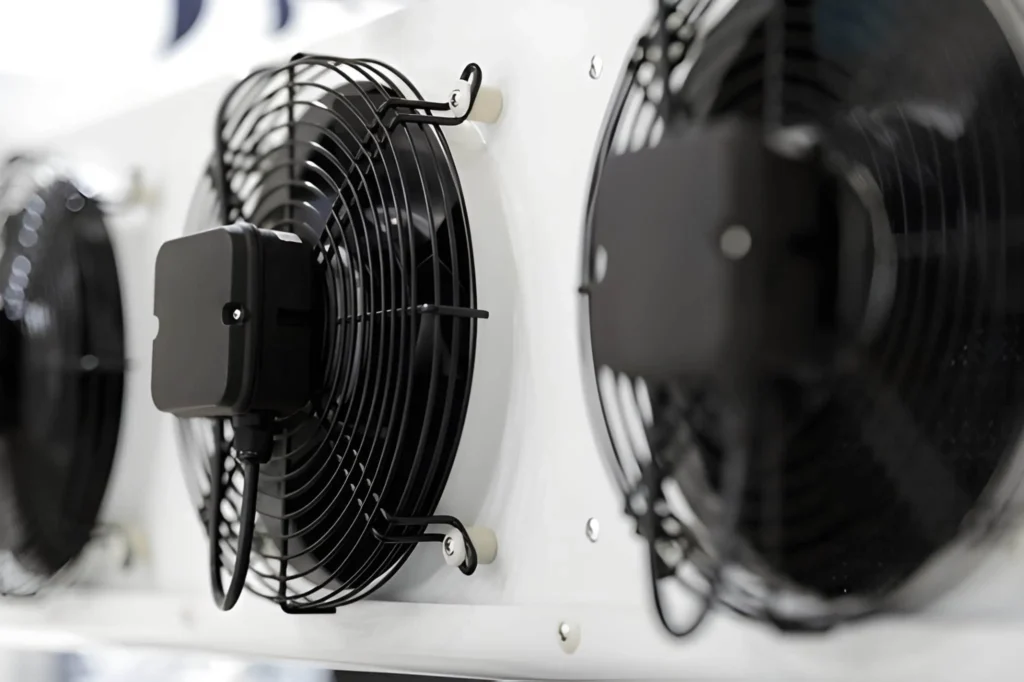
AC axial fans are essential appliances in HVAC, electronics, and many other industrial fields for cooling, ventilation, and exhaust. The air moving along the axis of rotation due to the axial flow design provides very high air conduction at a relatively low-pressure level which makes these fans very good for cooling and air quality improvement.
They are used in panels in cabinets or in huge facilities as industrial axial fans, even though they have different flow rates, efficiencies, and lifetimes. When getting into the topic of axial fans one must first get to know the blades and impeller geometry, the shaft and bearing configuration, and the performance curve that connects airflow and pressure difference.
With transparent specification data and performance characteristics, buyers of fans can get their fans at competitive prices which are fitting for industrial cooling purposes and any other axial fan uses. View Axial Fan Manufacturer | OEM Available – Provento Fan for More Details
- Understanding Axial Fans
- What is an Axial Fan?
- Characteristics of Axial Fans
- Types of Axial Fans: AC vs DC
- AC Axial Fans and Their Efficiency
- Efficiency Metrics for AC Axial Fans
- Comparing Efficiency: AC Axial Fans vs DC Axial Fans
- Factors Affecting Efficiency
- Cooling and Ventilation Applications
- High Airflow Requirements in Industry
- Common Uses of Axial Fans
- Panel Fans: Specific Applications in Ventilation
- Performance Characteristics of Axial Fans
- Understanding the Performance Curve
- Specifications to Consider
- Exhaust Applications of Axial Fans
Understanding Axial Fans
Understanding axial fans means to analyze the working principle of how the fan blades and the impeller produce a pressure difference and then air is moved through the axial direction. As the blades change their position with propeller-like rotation, they push the gas from the inlet to the outlet and thus, a certain flow rate with low static pressure is produced.
The motor and shaft are placed in line with the airflow, which is a distinctive feature since centrifugal fans push air in a radial direction. AC axial fans and dc axial fans both use axial flow but they differ in the type of power electronics and control.
Engineers in the industry assess performance traits, bearing types, and specification limits to cater the high airflow demand in HVAC and exhaust applications while guarding efficiency, reliability, and compatibility with industrial applications.
What is an Axial Fan?
An axial fan is a fan that consists of a rotating impeller with multiple fan blades, often resembling a propeller, that pushes air along the same axis as the shaft and at the same time makes a small pressure rise. Blades the inlet and outlet and create a pressure zone that drives the air volume through the inlet and out in the same axial direction, allowing the different air streams to mingle or be separated.
The axial direction of air movement and low-pressure characteristic of these fans mean that they can be applied in the very wide range of cooling of electronic components, HVAC air circulation support, and precise industrial exhaust. The performance curve draws the connection between flow rate and pressure difference which in turn leads to the choice according to the specification.
In practical situations, the applications of axial fans cover panel fans for enclosures, ac axial fans in main powered systems, and industrial axial fans for a variety of industrial needs.
Characteristics of Axial Fans
The characteristics of axial fans include principally the high airflow efficiency, low pressure operation, and compact structure with the axis aligned. The characteristics like flow rate stability, pressure capacity, and noise along the performance curve are primarily determined by the design of the impeller and blade profile.
Also, the choice of bearings and shaft design can either contribute to the durability and smooth rotating behavior or take it away, whereas the type of motor, AC, DC, or EC, will decide about control and energy saving.
The same-size axial fans outperform the centrifugal fans in terms of air volume while producing less static pressure, thus being better suited for ventilation and exhaust purposes rather than for duct systems that have high resistance. Specification details of air inlet conditions and fan placement are crucial to making sure the fan can effectively move air in industrial applications and HVAC environments.
Types of Axial Fans: AC vs DC
AC axial fans are powered by alternating current motors which allows for simple and robust operation in HVAC and industrial settings that need reliable ventilation and cooling with uncomplicated wiring and wide availability at reasonable prices.
On the other hand, DC axial fans use direct current electronics to realize speed regulation, lower power usage, and precise performance characteristics, which is why they are often the option in the cooling of electronics where both efficiency and control are key. EC versions are the integration of AC power supply with highly efficient electronically commutated motors that provide the higher efficiency and controllability.
Engineers consider the performance curve, flow rate requirements, low pressure capabilities, bearing type, and specification limits when comparing ac and dc axial fans. The motor selection that best matches duty cycle, airflow requirements, and system resistance will benefit panel and exhaust fans in different industries.
AC Axial Fans and Their Efficiency
The efficiency of ac axial fans is the measure of how much power is converted into airflow overcoming a specific pressure difference. The air flow direction in an axial fan is the same as the axis of the rotating device, and thus blade pitch, impeller geometry, and the flow rate to pressure characteristics are the crucial points where designers can intervene.
In HVAC and industrial applications, the objective is to drive air for cooling, ventilation, and exhaust with air loss only due to turbulence, tip clearance, and bearing friction along the shaft and axis. To understand an axial fan, it is essential to interpret its performance curve, which shows the volume of air and pressure at the intended operating point.
Ideal inlet conditions, smooth rotation, and balanced fan blades contribute to the power efficiency of the industrial axial fans and panel fans that are capable of delivering substantial air volumes at a lower power draw.
Efficiency Metrics for AC Axial Fans
Among the main efficiency metrics are aerodynamic efficiency, total efficiency, and specific fan power, all of them derived from the measured airflow, pressure, and electrical input. The performance curve shows the way an impeller maintains flow rate when the system resistance varies, while static efficiency is concerned with the power being converted into pressure rise at low pressure that is typical of axial flow.
In the case of ac axial fans, power factor and motor losses determine the overall efficiency, while bearing type has an impact on friction at the shaft. Noise is also a factor that engineers take into account when measuring efficiency since blade tip turbulence is capable of soaking up power and generating noise at the same time.
Fan specifications should take into account inlet geometry, grid frequency, and voltage to ensure that the axial fan is capable of moving air without stalling at the axis. Calibrated tests carried out under standard conditions facilitate comparisons among manufacturers and likewise enable the selection of the most competitively priced fans.
Comparing Efficiency: AC Axial Fans vs DC Axial Fans
The aerodynamic features of the blade and impeller are alike when ac and dc axial fans are compared, though losses from motor and control differ. The DC varieties and ec hybrids frequently reach higher total efficiency due to electronic commutation and variable speed control, which reduces the energy losses due to pressure by matching flow rate to the demand.
Though ac fans are more expensive in the long run, they are still the preferred choice in certain industrial applications due to their robustness, simple wiring, and availability, particularly where constant high airflow and low pressure conditions are common. In cooling electronics and precision ventilation, dc axial fans can provide cooling power with better modulation, thus cutting energy down in partial load situations.
Still, properly engineered AC units with premium bearings, fan blades that are balanced, and inlet design that is optimized may match efficiency while making procurement easy. Engineers consider lifecycle cost, performance attributes, and duty cycle in the HVAC and exhaust air applications.
Factors Affecting Efficiency
Efficiency is determined by a variety of factors that are interconnected: the aerodynamics of the impeller, the number of blades and the tip clearance; losses in the motor and bearing; and the fan-system interaction.
Inlet conditions that are not good, misalignment with the axis, or obstructions around the propeller can cause distortions in the axial flow which reduce the amount of air and increase the pressure losses. The way that mounting affects vibration and rotate stability at the shaft will also influence the energy used and the noise produced.
The specification should position the operating point on the performance curve corresponding to the system’s pressure difference so that stall or inefficient regions will be avoided. In the case of HVAC, smooth ducts and fewer bends will maintain airflow, while in the case of industrial cooling and exhaust fans, the size of protective grills and filters must be such that resistance is minimal. Regular maintenance, balancing, and cleaning help to maintain performance characteristics throughout the industry.
Cooling and Ventilation Applications
Among the applications of cooling and ventilation axial fans are thenelips that meet air circulation transverse with high airflow at low pressure. In the HVAC and industrial regions, ac axial fans cause a large volume of air to flow in parallel with the axial line of the shaft thus allowing the systems to cool electronic devices, dilute contaminants, and exhaust directly.
The propeller effect of the impeller and fan blades allows the designers to consult the performance curve for the specific industrial duty when changing the rate of flow and the pressure difference. However, if resistance is modest, the throughput of axial flow devices will be superior to centrifugal fans and thus the efficiency will be maximized.
Besides the high quality of the inlet conditions the proper specification will also consider the choice of the bearings and the type of motor whether AC, DC or EC so that the fans can be at the competitive prices while the performance characteristics are predictable and the rotate behavior is stable.
High Airflow Requirements in Industry
Manufacturing operations generally require uninterrupted high airflow to cool process machines, ventilate huge areas, and get rid of heated air through operations that consume a lot of energy. The industrial axial fan with its optimized blade design and an aligned impeller unit of the axis creates air in parallel paths and thus keeps a high flow rate with little pressure loss.
An example of this would be the axial fan yielding a predictable volume of air at low pressure in the case of the industrial cooling method of the heat exchangers, welding bays, paint booths, and drying lines, which in turn leads to energy saving and good air quality maintenance.
To get the maximum out of the performance curve, engineers will set the operating point strategically away from the stall and make the shaft, bearing, and motor sized accordingly for long and continuous duty cycles support. Unlike centrifugal systems, these solutions prefer to give throughput rather than static pressure and hence the cost of the system is reduced and the efficiency of the system is increased.
Common Uses of Axial Fans
Common axial fan applications include air change in HVAC, cooling of electronic equipment, and exhaust fans for localized extraction. In HVAC, AC axial fans circulate fresh and return air along with ventilation strategies that use low resistance air movement parallel to ducts.
In electronics, DC axial fans and EC variants control airflow to cool boards, drives, and power supplies without sacrificing efficiency. Industrial axial fans are installed to provide airflow to condensers, radiators, and process enclosures across the roof and wall exhaust configurations that remove heat and fumes.
Panel fans are mounted on cabinets to filter and move air through grills while protecting the components with a steady flow at a modest pressure difference. In all these applications, the knowledge of axial fans and their performance characteristics will lead to correct specification of impeller size, blade pitch, and inlet geometry.
| Application | Role of Axial Fans |
|---|---|
| HVAC | AC axial fans circulate supply and return air with low resistance, moving air parallel to ducts. |
| Electronics | DC and EC axial fans modulate airflow to cool boards, drives, and power supplies efficiently. |
| Industrial/Exhaust | High airflow across condensers, radiators, and enclosures; roof and wall units remove heat and fumes. |
| Panel/Cabinet | Panel fans move air through filters and grills, maintaining steady flow at modest pressure difference. |
Panel Fans: Specific Applications in Ventilation
Panel fans are compact axial flow units designed to mount on walls, doors, or enclosure panels to move air directly through a defined opening. Their propeller-style impeller and fan blades align with the axis of the motor, delivering a high volume of air with low pressure, ideal for cabinet ventilation, machinery housings, and server racks.
In HVAC plenums and small process rooms, panel fans serve as supply or exhaust fans, improving air changes where duct resistance is limited. Engineers select ac axial fans for simple mains operation or dc axial fans and EC options for variable speed and higher efficiency.
Proper specification addresses inlet guards, filters, and grills to minimize pressure difference, while robust bearing and shaft design ensure smooth rotate behavior and reliable performance at competitive prices.
Performance Characteristics of Axial Fans
The performance characteristics of an axial fan reflect how its impeller, blade geometry, and motor convert input power into useful airflow at low pressure. Because axial flow moves air in the axial direction, the propeller-style fan blades generate a modest pressure difference while delivering a large volume of air in parallel with the axis.
In HVAC and industrial applications, ac axial fans and dc axial fans are specified to cool electronics, provide ventilation, or support exhaust with predictable flow rate. Compared with centrifugal fans, industrial axial fans prioritize high airflow over static pressure capability, making inlet conditions and mounting critical.
Proper specification of shaft, bearing, and motor type, alongside the performance curve, enables engineers to move air efficiently across various industrial duties and source fans at competitive prices.
Understanding the Performance Curve
The performance curve of an axial fan plots airflow against pressure difference to show how the impeller and fan blades behave as system resistance changes. At zero system pressure, the fan delivers maximum air volume; as pressure rises, the flow rate declines until stall occurs.
Selecting an operating point on the curve that matches the intended ventilation, cooling, or exhaust duty helps ensure stable axial rotation. Curves often include efficiency and power lines, showing where AC axial fans or DC axial fans perform best.
Engineers compare these to centrifugal fans when higher pressure is needed. Proper inlet geometry, clearances around the axis, and minimal obstructions keep the propeller flow parallel and maintain predictable performance.
| Aspect | Key Point |
|---|---|
| Operating behavior | Airflow is highest at zero pressure and decreases as pressure rises until stall. |
| Selection and comparison | Choose an operating point for the required duty; compare with centrifugal fans for higher pressure needs. |
| Curve details | Efficiency and power lines indicate where AC and DC axial fans perform best. |
| Design factors | Good inlet geometry, adequate clearances, and minimal obstructions maintain parallel flow and predictable performance. |
Specifications to Consider
Key specification elements include rated airflow, static pressure, input power, efficiency, and speed, all linked by the performance curve. Blade diameter, pitch, and impeller material govern high airflow and durability, while the shaft and bearing type affect noise, reliability, and rotational smoothness.
For HVAC and industrial applications, engineers must define inlet and outlet conditions, allowable pressure difference, and target flow rate to move air in axial flow without stall. Motor selection—AC axial fans, DC axial fans, or EC variants—impacts controllability and energy use.
Additional specification points include operating temperature, protection class, acoustic limits, and mounting for panel fans or exhaust fans. Aligning these factors with industry standards ensures the axial fan cools electronics or supports industrial cooling at competitive prices.
| Category | Key Points |
|---|---|
| Core performance | Rated airflow, static pressure, input power, efficiency, speed; linked by the performance curve |
| Mechanical design | Blade diameter, pitch, impeller material for airflow and durability; shaft and bearing type for noise, reliability, smooth rotation |
| Application setup | Define inlet/outlet conditions, allowable pressure difference, target flow rate to avoid stall in axial flow |
| Motor choice | AC axial, DC axial, or EC variants; affects controllability and energy use |
| Additional specs | Operating temperature, protection class, acoustic limits, mounting for panel or exhaust fans |
| Outcome | Alignment with standards supports electronics cooling and industrial cooling at competitive prices |
Exhaust Applications of Axial Fans
Exhaust applications utilize the natural strong point of the axial fan to provide high airflow at low pressure, pulling the hot and unpleasant air from behind the fan in the axial direction. Industrial axial fans, functioning as wall or roof-mounted exhaust fans, cause air movement along the axis through short ducts or louvered openings that have almost no resistance, thereby keeping the flow rate at the applied value.
In HVAC and diverse industrial applications, panel fans configured for exhaust help cool equipment rooms and electronics by extracting warm air from the area near the inlet grills. Specification done right combines impeller and blade design with the anticipated pressure difference created by filters and backdraft dampers.
When higher pressure is necessary, the engineers might look into centrifugal fans, but otherwise, ac axial fans, dc axial fans, or ec types will be sufficient to deliver effective ventilation and industrial cooling while keeping performance characteristics stable and bearing life long.





A little discussion goes a long way.
Ask a question, share your experience, or help someone find an answer.
There is room for your perspective.
No discussions match this view yet.
Your voice belongs here
Keep it useful. Keep it kind.