

Selecting the right SPF flattener is essential for organizations aiming to maintain robust email deliverability, SPF compliance, and security. With evolving DNS limits, increasing complexity from third-party email sending services (like Gmail and Google), and the ongoing challenge of exceeding the 10-lookup limit, it’s critical to understand which features truly matter in an SPF management solution. Below are the 10 most impactful features to look for before choosing an SPF flattener, whether you’re administering a single SPF DNS record or need enterprise SPF handling across multiple domains.
- 1. Automatic SPF Record Flattening
- 2. Real-Time DNS Lookup Monitoring
- 3. Protection Against the 10-Lookup SPF Limit
- 4. Dynamic IP Address Updates
- 5. Support for Multiple Domains
- 6. Easy Integration With Email Service Providers
- 7. Clear SPF Record Validation and Error Detection
- 8. Automated Alerts for SPF Failures or Changes
- 9. Security Controls to Prevent Unauthorized Changes
- 10. Detailed Reporting and Compliance Insights
1. Automatic SPF Record Flattening
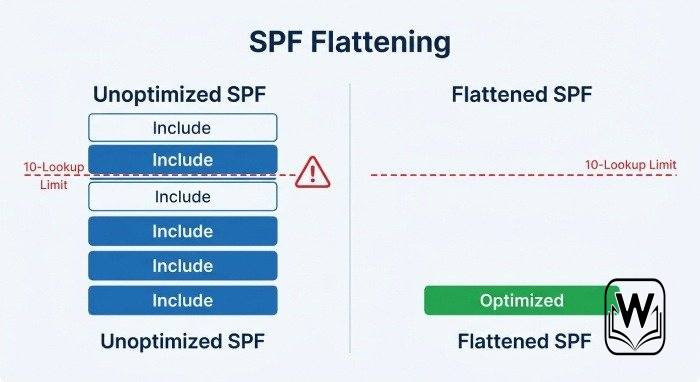
The hallmark of any modern SPF flattener is seamless, automatic SPF flattening. Flattening an SPF record refers to the process of resolving all include tags and nested lookups to generate a direct, flattened list of authorized sending IPs. This eliminates the risk of hitting the DNS lookup limit and ensures your SPF output is always within the 10-lookup threshold.
SPF record flattening is especially important for organizations using complex SPF setups, with several third-party SPF mechanisms and sprawling include tags, such as setups commonly found in companies leveraging Constant Contact, GoDaddy, or Helpscout. An automated SPF solution should run a regular SPF domain scan to continuously flatten SPF entries, merge SPF records as needed, and automatically remove SPF entries that are obsolete.
2. Real-Time DNS Lookup Monitoring
Continuous, real-time monitoring of DNS lookups is a critical safeguard against exceeding the DNS lookup limit. An advanced SPF flattener actively tracks the number of DNS lookups generated by your SPF setup, including implicit lookups such as those spawned by nested lookups within include tags.
Real-time DNS monitoring assists organizations in avoiding SPF problems like the classic “SPF too many lookups” error, which severely impacts email deliverability and SPF security. Tools offering this feature often integrate visual SPF output code feedback into their dashboard, showing the live count of DNS queries and alerting administrators if the SPF domain limit is ever at risk.
3. Protection Against the 10-Lookup SPF Limit
A key feature of any reputable SPF management tool is robust protection against the 10-lookup limit imposed by the SPF RFC standard (RFC 7208). Solutions like Cloudflare’s DNS flattening, or purpose-built free SPF tools such as SPF1.com, reduce the risk of hitting this critical ceiling by consolidating all possible records into a flattened SPF output.
Providers should offer mechanisms to handle even the most complex SPF setups, employing smart SPF rewrite logic to ensure no combination of flattened SPF entries or include tags allows more than 10 effective lookups. Built-in SPF validators and SPF checkers play a vital role in preempting DNS aborts before SPF issues escalate.
4. Dynamic IP Address Updates
For those leveraging dynamic ranges, such as marketing tools SPF providers or email sending services with shifting infrastructure, like Firebase or mlsend.com, it’s essential that your SPF flattener automatically updates IP addresses as vendor records change. Without real-time updates, your flattened SPF output could quickly become outdated, breaking SPF compliance and disrupting your email authentication.
Cloud-based SPF flatteners can automatically fetch changes via DNS & Network integrations, ensuring the flattened list in your SPF record is always accurate. This dynamic updating is a cornerstone of SPF optimization, especially for enterprise SPF users facing frequent vendor-side updates.
5. Support for Multiple Domains
Scalable SPF management is non-negotiable for agencies, multi-brand companies, or service bureaus. Your chosen SPF solution should allow you to manage domains SPF across as many branded identities as needed, keeping each SPF DNS record within the valid SPF record parameters, including a strict single SPF per domain policy, as per ICANN and best practices.
Solutions that streamline multi-domain SPF setup not only help avoid SPF problems but also simplify operations across global campaigns, including unified dashboards, batch SPF record flattening, and domain-specific SPF fixes.
6. Easy Integration With Email Service Providers
SPF flattening tools must offer easy integration with major email service providers and third-party SPF vendors, be it Constant Contact, Gmail, secureserver.net, emsd1.com, or other ESPs. Native integrations ensure that any changes to your provider’s sending infrastructure are instantly reflected in your SPF DNS record, with flattened SPF entries generated automatically.
Well-integrated SPF flatteners facilitate simple SPF tool onboarding and swift SPF output adjustments when your marketing tools SPF configuration evolves. This is crucial both for smaller businesses lacking IT resources and for larger enterprises managing substantial SPF handling across multiple platforms.
7. Clear SPF Record Validation and Error Detection
Comprehensive SPF validation and real-time error detection should be built into your SPF flattener. Advanced SPF validators scan your SPF DNS record for syntax errors (like incorrect include tags or deprecated mechanisms) and logic flaws (such as infinite nested lookups or accidental SPF record chaining).
Many vendors, including Cloudflare Community and SecurityTrails.com, recommend using tools with visual SPF checker panels and detailed SPF tool feedback so admins can quickly test SPF output, spot SPF issues, and implement rapid SPF fixes before they impact deliverability.
8. Automated Alerts for SPF Failures or Changes
Automated alerting provides immediate notification of SPF failures, unauthorized SPF DNS record changes, or compliance anomalies. This is particularly valuable for those with complex SPF setups or frequent interactions with third party SPF providers.
A modern SPF flattener should send instant emails or notifications, potentially integrating with platforms like Slack or SMS, when any SPF record flattening breaks, an SPF workaround is deployed, or SPF problems like too many DNS lookups arise. Such alerts help admins proactively test SPF and prevent reputational damage before it happens.

9. Security Controls to Prevent Unauthorized Changes
SPF security is paramount, especially for enterprise SPF environments. Choose an SPF flattener that includes granular security controls, such as role-based access, audit logs, and two-factor authentication, minimizing the risk of unauthorized changes to SPF DNS records.
Robust controls also prevent tampering with flattened SPF entries and help maintain valid SPF records in line with ICANN guidance. Vendors such as Cloudflare and GoDaddy provide enhanced controls, ensuring only authorized personnel can perform SPF fixes, remove SPF entries, or deploy DNS flattening.
10. Detailed Reporting and Compliance Insights
Effective SPF management relies on actionable reporting and compliance insights. Comprehensive dashboards should provide analytics on DNS lookup volume, the status of each SPF entry, compliance with the SPF domain limit, and statistics on failed or forwarded messages due to SPF issues.
Integration with external tools (such as Cloudflare Radar or Email Checker) further strengthens SPF output intelligence, alerting IT teams to trends in DNS flattening reliability, SPF optimization opportunities, and overall SPF handling efficiency.




A little discussion goes a long way.
Ask a question, share your experience, or help someone find an answer.
There is room for your perspective.
No discussions match this view yet.
Your voice belongs here
Keep it useful. Keep it kind.