
Most product launches don’t fail because the product is bad. They fail because the people who would have loved the product never found out it existed, or found out too late, or encountered it through content that didn’t make a convincing case for why they should care. Distribution and presentation are the variables that determine whether a good product reaches the audience it deserves, and in an environment where video is the dominant format for capturing attention across every major platform, the ability to produce compelling video content is increasingly the difference between products that break through and products that don’t.
The frustrating reality for most small and medium-sized product businesses is that the content requirements of a successful launch have grown faster than the resources most of them have available to meet them. A product launch five years ago might have needed a handful of good photos and a press release.
The same launch today needs video for Instagram Reels, TikTok, YouTube Shorts, a product page hero video, video for paid advertising across multiple platforms, and possibly additional video for email campaigns and retail partner requirements. The asset list is long, the formats are varied, and each platform has its own technical requirements and stylistic conventions that determine whether content performs or disappears.
Against this backdrop, the image-to-video capability of current AI generation tools is one of the more practically significant developments for product businesses. The premise is straightforward: you have a product photo, and you need video. The question is how much video you can derive from that single starting point, and how much of the platform-specific variation you need can be generated from the same source material.
Why Product Photography Is Already the Right Starting Point
The reason image-to-video conversion is particularly valuable for product businesses specifically is that product photography is the asset category that most product businesses have already invested in seriously. A brand that hasn’t produced professional video has almost certainly produced professional photography.
The packaging shots, the lifestyle images, the detail photos that show material and texture, the hero shots that anchor the product page, these exist because they’re required for e-commerce listings, for wholesale catalogs, for press kits. They’ve been produced by professionals who understand how to make the product look its best.
This photography represents a significant investment that, until recently, was limited to static applications. It could appear on product pages, in catalogs, in print advertising, and in email headers. It couldn’t move, which meant it couldn’t serve the video formats where an increasing share of purchase decisions are being made. Image-to-video generation changes that boundary. The investment in professional photography now produces assets that can be extended into the video domain without the additional investment of a separate video production.
The visual quality that professional photography brings carries through into AI-generated video in ways that make the output look like it belongs with the photography rather than looking like something produced separately at lower quality. The aesthetic continuity between the brand’s existing visual assets and its new video content is built into the generation process rather than requiring extensive color matching and post-production work to achieve.
The Variety a Single Photo Can Generate
One of the things worth understanding about image-to-video generation is the range of visual treatments that can be applied to a single reference image. A product photo isn’t a template that produces one kind of video — it’s a visual anchor that can be used to generate video with very different characters depending on what the generation prompt calls for.
A packaged food product photographed on a clean white surface can generate a slow, elegant push-in that treats the product as a refined object appropriate for a performance or value-oriented positioning. It can generate a close-up sequence that explores the texture and materiality of the packaging in detail. It can anchor an environmental sequence that places the product in a kitchen, on a breakfast table, or in a context that implies use and occasion. Each of these serves a different platform, a different ad format, or a different moment in the purchase funnel.
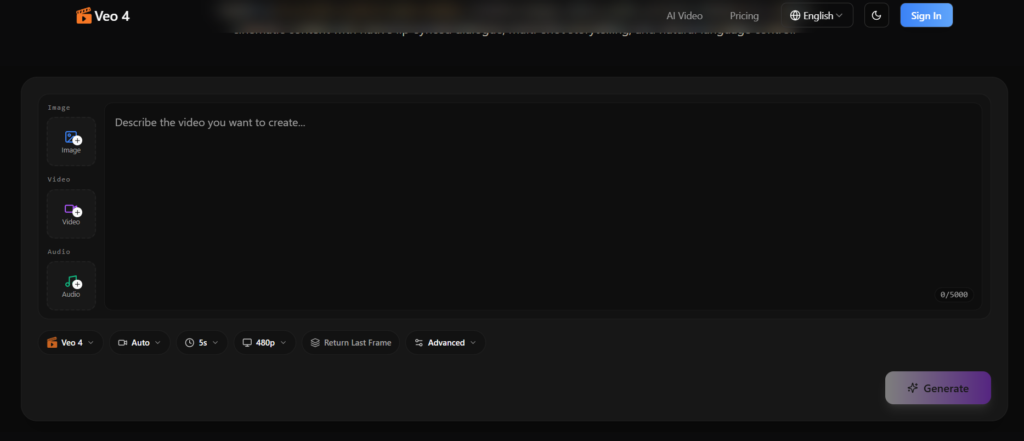
Veo 4 handles this variation through the combination of the reference image and the text prompt, where the image establishes the visual identity of the product and the prompt describes the motion, atmosphere, and context of the generation. The same product appears across different video treatments with consistent visual identity while the surrounding context and movement style vary to serve different creative purposes.
Building a Campaign Asset Library From a Single Shoot
The practical implication of this variety is that a single product photography session can now generate the entire visual asset library that a campaign requires, including the video components. The shoot produces the photography. The photography becomes the reference input for video generation. The video generation produces platform-specific formats with the appropriate aspect ratios, pacing, and visual treatment for each channel.
This collapses what used to be a two-stage production process into a single stage with an additional generation step that doesn’t require scheduling, crew, or additional access to the product. For brands that are launching new products on a regular cadence, or refreshing campaign creative seasonally, the workflow simplification is significant. The production overhead of maintaining a full-funnel video content library drops enough that it becomes manageable for teams that previously couldn’t sustain it.
The asset library that results also has better visual coherence than one assembled from separate photography and video productions. When video is derived from photography using the same visual reference, the consistency between static and moving assets is high without requiring deliberate effort to achieve it. Photography and video look like they come from the same campaign because they were generated from the same source material, which is a quality that matters in branded content and is surprisingly difficult to achieve when assets are produced in separate processes.
Paid Advertising and Performance Testing
Paid video advertising has its own requirements that are worth addressing specifically. Performance advertising on Meta, TikTok, YouTube, and other platforms rewards creative testing, running multiple versions of an ad concept, identifying which performs best, and allocating budget toward the winner. The challenge for product businesses has been that producing multiple creative variations for testing multiplied the production cost, which meant most brands either didn’t test systematically or tested only at the most superficial level.
When video variations can be generated from the same photography reference with different treatments the economics of creative testing change. A brand can enter a campaign with five or ten video variations rather than one or two, gather performance data across all of them in the first week, and then allocate spend toward the approaches that are working. The learning that results from this kind of testing compounds over multiple campaigns, producing creative knowledge about what resonates with a specific audience that’s more valuable than any individual piece of creative.
The aspect ratio and format flexibility that different ad placements require is also much easier to manage when generation is fast and the source material is a static image rather than produced video. A square format for Facebook feed, a vertical format for Stories and Reels, a horizontal format for YouTube pre-roll — these can all be generated from the same product photo with format-appropriate framing and composition, rather than requiring the cropping and reformatting of produced video that frequently produces awkward results.
Seasonal and Promotional Refresh
Product businesses that sell year-round typically need their visual content to reflect seasonal contexts going back into production with appropriate props, styling, and contexts to produce content that feels of the moment rather than generic.
Image-to-video generation changes this requirement. The core product photography can remain the anchor, with the seasonal context applied through the generation prompt and supplementary reference images that establish the seasonal character. A product that was photographed in a neutral studio context can be placed in an autumn kitchen, a winter table setting, or a summer outdoor context through generation rather than reshooting. The product looks the same; the world around it changes to reflect the season or the occasion.
The Honest Scope of What This Solves
Image-to-video generation solves a specific problem: it extends the value of existing photography into video formats without requiring separate video production. It doesn’t solve problems that weren’t previously solved by photography either. A product that doesn’t photograph compellingly won’t generate compelling video from those photographs. A brand without a clear visual identity won’t produce consistent video from inconsistent photography. The quality ceiling of the generated video is related to the quality of the reference photography it’s built from.
What it does offer is a meaningful reduction in the production overhead that has made comprehensive video content strategies inaccessible for most product businesses outside the largest brands. For the majority of product businesses operating with real budget and resource constraints, the ability to derive a full campaign’s worth of video from a photography session they were already going to conduct is a genuine change in what’s possible, and it’s the kind of change that compounds over time as brands build larger libraries of reference photography that can be extended into video content across multiple campaigns. For those evaluating whether the economics make sense for their specific situation, the Veo 4 Pricing page provides a clear breakdown of what different levels of usage cost, which makes it easier to run the numbers against a real content calendar before committing.



A little discussion goes a long way.
Ask a question, share your experience, or help someone find an answer.
There is room for your perspective.
No discussions match this view yet.
Your voice belongs here
Keep it useful. Keep it kind.