
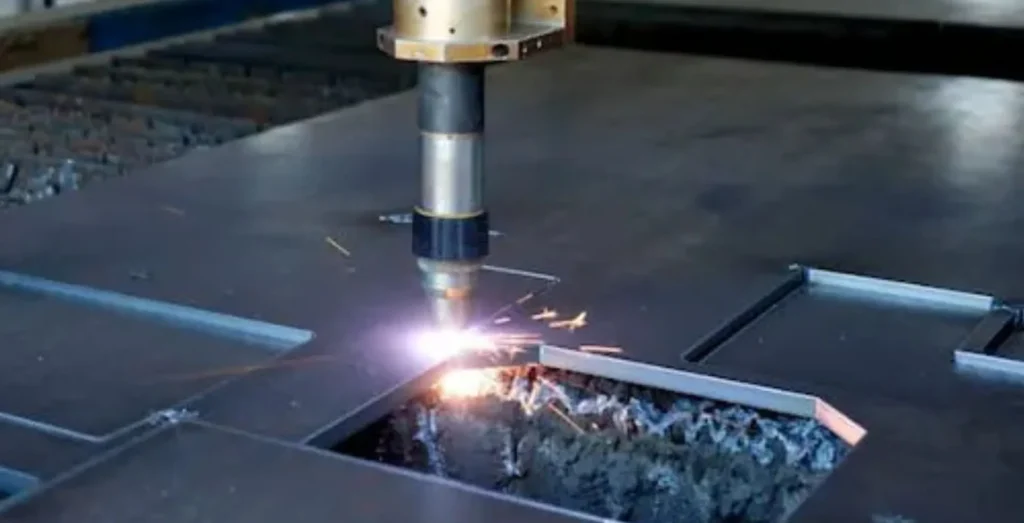
Metal fabrication system technologies are continually changing, and newer developments are influencing the accuracy and the productivity of the industry. The CNC plasma cutting table is one such innovation, as it has changed the cutting and modification of metal to meet various needs.
In this article, we shall explore the benefits and uses of these state-of-the-art tools in metalworking.
- CNC Plasma Cutting in Metal Fabrication
- What Is a CNC Plasma Cutting Table?
- Benefits of Using CNC Plasma Cutting Tables
- Enhanced Precision and Complexity
- Increased Efficiency and Speed
- Optimised Material Usage
- Improved Operator Safety
- Versatility in Materials and Thickness
- The Multiplicity of Applications for CNC Plasma Cutting Tables
- The Future of Metal Fabrication with CNC Techniques
- Conclusion
CNC Plasma Cutting in Metal Fabrication
Metal fabrication-It is the process of cutting, shaping, and assembling metal materials to form various products and structures. These functions were traditionally performed manually by skilled craft laborers using handheld tools.
With the coming of Computer Numerical Control (CNC) technology, however, this has tremendously transformed the game.
CNC technology has been employed to automate the control of machining tools, such as plasma cutters, through computer programming.
Plasma cutting, in itself, involves a high-velocity jet of ionized gas that melts and forcibly removes the material from an electrically conductive workpiece.
When used in a CNC-controlled system, plasma cutting becomes a highly accurate and consistent method for working with metal materials.
What Is a CNC Plasma Cutting Table?
A CNC-controlled plasma cutting table is a robotic mechanism that precisely traverses a flat surface with a plasma torch to cut metal sheets on the table.
It is this precision, among other factors, which makes these tools an inseparable part of the metal fabrication industry.
Benefits of Using CNC Plasma Cutting Tables
The integration of the CNC plasma cutting tables to the metal fabrication in the workshops can offer many benefits, as the specific operations are converted in various particular ways:
Enhanced Precision and Complexity
The accuracy available in a CNC plasma cutting table is unsurpassed. The process of computer programming enables the cutting of complex designs and patterns with a high level of detail, which an entirely manual process could not easily attain.
Such accuracy conditions the quality of work, and the work can be regularly repeated with the mass production issue.
Increased Efficiency and Speed
The next great advantage is greater efficiency. CNC plasma cutting surfaces can operate at a very high speed, which significantly reduces the duration required for cutting.
Such an improvement in the flow of the production process may result in higher throughput and overall productivity for a workshop.
Optimised Material Usage
CNC plasma cutting also results in minimal wastage due to its capability of maximizing the available raw materials through precision cutting and intricate patterns that can be programmed during the cutting process.
Being environmentally friendly, this aspect of CNC plasma cutting not only saves on material costs but also reduces overall costs.
Improved Operator Safety
The operator’s safety is enhanced by a CNC plasma table that automates the cutting process. Because a computer operates it, the operator only needs to monitor the process, rather than being right beside the machine, when it produces heat and fumes during the cutting process.
Versatility in Materials and Thickness
The kind of metal or its thickness does not set any limitations on CNC plasma cutting tables. They can cut various materials, such as steel, stainless steel, and aluminium, which can support a wide range of thicknesses, making them even more versatile.
The Multiplicity of Applications for CNC Plasma Cutting Tables
The flexibility and accuracy of the CNC plasma cutting tables have created opportunities for many applications in industry. They find use in building automobiles, ships, and aircraft, where precision cutting is not only preferable but in most cases obligatory.
They can also be important in creating metal gates, sculptures, signage, and HVAC fittings, as they can make a creation unique to the tiniest detail.
Moreover, the technology does not only target big industrial players; small workshops and hobbyists are also employing CNC plasma cutting tables to realise their metalworking plans.
The Future of Metal Fabrication with CNC Techniques
The integration of CNC plasma cutting tables into the metal fabrication industry is just one of the things being experienced in the current industry.
It is possible that with the further development of technology, more advanced and sophisticated CNC technologies will emerge, further facilitating and refining the manufacturing and building processes.
As Industry 4.0 emerges and promotes smart automation and data sharing in production technologies, CNC plasma cutting tables will likely become more closely integrated with other systems.
The digital transformation of the industry is an ongoing process that may lead to predictive maintenance, real-time analysis, and increasingly accurate controls.
Conclusion
CNC technology has brought about a radical change in metal fabrication, and the introduction of CNC plasma cutting tables is arguably the most significant development in the field.
Such machines have given fabricators a machine with unrivalled accuracy and speed that has enabled applications in a wide range of industries.
The flat plasma CNC cutting table is a stalwart product that expands the envelope of what is achievable in plasma metal cutting.
Looking into the future, it is clear that the integrated nature of CNC technology and its further development will continue to transform the sphere even further into the cutting edge of metal manufacturing and construction. The future is glowing, it is the future, and it is CNC plasma cutting technology.
Any attempt to remain competitive in the metal fabrication industry will have no option but to adopt the potential of CNC plasma cutting tables. It is the precision edge that characterizes the prosperity and yield of contemporary metalworking companies.





A little discussion goes a long way.
Ask a question, share your experience, or help someone find an answer.
There is room for your perspective.
No discussions match this view yet.
Your voice belongs here
Keep it useful. Keep it kind.