USDT on TRON is widely used for quick payments, P2P deals, and exchange deposits. Yet many users hit the same surprise. They have USDT, but the transfer still needs TRX, or the cost feels higher than expected.
The reason is TRON’s resource system. Transactions spend Energy and Bandwidth first. When the wallet cannot supply them, the network burns native coin to cover the shortfall. If you want to reduce how often that happens, you can buy energy tron and add resources to your address before sending.
TRON’s costs are based on a resource model
TRON avoids calculating fees through a uniform gas metric. Rather, the protocol monitors the actual blockchain resources each action utilizes. Throughput accounts for the transaction’s data volume, whereas Power compensates for the calculative effort needed to execute contract code.
Since USD Tether operates under the TRC-20 framework on TRON, each transfer represents a contract interaction. Consequently, Power typically carries the greatest cost weight. When a wallet holds insufficient Power or Throughput, the system automatically destroys TRX to cover the deficit and finalize the operation.
Why two USDT transfers can burn different amounts of TRX
Many users expect every USDT transfer to behave the same. On chain, the resource demand can change. One frequent factor is the receiver’s address state.
If the receiver already has USDT, the contract call often consumes fewer resources. If the receiver gets USDT for the first time, the operation can require more Energy. When the sender has no resources, the difference appears as extra TRX burn.
What renting Energy changes for the sender
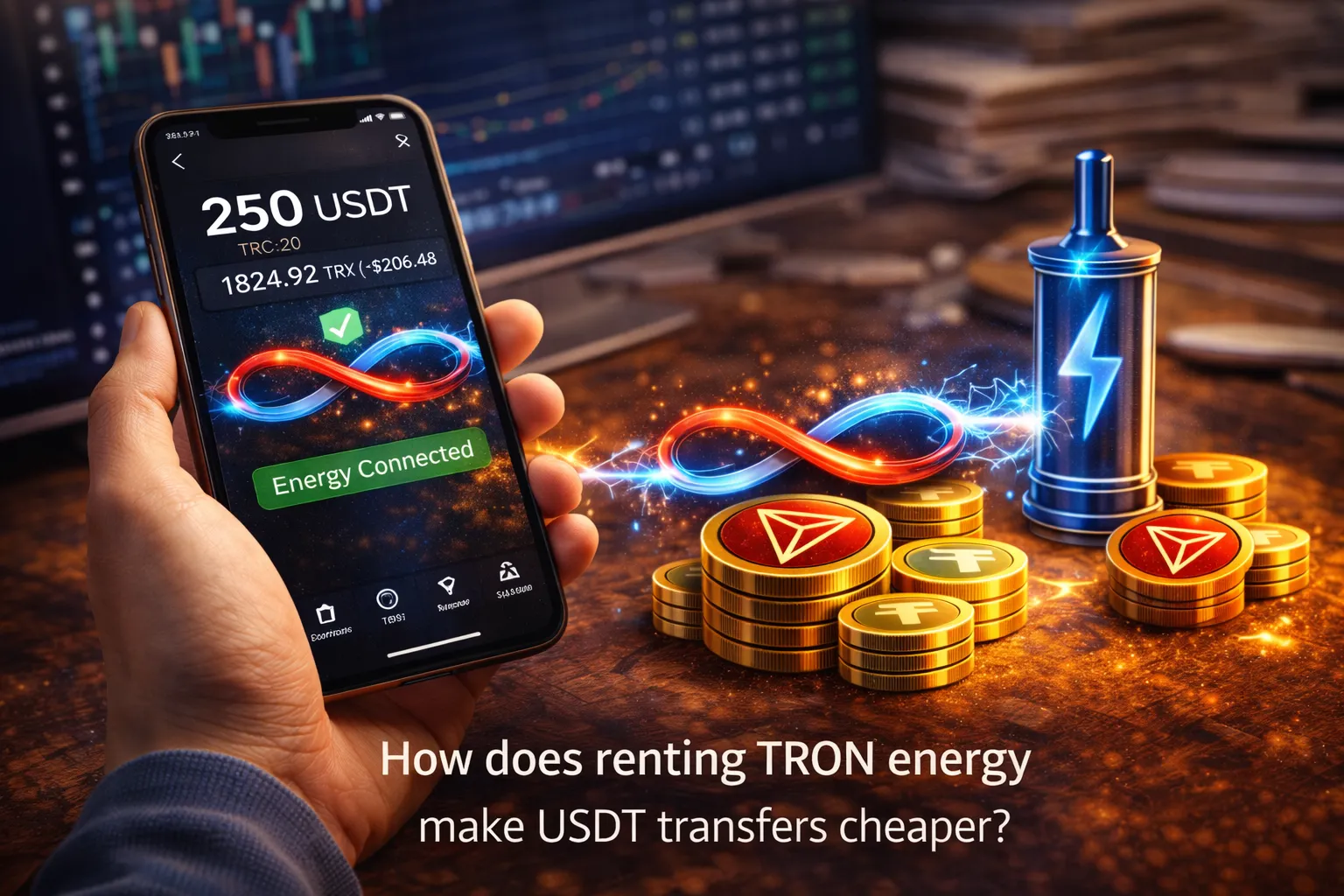
Renting Energy does not rewrite network rules. It changes what your address brings into the transaction. When Energy is available, the USDT contract call can consume that Energy instead of forcing TRX burn for computation.
For active users, this usually means less TRX spent across many transfers and fewer failed sends caused by a zero TRX balance.
Renting compared with staking TRX
You can obtain resources by staking coin Tron, or by renting them when needed. Staking fits users who already hold TRX for the long term. It also has constraints. Unfreezing TRX takes 14 days, and resources stop accruing during that period. Meaningful coverage can require freezing a substantial amount, even for a few transfers per day. TRX volatility can also change the real economics.
Renting is more flexible. It avoids long lockups and reduces the need to top up TRX “just for fees,” especially when you manage multiple wallets.
Why users pick Tron Pool Energy
Tron Pool Energy is a TRON resource rental service designed for Tether USD Tron transfers. It connects resources through the public wallet address only. It does not request private keys or a recovery phrase, so self custody control stays with the owner.
Most users care about outcomes and operational simplicity:
- savings can reach 65 percent compared with burning TRX on each transfer;
- activation is quick, and it does not require complex wallet changes;
- public address only setup supports safer handling of access data;
- support is available 24/7 when something looks unclear;
- one account can manage up to 30 wallet addresses.
This setup reduces emergency TRX purchases and makes transfer costs easier to plan. For heavier usage, Unlimited Energy packages can help, and many users keep a zero TRX balance while Bandwidth is covered within the package.
Conclusion
Renting TRON Energy makes USDT transfers cheaper because it reduces repeated TRX burn. When Energy and Bandwidth are available on the sending address, the network spends resources first and relies less on TRX to pay for execution.
If you send USDT often, the benefit is direct. You buy TRX less frequently for fees, transfers fail less often, and costs are easier to anticipate.
Never Miss an Important Update
Get the latest tech news, how to guides, AI updates, telecom offers, and useful tools delivered instantly. Join our WhatsApp Channel or add WikiTechLibrary as your preferred source on Google.