
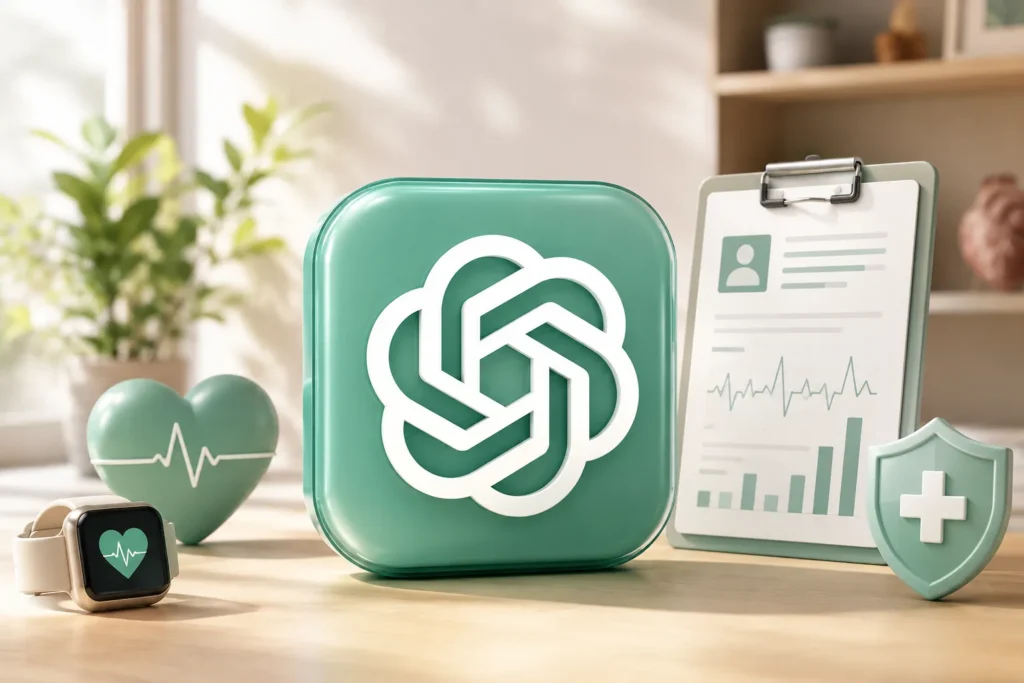
OpenAI made its Health feature available to every adult ChatGPT user in the United States this week, letting people link their Apple Health data and hospital medical records straight into their everyday conversations with the chatbot.
OpenAI announced the rollout on July 23. The feature is available to logged-in users aged 18 or older in the US across Free, Go, Plus, and Pro plans on the web and iOS. It’s a wider release of something OpenAI first tested in a limited pilot back in January.
Why OpenAI rebuilt this feature
The company said its earlier pilot required people to open a separate Health tab to ask anything medical. That setup did not match how people were using ChatGPT.
During testing, OpenAI found that roughly 70 percent of health-related questions came up naturally in regular chats, not inside the dedicated Health section. OpenAI said most people asked health questions during normal conversations instead of opening a separate Health tab. Because of that, the company integrated Health into the main chat experience.
What you can connect
Users can link Apple Health, along with fitness apps like MyFitnessPal and Function. On the medical side, the feature supports records from hospital systems including Epic and Oracle Health, plus platforms like One Medical.
Once connected, ChatGPT can compare new lab results against older ones, summarize what’s changed since a person’s last doctor visit, and look at how sleep or activity levels relate to a person’s broader health goals.
The models doing this work are GPT-5.5 Instant for free-tier users and GPT-5.6 Sol for paid subscribers, and OpenAI says it worked with practicing physicians to test performance across real medical scenarios.
How OpenAI says it’s handling privacy
Because medical information is highly sensitive, OpenAI says it has added several privacy protections. Connected health records, Apple Health data, and any conversation that draws on that information will not be used to train OpenAI’s models or to shape advertising, according to the company.
ChatGPT will also ask permission before referencing a person’s connected records in any given response, so access isn’t automatic just because someone has linked their data. Anyone who doesn’t want to connect anything can still use the Health section on its own, without linking outside accounts.
OpenAI faces new questions over medical advice
The timing is worth noting. TechCrunch reported that the wider rollout came just a day after a Florida pastor filed a lawsuit against OpenAI, alleging that ChatGPT gave him a near-fatal recommendation not to see a doctor.
OpenAI has said it wants users to verify information and rely on professional medical advice rather than treating the chatbot as a replacement for a doctor. The company says ChatGPT should support, not replace, professional medical advice.
OpenAI says more than 300 million people already ask ChatGPT health-related questions every week, up from 230 million when the January pilot began.
Competition in AI healthcare
OpenAI isn’t alone in pushing further into personal health data. Rivals including Anthropic and Google have also been building out their own health-focused AI tools, even as multiple studies have raised concerns about how reliable AI chatbots actually are for medical guidance.
For now, ChatGPT Health remains US-only, and OpenAI hasn’t given a timeline for expanding to other countries. The feature also isn’t available yet inside Codex, the company’s coding-focused product. Whether OpenAI extends Health internationally, and how regulators and health privacy advocates respond to this deeper data integration, will likely shape the next phase of this rollout.





A little discussion goes a long way.
Ask a question, share your experience, or help someone find an answer.
There is room for your perspective.
No discussions match this view yet.
Your voice belongs here
Keep it useful. Keep it kind.