

Cryptocurrency investing can feel exciting, confusing, and risky all at the same time. Prices move quickly, social media is noisy, and beginners often feel pressure to “buy before it is too late.” That pressure is exactly why a simple plan matters.
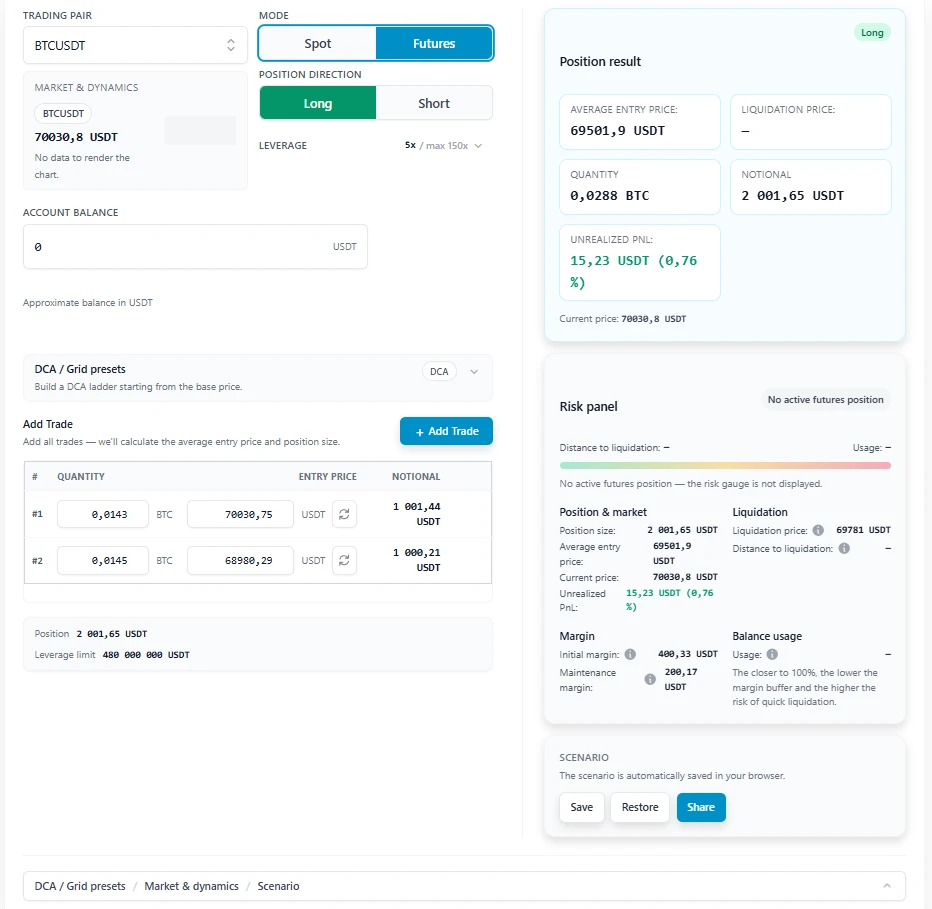
Before putting real money into any digital asset, new investors should learn how average buying price works. A practical tool like the IamForexTrader crypto calculator can help beginners estimate their average cost after several purchases instead of guessing from memory or screenshots.
This guide explains a beginner-friendly way to think about cryptocurrency investing, especially if you want to use an averaging strategy rather than trying to predict the perfect entry point.
- Why Beginners Struggle With Crypto Timing
- What Is Crypto Averaging?
- Lump Sum vs Averaging
- A Simple Beginner Averaging Plan
- Example: How Average Cost Changes
- Rules Beginners Should Set Before Buying
- What to Research Before Choosing a Crypto Asset
- Common Beginner Mistakes
- When Averaging May Not Be Suitable
- Final Thoughts
Why Beginners Struggle With Crypto Timing
Most new investors start with the same question: “Is now a good time to buy?”
It sounds simple, but it is actually one of the hardest questions in any market. Cryptocurrency prices can rise sharply, drop suddenly, and then recover before many people understand what happened. For beginners, this creates two common mistakes:
- Buying too much after a big price increase.
- Selling too quickly after a normal market pullback.
- Following hype instead of a plan.
- Forgetting the real average price after multiple buys.
- Investing money that may be needed for bills, tuition, or emergencies.
Averaging does not remove risk. Nothing does. But it can make the process more organized.
In crypto, the hard part is often not choosing a coin. The hard part is staying disciplined when the market becomes emotional.
What Is Crypto Averaging?
Crypto averaging means buying the same asset in smaller portions over time instead of investing the full amount at once.
For example, instead of buying $600 worth of Bitcoin on one day, a beginner might buy $100 every week for six weeks. If the price goes down, the later purchases buy more coins. If the price goes up, the investor already has some exposure.
The goal is not to “beat the market” every time. The goal is to avoid making one emotional decision with the entire budget.
Lump Sum vs Averaging
| Method | How It Works | Possible Advantage | Main Risk |
|---|---|---|---|
| Lump sum investing | You invest the full amount at once | Works well if the price rises soon after buying | Bad timing can feel painful |
| Crypto averaging | You split purchases over time | Reduces pressure to find one perfect entry | You may buy higher if the market rises fast |
| Random buying | You buy whenever you feel excited or afraid | Easy to start | Usually driven by emotion, not planning |
For most beginners, the third option is the most dangerous. Random buying may feel natural, but it often leads to poor tracking and emotional decisions.
A Simple Beginner Averaging Plan
A good plan does not need to be complicated. In fact, a beginner plan should be simple enough to follow even during a stressful market week.
Here is a basic structure:
- Choose an amount you can afford to risk.
- Split it into smaller parts.
- Decide how often you will buy.
- Track your average cost after every purchase.
- Review the plan monthly, not every five minutes.
For example, imagine a beginner has $500 allocated for crypto education and long-term investing. Instead of investing all $500 today, they may divide it into five purchases of $100. The purchases could happen weekly, biweekly, or monthly.
The important part is consistency.
Example: How Average Cost Changes
Let’s say a beginner buys the same cryptocurrency three times:
| Purchase | Amount Invested | Coin Price | Coins Bought |
|---|---|---|---|
| First buy | $100 | $50 | 2.00 |
| Second buy | $100 | $40 | 2.50 |
| Third buy | $100 | $25 | 4.00 |
| Total | $300 | – | 8.50 |
The investor spent $300 and received 8.50 coins.
Average cost = $300 / 8.50 = $35.29 per coin.
This is why tracking matters. If the investor only remembers the first purchase at $50, they may think the position is much worse than it really is. If they only remember the last purchase at $25, they may become too confident. The average cost gives a clearer picture.
Rules Beginners Should Set Before Buying
Crypto investing becomes more dangerous when rules are created after emotions appear. It is better to set rules before the first purchase.
Useful beginner rules may include:
- Never invest emergency money.
- Avoid borrowing money to buy crypto.
- Decide the maximum amount before starting.
- Avoid buying only because a coin is trending.
- Keep records of every purchase.
- Learn wallet and exchange security basics.
- Understand that large losses are possible.
These rules may sound boring, but boring rules often protect beginners from expensive mistakes.
What to Research Before Choosing a Crypto Asset
Averaging into a weak or poorly understood asset is still risky. A plan cannot turn a bad decision into a good one automatically. Before buying any cryptocurrency, beginners should research several areas.
Look at the project’s purpose. What problem does it claim to solve? Is there real usage, or is the value mostly based on hype?
Check liquidity. Can people buy and sell the asset easily? Very small coins can move dramatically because there are not enough buyers and sellers.
Read about token supply. If a huge number of tokens can enter circulation later, price pressure may increase.
Review security history. Has the project, exchange, or related protocol suffered major hacks?
Finally, ask a simple question: “Can I explain this asset to someone else in plain English?” If the answer is no, more learning is needed.
Common Beginner Mistakes
Many beginners lose money not because crypto is impossible to understand, but because they repeat avoidable mistakes.
One mistake is buying after a huge rally without a plan. Another is checking the chart constantly and making decisions based on short-term fear. Some beginners also track profit and loss poorly, especially after several purchases at different prices.
Another common mistake is confusing a lower price with a better opportunity. A coin that falls 70% is not automatically cheap. Sometimes it is undervalued. Sometimes the market is warning investors about real problems.
When Averaging May Not Be Suitable
Crypto averaging is not a magic strategy. It may not be suitable if:
- You do not understand the asset.
- You need the money soon.
- The project has weak fundamentals.
- You are averaging only because you refuse to accept a mistake.
- Your position is becoming too large for your budget.
Averaging should be used as part of a plan, not as an excuse to keep buying blindly.
Final Thoughts
Cryptocurrency investing for beginners should start with education, not excitement. A simple averaging plan can help reduce timing pressure, but it must be combined with risk limits, research, and honest tracking.
The best beginner habit is not predicting every price move. It is learning how to make decisions calmly.
If you know how much you invested, how many coins you own, and what your average cost is, you are already ahead of many emotional market participants.




A little discussion goes a long way.
Ask a question, share your experience, or help someone find an answer.
There is room for your perspective.
No discussions match this view yet.
Your voice belongs here
Keep it useful. Keep it kind.