
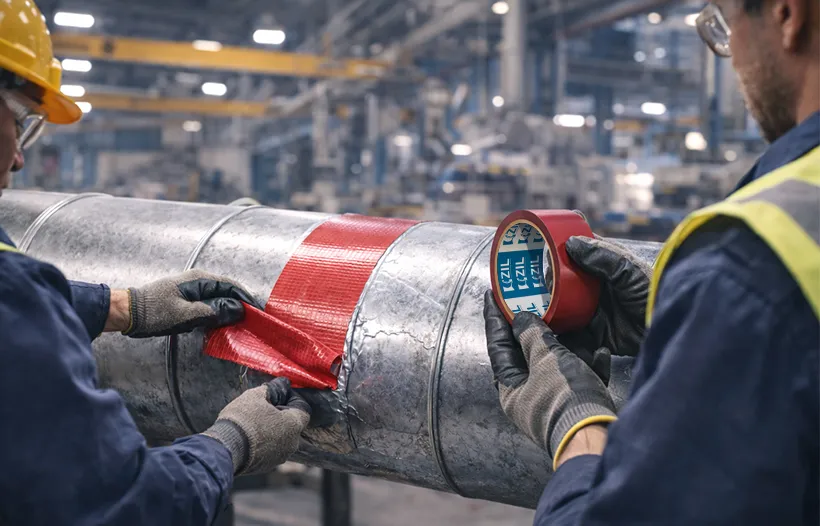
Industrial packaging is a critical operational function across Pakistan’s manufacturing, warehousing, and logistics sectors. From export-oriented textile units, through national FMCG distribution networks, the packaging materials have to ensure the safety of the commodity, facilitate the handling efficiency and can be dependable across different storage and transportation environments. Although most of the systems of packaging are based on the use of cartons, strapping and wrapping in plastics, duct tape continues to play a vital supporting role.
Despite increasing automation in global packaging practices, duct tapes are still prevalent in the Pakistani industries because of their versatility, availability and ability to suit real-life operational conditions. It is frequently depended on in cases where there is deviation in packaging needs, manual handling, or environmental conditions are less predictable.
- Availability of Industrial Duct Tape in Pakistan
- The Role of Duct Tape in Industrial Packaging
- Industrial Packaging Practices in Pakistan
- Why Duct Tape Remains Relevant Despite Automated Packaging
- Common Types of Duct Tape Used in Pakistan’s Industrial Sector
- 1. Cloth-Backed Duct Tape
- 2. Polyethylene (PE) Coated Duct Tape
- 3. Heavy-Duty Reinforced Duct Tape
- 4. Heat-Resistant Duct Tape
- 5. Waterproof Industrial Duct Tape
- Comparison of Common Industrial Duct Tape Types
- Industry-Specific Applications Across Pakistan
- How Industries Select the Right Duct Tape
- Quality and Performance Considerations
- Environmental and Operational Factors
- Conclusion
Availability of Industrial Duct Tape in Pakistan
Pakistan’s industrial packaging sector relies on a combination of imported and locally manufactured duct tape solutions. Local manufacturing has gained importance due to shorter supply cycles, customization flexibility, and alignment with regional operating conditions.
Domestic producers play a key role in meeting industrial demand by supplying duct tape variants suitable for warehousing, export handling, and general packaging use. Companies such as Zil (Zil Tapes), along with other local manufacturers, support industrial packaging requirements across multiple sectors by contributing to consistent material availability.
Local sourcing also enables the industries to make changes to the tape specifications according to the humidity, temperatures, and handling habits prevalent in the industrial clusters of Pakistani industries.
The Role of Duct Tape in Industrial Packaging
In industrial settings, packaging materials are expected to withstand repeated handling, vibration, stacking pressure, and exposure to environmental factors such as humidity and dust. Duct tape is typically not used as a primary load-bearing solution but rather as a reinforcement and stabilization material within broader packaging systems.
Common industrial uses include carton reinforcement, bundle securing, pallet edge stabilization, and temporary fastening during packing or unpacking processes. One of duct tape’s key advantages is its ability to adhere to a wide range of surfaces, including corrugated cardboard, plastic films, metal components, and wooden crates.
The duct tape is still especially topical in the context of industry of Pakistan since it can be used without special equipment. This is convenient in plants where the packaging operations are semi-automatic or where the product types change very often. It is also very versatile and tear resistant, which is why it suits irregular packaging forms and loads of mixed materials.
Industrial Packaging Practices in Pakistan
In Pakistan, the practice of packaging is influenced by the interaction of the export requirements, local distribution demands, and the reality of the infrastructure. Exporters in the textile and apparel industries need the packaging solutions that will withstand the long distances in shipping and the varying humidity levels. In the high-volume setting, manufacturers of FMCGs are concerned with speed, predictability and the control of costs. Electronics and appliances as well as industrial equipment require secure packing to avoid movement and damages during transportation.
There are several industrial clusters that are in common logistics area where warehousing conditions are highly different. Storage under controlled climatic conditions is not always possible, and packaging materials should be reliable when used in semi-open or non-controlled conditions. Consequently, performance-balancing, availability-balancing, and adaptability-balancing materials tend to be preferred instead of highly specialized materials.
Duct tapes are suitable to these practical needs, and that is why they have been used throughout the industrial supply chain in Pakistan.
Why Duct Tape Remains Relevant Despite Automated Packaging
While automated sealing and strapping systems are more and more widespread in large-scale manufacturing plants, duct tape remains a very popular means of securing the item due to several reasons. Most of the small-to-medium businesses have flexible production schedules, mixed packaging formats, and it is not feasible to fully automate them.
Duct Tape helps in the temporary reinforcement, corrective sealing and last minute adjustments that are not easily accommodated in automated systems. It is also commonly applied in internal use and in this case goods are transferred between production, storage, and dispatch and final packaging is not done.
Duct tapes are also commonly used in export operations where the duct tape is added as added protection to the cartons or pallets that may be subjected to prolonged handling periods. These are the practical benefits, which assist in justifying the necessity of duct tape to be embedded in the industrial package processes even when the technology has advanced.
Common Types of Duct Tape Used in Pakistan’s Industrial Sector
Industrial use demands varying tape properties depending on load, climate, and conditions of handling. These are the most commonly used types of duct tapes in the industry of industrial packaging in Pakistan.
1. Cloth-Backed Duct Tape
Cloth-backed duct tape is among the most widely used variants in industrial environments. It features a fabric scrim embedded within the backing material, providing strength while retaining flexibility.
The tape is appreciated due to its tear protection and ease of manual installation. It can be torn by hand without cutting tools and this enhances efficiency in the fast-paced packaging environment. Cloth-backed duct tape is also good on rough surfaces and is the ideal choice in corrugated cartons and wooden packaging.
This type finds widespread application in Pakistan in packaging of textiles, warehouse and general industrial usage where flexibility and fast usage is crucial.
2. Polyethylene (PE) Coated Duct Tape
PE-coated duct tape has polyethylene cover which increases the resistance to moisture, abrasion and environmental effects. This is of great use especially in storage or transportation conditions where humidity or contact on surface can damage the normal tapes.
Export staging areas, warehousing facilities and logistics hubs often utilize PE-coated duct tape to preserve the packaging integrity in the course of handling and transportation. It is also a durable coating in cases where packages are stacked or moved frequently.
In industries located in an area with a coastal climate or other big export corridors, PE-coated duct tapes are usually preferred because of the extra benefits of being outer resistant to moisture.
3. Heavy-Duty Reinforced Duct Tape
Reinforced duct tapes need a heavier duct tape to be used in situations where higher tensile strength is needed. These tapes are normally supplemented with extra fiber reinforcement which restricts the stretching and improves stability of the loads.
The variant is usually applied in the stabilization of pallets, packaging of heavy objects, and the reinforcement of machinery or industry part packaging. It is specifically applicable in construction material, packaging, and heavy manufacture industries.
In Pakistan, reinforced duct tape is commonly used with strapping or shrink wrap as an additional support, not as a substitute for primary load-carrying systems.
4. Heat-Resistant Duct Tape
Heat resistant duct tape is designed to retain adhesive property even in areas with varying ambient temperature, or where ambient temperature might be high. Although it is not meant to work under extreme conditions of heat, it works dependably in areas around manufacturing lines and processing equipment.
Such tape is usually applied in packaging activities that are very near the production zones where normal glues may lose strength or become sticky. Adhesion in such conditions minimizes the chances of the packages failing in handling.
Manufacturing plants located in hot industrial areas usually choose heat-resistance duct tapes to maintain the same packaging performance.
5. Waterproof Industrial Duct Tape
Waterproof duct tape is made in order to stop the entry of moisture and also to avoid loosening when subjected to water or condensation. These variants do not degrade well in wet environments as opposed to normal tapes.
Waterproof duct tape is used by cold storage facilities, agricultural supply chains, and outdoor logistics operations to aid the integrity of packaging. It is also applied in temporary sealing whereby it may be exposed to rain or humidity.
Waterproof duct tape offers extra cushioning of reliability in the packaging of exposed products in the diverse climate of Pakistan.
Comparison of Common Industrial Duct Tape Types
| Duct Tape Type | Primary Property | Typical Industrial Use |
| Cloth-backed | Tear resistance & flexibility | Carton reinforcement |
| PE-coated | Moisture resistance | Export packaging |
| Reinforced | High tensile strength | Pallet stabilization |
| Heat-resistant | Adhesive stability | Manufacturing areas |
| Waterproof | Moisture protection | Cold storage & outdoor logistics |
Industry-Specific Applications Across Pakistan
Different industries will use duct tapes depending on the operations of the operation and the patterns of being handled. Duct tape is employed in the reinforcement of cartons and grosses used in shipping, in textile manufacturing and export centres. The manufacturers of FMCGs use it to seal quickly and prepare the pallets in high-throughput settings.
Electronics and appliance producers apply duct tape to fasten protective packaging components and to avoid movements in transportation. The suppliers of construction materials use the heavy-duty variants to stabilize the bulk loads and reinforce the packaging under the high stress.
These varied applications highlight the adaptability of duct tape within Pakistan’s industrial ecosystem.
How Industries Select the Right Duct Tape
Selecting duct tape for industrial packaging involves practical evaluation rather than generic specifications. Load weight is a primary consideration, as heavier packages require higher tensile strength and reinforcement.
Surface type can have an effect on the adhesive performance with rough cardboard surfaces needing to have different bonding properties than smooth plastic or metal. The PE-coated or waterproof variants will depend on the environmental exposure such as humidity and temperature change.
Export packaging is usually focused on durability and consistency of adhesion whereas internal handling can be focused on the ease of removal and flexibility. The validation of tape selection is usually done by trial application and performance testing prior to standardization.
Quality and Performance Considerations
Adhesive makeup is an important factor in long-term performance. Low-quality adhesives may result in premature malfunction because they may weaken the packaging. Support of the material influences tear resistance, flex and abrasion resistance.
Thickness consistency is also significant since disparities in the thickness of the tape may produce weak spots. In order to be reliable, industrial users tend to test the quality of a tape by placing it in controlled tests within real conditions of operation.
Performance consistency is even more important than minor variations in cost, especially when it comes to export-oriented packaging where a failure may result in delays or damaged products.
Environmental and Operational Factors
Industrial Pakistani packaging environment encompasses climate-controlled warehouse down to open logistics yard. The duct tape should be able to work under these conditions.
Tape performance is affected by humidity, the amount of dust exposed, the frequency of handling, and the storage time. The choice to use duct tape according to the actual operating conditions than nominal specification is used as a way of minimizing the problem of packaging and enhancing efficiency.
Understanding these factors enables industries to match the selection of tapes with practical requirements instead of performance claims on paper.
Conclusion
Duct tape continues to serve as a practical and adaptable component of industrial packaging across Pakistan. By understanding the characteristics and applications of different duct tape types, industries can make informed decisions that improve packaging reliability and operational efficiency.
As industrial activity and export volumes grow, selecting packaging materials based on real-world conditions rather than habit becomes increasingly important. When chosen appropriately, duct tape remains a dependable support material within modern industrial packaging systems.





A little discussion goes a long way.
Ask a question, share your experience, or help someone find an answer.
There is room for your perspective.
No discussions match this view yet.
Your voice belongs here
Keep it useful. Keep it kind.