
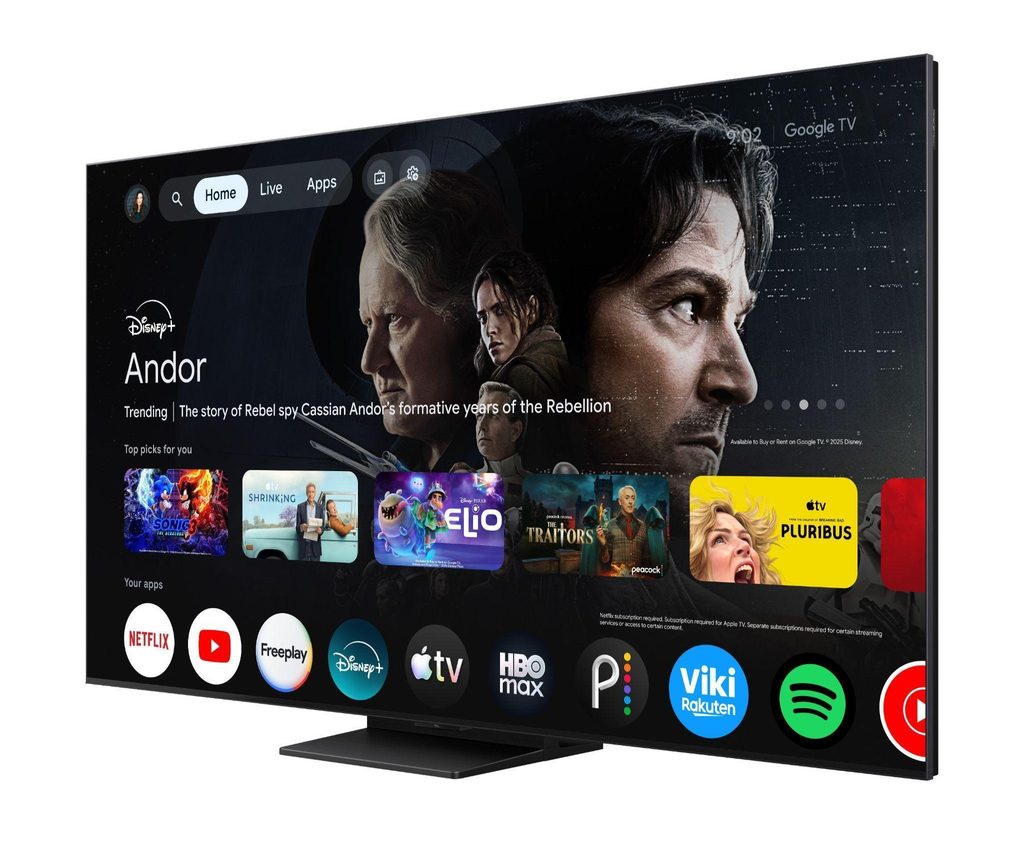
Premium frame-style televisions have often been defined by design: thinner profiles, low-reflection screens, art libraries, and wall-mounting systems intended to make the display feel less like conventional electronics.
The TCL A400U Designer TV takes a different route. It argues that picture quality itself should be part of what makes an art TV premium. The emphasis here is not on one isolated specification. The display system is designed around controlling light more precisely.
QD-Mini LED gives the TCL A400U Designer TV a dense array of small backlights, while local dimming allows different parts of the image to be illuminated independently. That helps the screen keep darker areas dark while pushing more brightness into highlights, reducing the washed-out appearance that can occur when the backlight has less control.
That approach matters most for HDR movies and high-contrast scenes, but it also helps in brighter rooms. TCL’s High Brightness Pro+ system is designed to maintain a more vivid image in ambient light, while the native 144Hz refresh rate gives the television stronger motion performance for sports and gaming.
The TCL A400U Designer TV still functions as an art display when entertainment stops. Its integrated slim design, included flush wall mount, low-reflection screen, curated Art Library, AI Art with more than 100,000 image options, and personal photo gallery preserve the visual role expected from the category.
That gives TCL’s Designer TV lineup clear roles. The new TCL A300L Designer TV emphasizes ultra-slim design and personalization, while the TCL A400U Designer TV focuses on QD-Mini LED picture performance and a more complete entertainment experience.
The broader implication is that the frame-style TV category may be moving past a period where design alone is enough to establish premium status. A television can look considered on the wall and still be judged like any other premium display once the content starts.
The TCL A400U Designer TV is designed for both moments.



A little discussion goes a long way.
Ask a question, share your experience, or help someone find an answer.
There is room for your perspective.
No discussions match this view yet.
Your voice belongs here
Keep it useful. Keep it kind.