
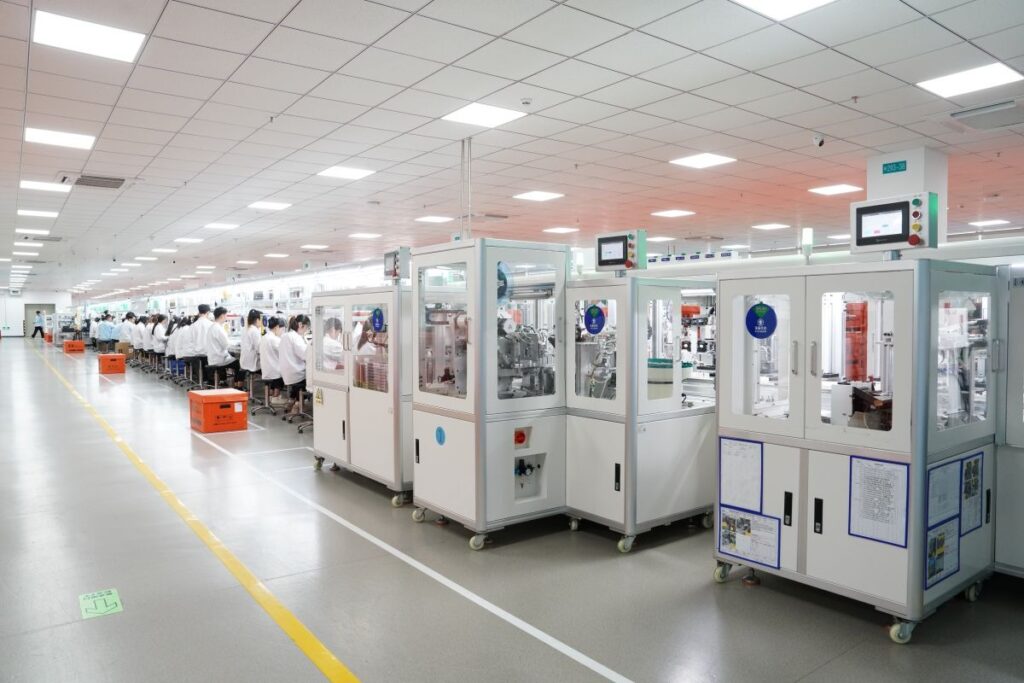
OEMs face persistent assembly challenges that drive up costs and delay product launches. Complex multi-component parts require coordination across multiple suppliers, while fragmented supply chains introduce variability that undermines consistency. Each additional vendor and handoff point creates opportunities for miscommunication, quality gaps, and logistical bottlenecks. For product designers and engineers working under tight deadlines, these inefficiencies translate directly into missed market windows and eroded margins.
Full-service plastic injection molding is a complete solution that combines design assistance, manufacturing accuracy, and assembly, all in one streamlined process. By handling internal tooling, molding, finishing and assembly processes, one competent partner can serve as the OEM’s sole partner for handling all of these processes. The outcome is: faster lead times, better quality control and much lower cost per unit. In this article, the author will discuss how full-service injection molding works and the techniques that can be used to eliminate the need for additional assembly operations, the quality assurance processes that help to ensure production integrity and the steps that an engineer can take to make these solutions a reality.
- The Fundamentals of Full-Service Plastic Injection Molding for OEMs
- Streamlining Assembly Processes with Integrated Plastic Injection Molding
- Key Techniques for Efficient Assembly Integration
- Ensuring Quality Control in Full-Service Production
- Advanced Technologies for Quality Assurance
- Steps to Implement Full-Service Plastic Injection Molding Solutions
- Turning Integrated Manufacturing into Competitive Advantage
The Fundamentals of Full-Service Plastic Injection Molding for OEMs
Full-service manufacturing in the context of plastic injection molding for OEMs refers to a vertically integrated approach where a single provider handles every stage of production, from initial concept development and mold design through material selection, molding, secondary operations, and final assembly. Unlike traditional arrangements where OEMs coordinate separate vendors for each phase, this model consolidates accountability and expertise within one organization.
For OEMs pursuing scalability, this integration proves critical. A full-service partner can ramp up production volumes without the delays caused by coordination along multi-vendor supply chains. A single team to oversee the design changes as well as the tooling changes helps to respond more quickly to customer demand and avoids finger pointing that can happen when there are no communication links between separate suppliers.
The key components of full-service plastic injection molding begin with mold design, where engineers optimize cavity layouts, gate locations, and cooling channels to achieve dimensional precision and cycle efficiency. Next, the material is selected to match the requirements of the application, such as impact resistance, thermal resistance, and chemical compatibility, which are properties of the polymers. Production planning then works out the order of tool changes, quality control points, and assembly tasks to get the most production per time with tight tolerances. These aspects combine to form a manufacturing ecosystem in which design intent seamlessly translates into finished products, allowing OEMs to rapidly experiment and have the peace of mind that every product delivered to the customer complies with the specification without the variability associated with a fragmented supply chain.
Streamlining Assembly Processes with Integrated Plastic Injection Molding
If molding and assembly are two different types of work done by different teams or even at different facilities, inefficiencies begin to add up at each joint. Preparation is required before the parts are ready to be put together; they must be packaged, shipped, inspected on arrival and then staged. Damage, contamination, and dimensional change are potential reasons for concern during each handoff due to environmental changes during transit. Full-service plastic injection molding overcomes these gaps by incorporating assembly functions into the production line; the assembled parts go from the press to the assembly line in a controlled environment.
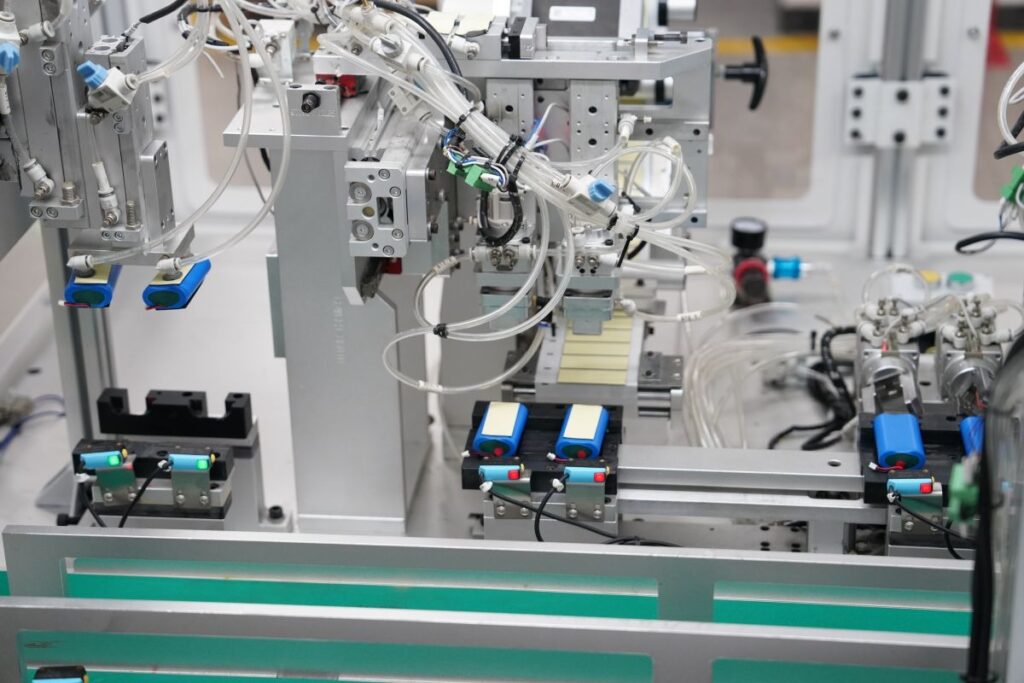
This integration delivers measurable advantages. The number of handling steps also decreases dramatically when freshly molded parts go directly into assembly fixtures without intermediate storage. The reduction in labour costs is due to not having to provide an operator to control logistics between isolated facilities. Production cycles shorten because there is no waiting for shipments to happen between vendors, or for scheduling conflicts to be resolved across various companies. This continuity is important for engineers designing products that require very close tolerances for the fit between assembled parts; parts fit before post-mold shrinkage variations or storage warpage can cause fit issues.
Consider a multi-component housing that traditionally required molding at one facility, pad printing at another, and final assembly at a third location. By bringing all of these operations under one roof, it is possible to shorten the production cycle to days in a three-week process and to reduce the percentage of reject rate at the assembly because the component does not go out of controlled conditions between the operations.
Key Techniques for Efficient Assembly Integration
Several proven techniques make this consolidation practical. Overmolding is a method to joint multiple materials in a single molding process to form soft-touch grips or sealed interfaces without the need for additional adhesives or fastenings. Insert molding is a process that incorporates metal inserts like threaded inserts, electrical contacts and other structural reinforcements directly into the molding process without a press fit or ultrasonic insertion after the molding operation. Automated assembly lines are placed directly downstream from the molding cells where a robot pick-and-place system mates molded components with purchased parts with repeatable force and alignment to produce exact components. The approaches lower total parts, trim down bills of material and condense a complex series of suppliers into a streamlined manufacturing process.
Ensuring Quality Control in Full-Service Production
Quality assurance for a full-service plastic injection molding business is not a “one and done” exercise applied after parts are made, but is applied throughout the production process. This built in method detects deviation at an early stage when a correction is the least expensive, and before the bad parts affect the downstream assembly process. This proactive approach avoids the expensive situation of identifying quality issues after assembled products arrive at end-of-line testing for OEMs whose products must comply with regulatory requirements or operate under challenging conditions.
Full-service companies apply multiple layers of inspection processes starting from the time of mold qualification and continuing throughout the production runs. First-article inspections confirm that the dimensions are correct, while volume production is not yet underway, and confirm them against CAD dimensions. While molding, cavity pressure sensors and thermometers ensure the accurate reproduction within process windows. At speeds manual inspection cannot match, automated vision systems can inspect critical features between molding and assembly, such as gate vestige height, presence of flash, surface defects. In assembly stations, joinings are checked for correct torque, leakage and function to ensure the joined parts are performing as intended. The multi-layered structure ensures that there is no single failure that does not get “caught” through the production process.
When product designers need to specify complex geometries and/or tight assembly tolerances, they benefit from immediate quality feedback loops offered by a full-service provider. If an inspection station alerts an engineer to a shift towards out-of-tolerance conditions, process engineers can modify the same facility and the same shift, without waiting for vendor communication cycles or the wait for replacement parts from distant vendors.
Advanced Technologies for Quality Assurance
Modern full-service operations leverage real-time monitoring systems that capture data from every machine cycle and correlate it with part quality outcomes. Statistical process control charts monitor critical dimensions over thousands of shots, before parts go out of spec. Connecting sensors to molding presses, robots, and assembly equipment, creating centralized dashboards to track overall equipment effectiveness, and intervening proactively with the help of engineers. Historical process data is used by machine learning algorithms to forecast maintenance requirements and optimal parameters for new materials and/or geometries. These technologies shift the nature of quality control from being a reactive gatekeeper to a predictive process that ensures the quality of the thousands of units produced over one or more production campaigns are consistent and any variation (between the first and the thousandth) is minimal.
Steps to Implement Full-Service Plastic Injection Molding Solutions
Making the shift to a full-service plastic injection molding model involves intentional planning, but when done in logical stages, it can be handled. Structured design reduces the common pitfalls and allows OEMs and product designers to experience the efficiency gains quicker.
First, make sure to fully understand the project needs. Capture all the elements in your assembly, record any parts you have that are sourced from more than one vendor and document handoff points, where delays or quality issues usually occur. This audit identifies opportunities for consolidation: components that can be consolidated during overmoulding; inserts that can be encapsulated when the moulding is made; or sub-assemblies that can be consolidated for a single provider to handle end-to-end.
Then choose a manufacturing partner that is a good match for your requirements. Assess candidates by engineering depth, equipment range, certifications and experience of working with your industry’s regulatory environment. WEILAN MFG can help illustrate the end-to-end workflow that can make consolidation effective because it provides molding, along with downstream assembly capabilities. Ask to see case studies where they’ve successfully managed multi-step production, and ensure they have solid process control measures and not just final inspection.
After pairing up, redesign together, keeping in mind manufacturability. Utilize the provider’s engineering team to maximize optimisation of part geometry for mouldability, minimising additional components where not required using multi-material solutions, and the design of assembly interfaces which benefit from the precision that can be achieved when moulding and assembly are performed in sequence. This co-design phase can result in the most significant cost savings by getting rid of complexity before it even starts to be tooling cost.
Finally, incorporate assembly procedures into the production plan as a part of the initial plan. Identify quality points throughout the molding to assembly process, set acceptance criteria for every process, and set up feedbacks to make process adjustments in real-time. Pilot runs will confirm the whole process before it goes into full production, guaranteeing efficient assembly and quality control from the initial production run onward.
Turning Integrated Manufacturing into Competitive Advantage
The full-service plastic injection molding process is a game-changer in the manufacturing paradigm of OEMs, bringing together all the steps of product realization under a single roof. Combining mold design, material knowledge, precision molding and assembly within a single facility eliminates inefficiencies in the handoff process that add to both time and expense. From cavity pressure monitoring to automated vision inspection of parts, embedded quality systems increase part quality without the need to sort at end-of-line to identify issues, and techniques like overmolding and insert molding, minimize parts and eliminate secondary operations.
For product designers and engineers, this model delivers tangible advantages: fewer suppliers to manage, faster design iterations, tighter dimensional control on mating interfaces, and predictable production outcomes from prototype through volume manufacturing. The competitive landscape rewards organizations that can bring reliable products to market quickly and cost-effectively. Adopting an integrated full-service manufacturing approach positions OEMs to achieve exactly that. Evaluate your current assembly workflows, identify where fragmentation creates waste, and engage a capable full-service partner to transform those inefficiencies into measurable competitive advantage.




A little discussion goes a long way.
Ask a question, share your experience, or help someone find an answer.
There is room for your perspective.
No discussions match this view yet.
Your voice belongs here
Keep it useful. Keep it kind.