
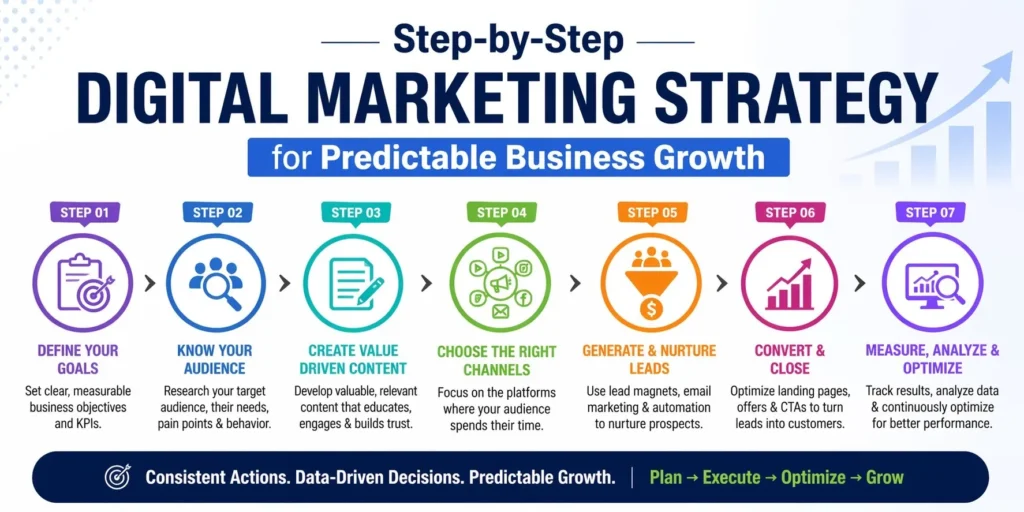
Most businesses want growth. But wanting growth and having a clear path to it are two very different things. Without a step-by-step digital marketing strategy, growth feels random and unpredictable.
The word predictable is important here. Predictable growth means you know what actions will produce what results. It means marketing that works consistently, not just sometimes.
Building this kind of system takes time and planning. But once it is set up, it becomes a reliable engine for your business. Every step feeds the next, and results compound over time.
In today’s market, many businesses struggle to decide what to do next in digital marketing. Muhammad Eassa is a Digital Marketing Consultant helping businesses build the right strategy, drive predictable growth, and integrate AI to improve efficiency and scale.
Understanding the right approach can make the difference between growth and wasted resources. That is what this article is about.
This step-by-step guide is for business owners and marketers who want a clear, practical marketing framework they can start using right away.
It covers everything from defining your audience to measuring your results at each stage of growth.
Why Most Marketing Plans Fail
- They Are Not Actually Plans
- They Are Not Built Around the Customer
- They Have No Tracking or Feedback Loop
- Step 1: Define Your Business Goals
- Step 2: Build a Clear Customer Profile
- Step 3: Audit What You Already Have
- Step 4: Map the Customer Journey
- Step 5: Choose Your Primary Marketing Channels
- Step 6: Create a Content Plan
- Step 7: Set Up Your Tracking and Analytics
- Step 8: Execute With Consistency
- Step 9: Review and Optimize Every Month
- Step 10: Add AI and Automation
- Monthly Lead Volume
- Customer Acquisition Cost
- Return on Marketing Investment
They Are Not Actually Plans
Many businesses call a list of marketing tasks a plan. But a real plan includes goals, timelines, responsibilities, and clear ways to measure success. Without these elements, you just have a wish list.
They Are Not Built Around the Customer
Many marketing plans are built around what the business wants to say, not what the customer needs to hear. Customer first thinking is the foundation of marketing that actually works.
They Have No Tracking or Feedback Loop
Without tracking, you can’t improve. A strategy that doesn’t include regular review points is a strategy that will stay broken even when something is clearly not working.
The Step-by-Step Framework
Step 1: Define Your Business Goals
Write down exactly what you want to achieve in the next three, six, and twelve months. Be as specific as possible. Numbers help. Grow revenue by thirty percent in six months is a real goal. Get more customers is not.
Make sure your marketing goals tie directly to your business goals. Marketing is a tool, not the end goal.
Step 2: Build a Clear Customer Profile
Describe your ideal customer in detail. Who are they? What do they do? What problems do they face? What do they search for online? What platforms do they use? What language do they speak?
The more specific your customer profile, the more targeted and effective your marketing will be.
Step 3: Audit What You Already Have
Look at your current website, social media, content, and any existing campaigns. What is working? What is not? What is missing? This audit gives you a starting point and prevents you from rebuilding things that are already fine.
Step 4: Map the Customer Journey
How does someone go from not knowing about your business to becoming a paying customer? Map each step of that journey: awareness, consideration, decision, and retention.
Then think about what marketing actions support each step. This turns your strategy into a connected system rather than isolated campaigns.
Step 5: Choose Your Primary Marketing Channels
Based on your audience and your goals, select two or three marketing channels to focus on first. Do not try to be everywhere at once.
Common starting choices are SEO and content for long-term organic growth, paid search or social ads for fast lead generation, or social media and email for relationship building.
Step 6: Create a Content Plan
Content is the fuel for almost every digital marketing channel. Plan what content you will create, in what format, on which platform, and how often.
A good content plan is realistic. It considers who will create the content and how much time they have. Better to publish one high-quality piece per week than five rushed and mediocre ones.
Step 7: Set Up Your Tracking and Analytics
Before you start executing anything, set up proper tracking. Connect your website to Google Analytics. Set up conversion tracking on your ads. Install the Facebook Pixel if you are running Meta ads.
Without tracking, you are flying blind. Tracking is what allows you to learn from your results and improve over time.
Step 8: Execute With Consistency
Now it is time to do the work. Publish the content. Run the campaigns. Send the emails. Post on social media.
The key here is consistency. Most marketing strategies fail not because the strategy was wrong but because execution was inconsistent. Show up every week, every month, without stopping.
Step 9: Review and Optimize Every Month
At the end of every month, look at your numbers. What content got the most engagement? Which ads produced the most leads? Where are people dropping off in your funnel?
Use these insights to improve your strategy. Stop doing what is not working. Do more of what is.
Step 10: Add AI and Automation
Once your core strategy is working, start bringing in AI tools to make it more efficient. AI can help you create content faster, optimize ads automatically, send personalized emails at scale, and analyze data more quickly.
Muhammad Eassa helps his clients integrate AI at this stage to multiply the results of a working strategy. This is how predictable growth becomes scalable growth.
Measuring Predictable Growth
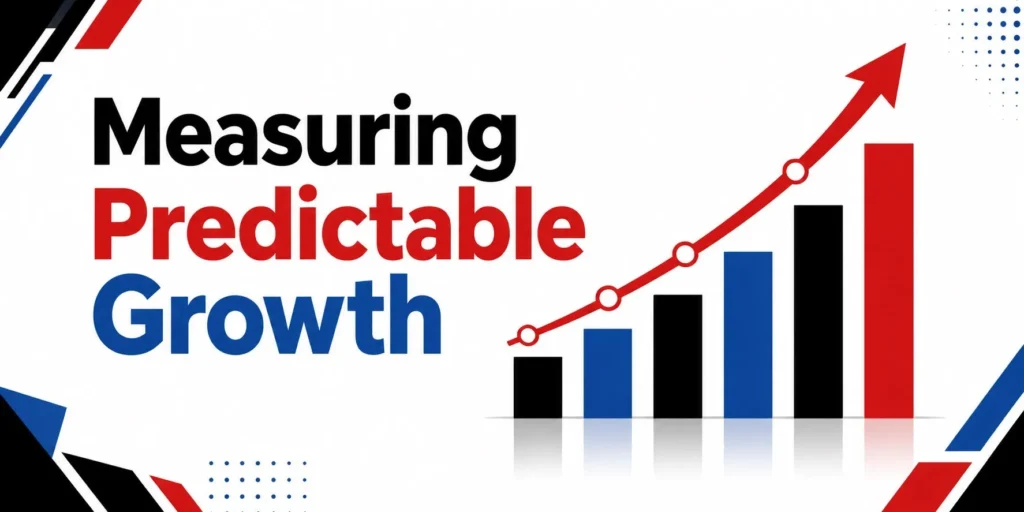
Monthly Lead Volume
Track how many new leads you get each month. Is the number growing? Staying the same? Declining? This is one of the clearest indicators of how your strategy is performing.
Customer Acquisition Cost
Divide your total marketing spend by the number of new customers you acquired. This tells you how much it costs to get one customer. Over time, a good strategy will lower this number while increasing the customer quality.
Return on Marketing Investment
Compare what you spent on marketing with the revenue that marketing helped generate. If you are spending more than you are earning from marketing, something needs to change.
Final Thoughts
Predictable business growth through digital marketing is absolutely possible. But it requires a real strategy, consistent execution, and regular measurement.
Growth does not happen by accident. It happens by design. Build your plan, follow the steps, and stay consistent.



A little discussion goes a long way.
Ask a question, share your experience, or help someone find an answer.
There is room for your perspective.
No discussions match this view yet.
Your voice belongs here
Keep it useful. Keep it kind.