
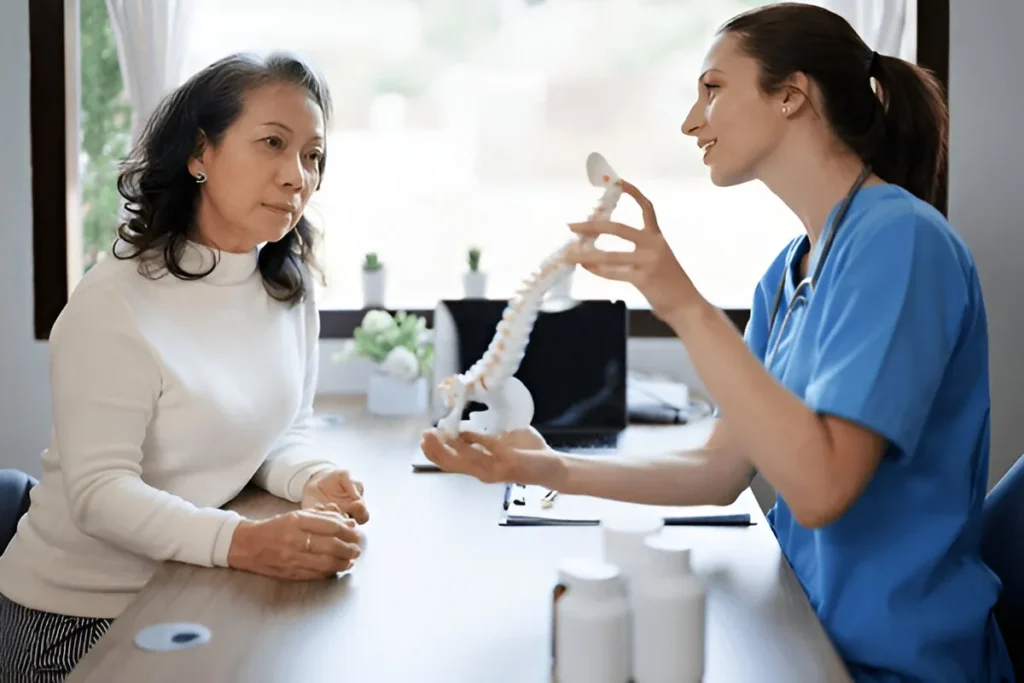
Back pain is nowadays a villain of the modern world; it comes when it is unwelcome, stays longer than necessary, and removes productivity, sleep, and quality of life from millions of individuals. Most of the episodes are short-term and treatable by rest, therapy, or lifestyle change, but other conditions are deeper-rooted and demand additional treatment for chronic low back pain.
Spine fusion surgery is one of the most discussed and yet poorly understood operations for treating chronic low back pain. Whereas it may sound like that, spinal fusion is an old and successful method of stabilizing the spine when some issues cannot solve themselves.
When you have intractable neck or back problems, here is a straightforward explanation of what spine fusion really entails, the conditions under which it is used, and how individuals make a decision of whether it is the correct move or not.
- The Real Workings of Spine Fusion Surgery
- Signs your back pain may need something stronger than rest and heat packs
- The decision of whether fusion is the right next step or not depends on how people choose it
- Recovery: What the patients can expect after spinal fusion surgery as a surgical procedure.
- Where to Turn When You Are Checking Out Your Alternatives for back surgery options
- Final Thoughts on managing chronic low back pain and exploring all treatment options
The Real Workings of Spine Fusion Surgery
The spine fusion surgery is meant to do something very simple: stabilize portions of the spine that are not supposed to be moving the way they are, often in conjunction with a laminectomy if necessary. Fusion is used in situations where movement between two vertebrae is painful, risky, or unsound enough to be dangerous, and therefore, it fuses the two bones together using a graft, creating a solid bone.
Imagine that it is a crooked table leg that you are fixing. Take out the crookedness, and all other parts start performing better, which may relieve back pain.
Most likely to be recommended in the case of a patient who has herniated discs are spinal fusion surgery, which is one of the treatment options available to address degenerative conditions.
- Instability of the spine caused by such conditions as spondylolisthesis.
- Extreme degenerative disc disease having affected nerve functioning.
- Repeated disc herniation that has not responded to the conservative treatments.
- The pressing of nerves to result in chronic pain, numbness, or weakness.
- Progressing Para lumbar disorders such as scoliosis.
- Stability instability, fractures, or structural impairment, which is related to trauma.
This is not a first-line therapy. Indeed, most spine experts highlight months of conservative treatment, physical therapy, changes in lifestyle, injections, rest, etc. prior to surgery.
Signs your back pain may need something stronger than rest and heat packs
Many people live with back pain for years, partly because they believe surgery should be a last resort and partly because pain can flare up without warning, like a sudden twinge when you bend to tie your shoe. Still, a few red flags should make you stop and call a spine specialist for a closer look, like sharp pain that shoots down your leg when you bend.
The following might require a more detailed assessment in case of experiencing chronic low back pain:
Pain after more than 12 weeks of treatment may indicate spinal instability.
- Pain that radiates along the arm or the leg.
- Weakness, numbness, or tingling of the muscles.
- Deteriorating balance/coordination.
- Back pain with bowel/bladder alterations (emerging medical emergency)
- Improving pain, which is better when sitting or bending forward.
- Sleep disturbance or impaired functioning.
Such symptoms usually indicate a structural issue, something that will not improve until the impetus or instability has been fixed.
The decision of whether fusion is the right next step or not depends on how people choose it
Making a decision to have spine surgery is not a light matter, and the majority of patients do not reach the decision easily. Others understand that they have tried everything conservative, including various nonsurgical treatments. The others find that the pain is beginning to limit independence, movement or work. In addition, the neurological symptoms start to worsen in most instances when nerve symptoms such as numbness or weakness develop.
The issue of modern imaging (usually an MRI) is to help the specialists see precisely where the degenerative conditions are originating. Fusion is usually only suggested in instances where the imaging has a clear match to the symptoms of the patient and the condition is also known to respond well to stabilization, often discussed with an orthopedic expert.
Recovery: What the patients can expect after spinal fusion surgery as a surgical procedure.
In addition, there is a benefit from fusion recovery that can lead to significant pain relief. While it could be months before they are completely healed, most:
- Walk on the day of or the day after surgery.
- Return to normal daily life quite quickly
- Suffers slow alleviation of nerve pain.
- Switch to physical therapy in the process of healing.
- Report feeling better in terms of movement and pain.
Prolonged success after spinal fusion surgery is usually determined by abiding by the instructions of the surgeon, sitting straight, being active, and avoiding smoking because nicotine retards the healing of bones.
Where to Turn When You Are Checking Out Your Alternatives for back surgery options
When a conservative treatment has no longer helped you or somebody you know, a consultation with a specialist in the spine will help to shed light over the situation. The success of any surgery is often based on the surgeon who is thoughtful and patient-centered, or in other words, who listens to your symptoms and discusses all care options, not only surgery.
If you are considering for spine fusion surgery please contact to the Treasure Valley region (or even commuting due to medical care), you may reach Kelly Bridges Neurosurgery at 6140 W. Curtisian Avenue, Suite 400, in Boise, Idaho 83704, phone: (208) 327-5600. Dr. Bridges is an experienced communicator with a conservative first philosophy and ability to make patients aware of their disease and make the correct choice on the way.
Final Thoughts on managing chronic low back pain and exploring all treatment options
Chronic back pain can be an overwhelming experience, but one of the things that you have is knowledge about spinal stenosis and its potential to cause pain. The knowledge of when spine fusion surgery is and is not appropriate which may help you to make informed choices and search for ways that can really positively affect everyday life.
You might be at the initial stages of the diagnosis process, or you might be in the process of searching for the answers, but the most important thing is to simply not disregard the persistent symptoms. The proper assessment is the initial step toward the restoration of your life and can help identify if spinal fusion may be necessary.
Back pain is nowadays a villain of the modern world; it comes when it is unwelcome, stays longer than necessary, and removes productivity, sleep, and quality of life from millions of individuals. The majorities of the episodes are short term and can be cured by taking rest, therapy or lifestyle change, however some other illnesses are more in-depth and require further intervention to chronic low back pain.




A little discussion goes a long way.
Ask a question, share your experience, or help someone find an answer.
There is room for your perspective.
No discussions match this view yet.
Your voice belongs here
Keep it useful. Keep it kind.