
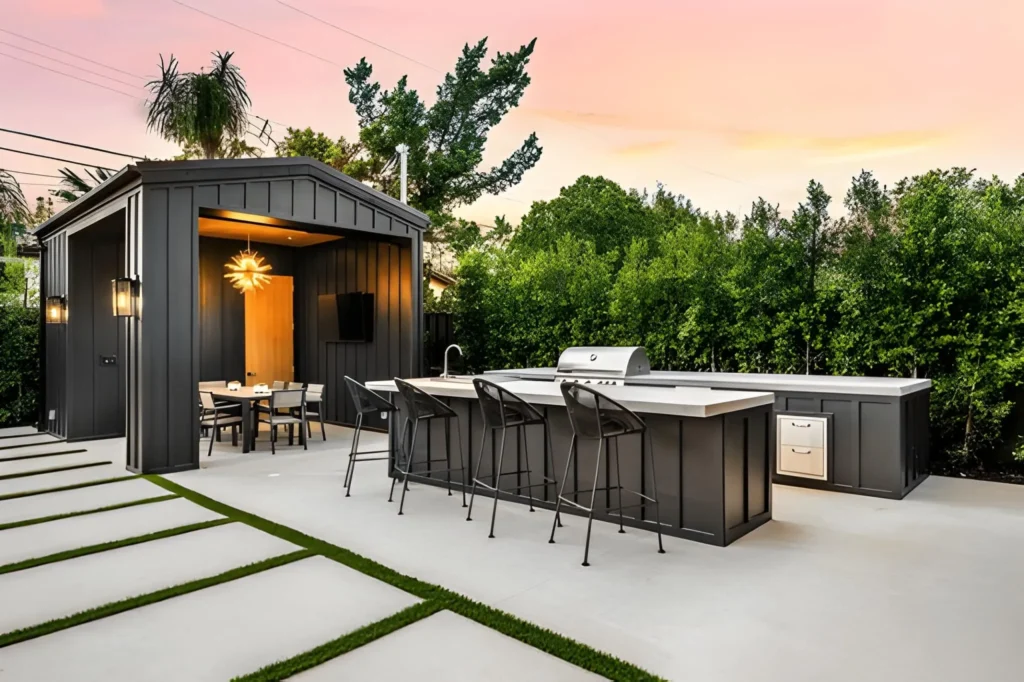
Outdoor kitchens are a growing trend in modern home design, providing an ideal space for entertaining, cooking, and enjoying the outdoors. However, with these open-air kitchen designs comes an important decision: selecting the right materials that can withstand harsh environmental conditions year after year.
Two popular options for outdoor kitchen cabinetry are PVC (polyvinyl chloride) and stainless steel. While PVC may seem like a cost-effective solution at first glance, its susceptibility to deterioration makes it far less reliable than stainless steel, which is unmatched in durability and reliability.
In this blog, we’ll focus on the comparison between PVC deterioration and the durability of stainless steel, highlighting why stainless steel is the superior choice for long-lasting, functional outdoor kitchens.
- 1. PVC Deterioration: The Drawbacks of Plastic Outdoor Cabinets
- Key Causes of PVC Deterioration
- 2. Stainless Steel: Durable and Built for Longevity
- Key Benefits of Stainless Steel Durability
- 3. Maintenance Comparison: Simple vs Recurring Upkeep
- PVC: High Maintenance and Frequent Repairs
- Stainless Steel: Low Maintenance and Longevity
- Winner: Stainless Steel
- 4. Cost Efficiency: Evaluating Long-Term Value
- PVC: Short-Term Savings, Long-Term Costs
- Stainless Steel: A Long-Term Investment
- Winner: Stainless Steel
- 5. Aesthetic Longevity: Maintaining Beauty Through the Years
- PVC: Dull and Fading Over Time
- Stainless Steel: Timeless Style
- Winner: Stainless Steel
- Stainless Steel Outshines PVC in Every Way
- Why Stainless Steel Wins
1. PVC Deterioration: The Drawbacks of Plastic Outdoor Cabinets
PVC is a material that is made of plastic mostly due to low initial cost and light weight of the material. While it may be effective in short-term or less-demand settings, PVC cabinets do not stand the test of time in an out-of-doors kitchen setting.
Key Causes of PVC Deterioration
UV Ray Exposure
PVC is very susceptible to UV radiations that decompose its structure with time.
PVC cabinets will also appear worn and old because of constant sun exposure leading to fading, chalking and discoloration.
The material tends to get brittle and easily cracked with the effect of long exposure which minimizes its usefulness and beauty.
High Temperatures and Heat Damage
Outdoor appliances such as grills, barbecues and fire pits may heat and cause the warping, softening or deformation of PVC.
PVC is not that heat-resistant; it generally can only withstand a range of about 160°F (70°C) of heat before it begins to show signs of damage.
The cabinets become structural and functional once they are warped or deformed.
Moisture and Humidity
While PVC is waterproof, water tends to gather in the seams and joints, which form the breeding grounds of molds or mildews.
The humidity conditions may increase the degradation of PVC, especially in tropical or coastal climates.
Lifespan
PVC cabinets have a normal life span of 5-10 years in the open air settings, or even less in some extreme conditions.
Their vulnerability to fading, cracking and deformation significantly reduces their lifespan as they have to be replaced frequently.
2. Stainless Steel: Durable and Built for Longevity
Stainless steel is meant to withstand the most difficult outdoor conditions. Its high-quality durability, weather resistance, and capacity to retain its structural integrity without any failure throughout decades make it the gold standard of outdoor kitchen cabinetry.
Key Benefits of Stainless Steel Durability
UV and Heat Resistance
UV-Proof: PVC is sensitive to sunlight and this stainless steel is not. Its surface does not lose its polish over the years with exposure to the sun.
Heat Resistance: The stainless steel can withstand high temperatures without warping, bending or losing its strength. It is also perfect in spaces around grills or cooktops, and it is completely stable even at high temperatures.
Weather and Corrosion Resistance
Protects against rust and other corrosions: Marine grade stainless steel (like 316 stainless steel) is resistant to rust and corrosion even in humid and coastal conditions where there is salty air.
Waterproof and Mold-Free: Stainless steel is impervious and does not accumulate or absorb moisture and this excludes the possibility of growing mould or mildew.
Temperature Adaptation: Stainless steel is resistant to cold or hot changes without shrinking or expanding resulting in preservation of its structure throughout the year.
Impact and Scratch Resistance
Stainless steel is very tough and can resist wear and tear like impacts, scratches and other damages which normally arises in use in the kitchen.
It is not cracking or splintering and, therefore, it is a stable material even in high-use conditions.
Lifespan
Stainless steel cabinets have a lifespan of more than 20 years with minimal maintenance thus they are very durable and have better payback.
It is resilient and thus the stainless steel cabinets do not require frequent replacement which saves the time and money of the homeowners in the long run.
3. Maintenance Comparison: Simple vs Recurring Upkeep
Outdoor kitchens are supposed to bring about pleasantries, rather than constant work. The maintenance of the two materials of PVC and stainless steel is different, so stainless steel would be a more convenient and trustworthy choice.
PVC: High Maintenance and Frequent Repairs
Fading and Repainting: PVC cabinets become faded and lose beauty with time and hence they have to be repainted to update their appearance.
Warping and Repairs: PVC cabinets can be warped or cracked; the cabinets might require repairing or replacing sooner than they should.
Mold Issues: PVC seals are able to trap moisture in seams or joints thus mold or mildew will develop and will be hard to clean or treated with chemicals.
Stainless Steel: Low Maintenance and Longevity
Easy Cleaning: This is because stainless steel can be cleaned with soap and water every now and then to eliminate dirt, grease or grime.
No Fading or Repairs: The stainless steel will remain vivid and polished without requiring repaint and refinishing because of its UV-resistant properties.
Mold resistance: Stainless steel is nonporous in nature and this attribute is mold resistant making it unnecessary to treat it as such.
Winner: Stainless Steel
Stainless steel also wastes much time and effort than PVC, in terms of maintenance; it provides a hassle-free outdoor kitchen experience.
4. Cost Efficiency: Evaluating Long-Term Value
While PVC has a cheaper initial price, it is not very durable and thus, it may end up being very costly in the long run. Stainless steel might require a bigger initial capital outlay, but it will provide more cost-efficient solution over time.
PVC: Short-Term Savings, Long-Term Costs
Lower Upfront Cost: PVC is generally cheap to acquire in the first place and hence is appealing to consumers that have low budgets.
Frequent Replacements: PVC cabinets have short life span and therefore, may require replacement after every 5-10 years, which increases the long term costs.
Repainting, Sealing and Repairs: PVC cabinets are expensive to repair, costly to maintain, and require more time thus reducing its economic appeal.
Stainless Steel: A Long-Term Investment
Lifetime Durability: Stainless Steel cabinets have a lifespan of 20 years and beyond, and therefore, will not need any replacement during decades of use.
Low Maintenance Expenses: The strength of stainless steel removes the necessity of repairs or treatment that cannot be done to it as time goes on, and this reduces the costs incurred in the long-term.
Winner: Stainless Steel
For cost-effectiveness over time, stainless steel provides a significantly better return on investment compared to PVC.
5. Aesthetic Longevity: Maintaining Beauty Through the Years
The look of your outdoor kitchen matters just as much as its performance. Stainless steel cabinets maintain their aesthetic appeal far longer than PVC ever could.
PVC: Dull and Fading Over Time
UV Damage: Sunlight causes PVC cabinets to become chalky, faded, and discolored, detracting from the kitchen’s overall look.
Synthetic Appearance: Even when new, PVC’s plastic look isn’t as elegant or luxurious compared to stainless steel.
Stainless Steel: Timeless Style
Fade-Free Finish: Stainless steel retains its mirror-like or brushed finish for its entire lifespan, maintaining a modern, high-end look.
Design Versatility: It seamlessly complements other premium materials like stone, granite, or wood accents, making it a versatile choice for any outdoor kitchen design.
Winner: Stainless Steel
Stainless steel offers unmatched beauty and sophistication that lasts for decades, far exceeding PVC’s aesthetic lifespan.
Stainless Steel Outshines PVC in Every Way
When designing an outdoor kitchen, selecting cabinetry materials that resist environmental challenges and stand strong for years is crucial. While PVC may seem like a viable option due to its lower cost, its susceptibility to deterioration makes it far less reliable than stainless steel.
Why Stainless Steel Wins
1. Durability: Stainless steel withstands UV exposure, heat, moisture, and impact without cracking, warping, or fading.
2. Low Maintenance: Simple cleaning and no painting or repairs make stainless steel a hassle-free option.
3. Longevity: Stainless steel lasts over 20 years with minimal upkeep, dramatically outlasting PVC’s 5–10 year lifespan.
4. Aesthetic Excellence: Its sleek, modern design stays beautiful for decades.
5. Cost Efficiency: While initially expensive, its longevity saves homeowners money over time.




A little discussion goes a long way.
Ask a question, share your experience, or help someone find an answer.
There is room for your perspective.
No discussions match this view yet.
Your voice belongs here
Keep it useful. Keep it kind.