
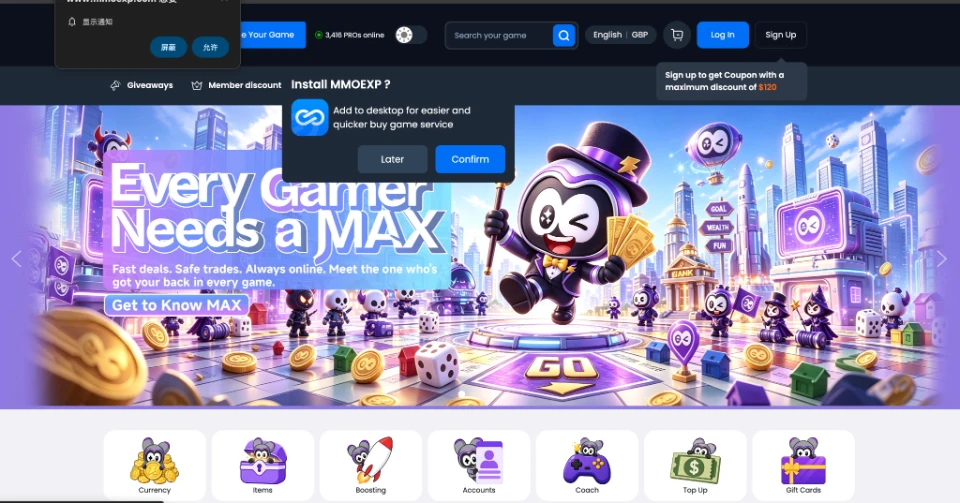
Many players who search for technology guides eventually run into a more specific question: how do you handle in-game currency, rare items, or a ready-made account without falling for scams or wasting time? This is a common gap for readers who are comfortable with software and digital tools but have never actually traded virtual goods, and who want a clear, non-technical explanation before they try it themselves.
Most articles on this topic either focus purely on game mechanics or turn into blunt sales pages, leaving out the practical decision-making steps a careful reader actually needs. This guide takes a more structured approach, walking through why players look for outside help in the first place, what risks exist, and how a reader can evaluate a service like Buy game currency, items, accounts before committing any money or account details.
- Why Players Look Outside the Game for Progress
- Common Risks When Trading Virtual Goods Online
- 1. Unverified or Anonymous Sellers
- 2. Accounts With Unclear Origins
- 3. Payment Methods With No Protection
- 4. Delivery Methods That Risk the Account
- How to Evaluate a Currency or Account Marketplace
- Practical Steps Before Making a Purchase
- Confirm the Exact Order Details
- Check for Order Tracking and Support Access
- Limit What Account Access Is Shared
- Keep Records of the Transaction
- How Risk Levels Differ Across Types of Games
- Weighing the Trade-Off Between Time and Risk
- Building a Safer Habit Around Virtual Goods Trading
Why Players Look Outside the Game for Progress
Many multiplayer games and RPGs have such long grind cycles that you need dozens of hours to earn your currency, crafting materials, or level up to high numbers. That grind becomes a chore with limited free time, work, and school.
This is a disadvantage in competitive economies, where it would be difficult for a late player to catch up with those who joined months or even years before. Instead of abandoning the game altogether, many gamers search for a way to make up for the time they’ve spent without it, but without losing any progress they’ve made.
Common Risks When Trading Virtual Goods Online
As there is a market for currency and accounts, not all the sellers in that market are the same. Knowing the specific failure points reduces a reader’s need for guesswork when examining any service – rather, it gives them a checklist to work through.
1. Unverified or Anonymous Sellers
Many trades occur due to forum posts, social media messages, or marketplace listings that have no responsibility when things go wrong. If the seller goes under after the payment is made, the buyer has no way to recoup the funds if it does not have a business name, support channel, or transaction record.
2. Accounts With Unclear Origins
Several accounts were sold via hacked logins, stolen payment cards, or by breaking a game’s terms of service. The buyer may be permanently banned later, even if he/she did not know about the account’s past when they purchased it.
3. Payment Methods With No Protection
When a deal is made without a step of escrow, there is no way to argue over a failed deal, which can be the case when using a prepaid gift card, direct bank transfer, or cryptocurrency. After the money is deposited, the buyer has no choice but to rely on the seller’s conformity.
4. Delivery Methods That Risk the Account
Some methods of transferring currencies involve temporarily sharing of logins, which could lead to the account being locked, the security settings being changed or to something being lost during the transfer, even if the seller is being truthful.
How to Evaluate a Currency or Account Marketplace
The better way to do it is to make this decision just like any other online purchase instead of taking the first listing that pops up from a search or group chat.
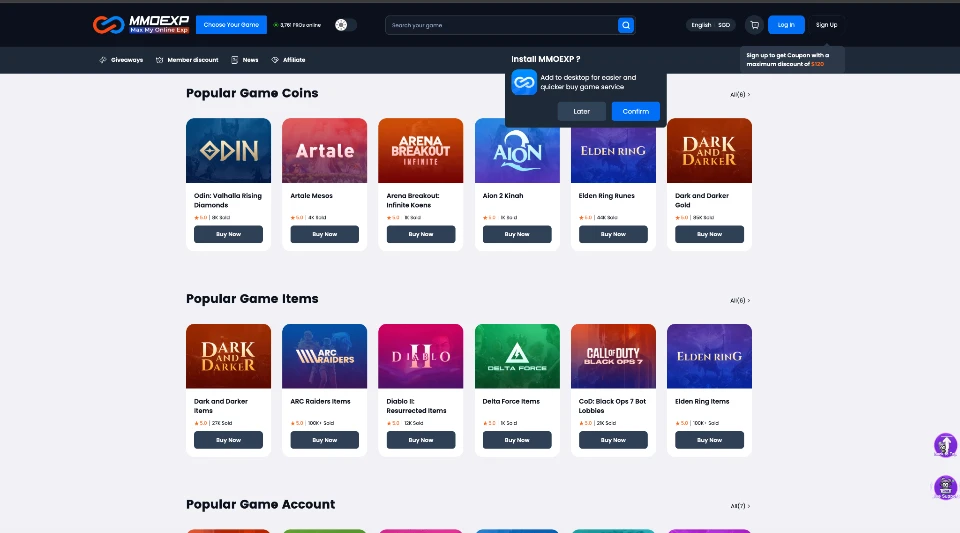
A reliable marketplace is usually a registered service with a readily available support system, published policies, and history that can be confirmed independently rather than on faith. Sites dedicated to this type of trading, including Buy game currency, items, accounts, typically have an order tracking system and established delivery time, providing a reference for a buyer in case a transaction fails as planned.
The delivery method, the refund policy, and the communication channels listed by a platform before you place an order are more valuable indicators than price. If the price is too low, it is one of the most frequent signs of a scam listing.
Practical Steps Before Making a Purchase
After screening a possible source, a brief verification procedure eliminates most of the risks listed above. The checks listed below are valid for any platform or seller.
Confirm the Exact Order Details
Before paying, double-check the game, server or region, item name, currency amount, and any character-specific requirements. One of the most common reasons for dispute is the receipt of an order that does not match that of the other side, for example, sending currency to the wrong server; having them in writing provides a reference point for both sides.
Check for Order Tracking and Support Access
A platform that provides order tracking or someone who responds to payment, rather than after payment, is more accountable than a platform that doesn’t communicate until after payment. Running a pre-purchase test with a simple question can provide a lot of insight into the handling of a dispute.
Limit What Account Access Is Shared
These delivery options that call for the entire account information must be taken with a grain of skepticism, and if someone asks to turn off the two-factor authentication, that is a sign of trouble, not a regular process. If it is necessary to use account-based delivery, change the password right after using it, which will minimize the exposure window.
Keep Records of the Transaction
When the order is placed, it’s a good idea to save the order confirmation, agreed price, and any chat or e-mail communication so that an e-mail question or dispute later makes it easier to find. This is a very quick process and is something that most first time customers forget to do.
While these steps don’t make the virtual goods trading process risk-free, they begin to move the needle in the buyer’s direction.
How Risk Levels Differ Across Types of Games
The risk profile is the same everywhere except the actual risk level varies with each game. Persistent MMORPGs: In these, the currency and items would be linked with long-term character progression and a banned account can wipe out months of investment, makes it important to rely on the seller more in this type of game.
With mobile live-service games, that may have a briefer content cycle, the stakes are typically lower but the number of little transactions can make it difficult to realize the pattern of poor service until several purchases are made. Competitive titles that have ranked accounts fall somewhere in the middle because it’s not just about the numbers being bought but what’s behind them too, such as account history and reputation. Knowing the type of game helps the reader assess what verification is warranted for a game and how much.
Weighing the Trade-Off Between Time and Risk
Whether to purchase currency or an account is a matter of risk versus time spent, and you will always have to consider the risk of someone else providing you with currency you don’t want to pay them for. If it is a casual player that’s willing to pay a little to avoid a repetitive grind, that could be a fair trade. A competitive player or a player playing for a long term will see the security and permanency of the account as the most important rather than the convenience.
There is no right or wrong answer for any player; but the decision is made easier if you understand the risk in specific terms, rather than in general. If you have someone in your life who is familiar with a legitimate transaction, they are not as likely to be taken aback by a bad one.
Building a Safer Habit Around Virtual Goods Trading
The bottom line is that the transaction of currency and accounts can be safe or unsafe, depending upon the seller’s openness, the method used to pay, and the buyer’s attention to verifying information before making a purchase. If you treat these purchases as you would any other online purchase, instead of just a favor from a stranger, you’ll eliminate most of the unnecessary risk.
Those who use a similar structured assessment of virtual goods trading are unlikely to find themselves in the headlines of gaming forums for repeat scams and account loss, and will still reap the practical benefits of reduced time spent on repetitive tasks. It’s a habit that will serve you well beyond any single purchase and it’s simple, just look before you pay.




A little discussion goes a long way.
Ask a question, share your experience, or help someone find an answer.
There is room for your perspective.
No discussions match this view yet.
Your voice belongs here
Keep it useful. Keep it kind.