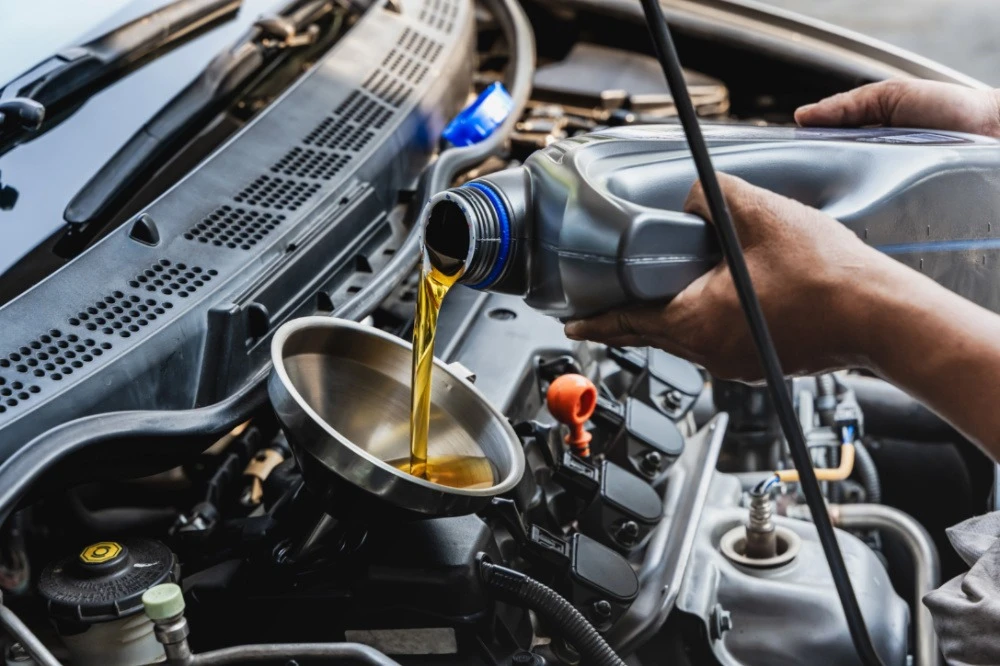
Engine oil is often called the lifeblood of a car engine – and in Dubai, that analogy is more literal than anywhere else. The UAE’s extreme heat, dusty road conditions, and high-density stop-and-go traffic create a uniquely demanding environment for engine oil.
Yet the majority of drivers in Dubai still follow the oil change intervals printed in their owner’s manuals – intervals that were developed and tested in European or North American conditions, often at ambient temperatures that Dubai does not see even in January.
The result is that many vehicles in the UAE are running on degraded oil for thousands of kilometres longer than they should be, accelerating engine wear in ways that only become apparent years down the line.
This complete guide for 2026 breaks down exactly what Dubai drivers need to know: the correct intervals, the right oil grades, the warning signs of overdue oil, and where to get it done properly.
- The Best in Each Category
- Why Dubai Demands a Completely Different Oil Change Schedule
- The Heat Factor
- The Traffic Factor
- The Dust Factor
- Recommended Oil Change Intervals for Dubai Drivers 2026
- Choosing the Right Engine Oil Grade for the UAE
- SAE 5W-40 – The Standard Choice for Most Dubai Vehicles
- SAE 5W-50 – For Performance, Turbocharged, and Track Use
- Manufacturer-Specific Approvals – Do Not Ignore Them
- What Happens When You Skip Oil Changes in Dubai
- Stage 1 – Sludge Formation (5,000–8,000 km overdue)
- Stage 2 – Accelerated Wear (8,000–15,000 km overdue)
- Stage 3 – Component Failure (severely overdue)
- How to Check If Your Oil Needs Changing Right Now
- Car Oil Change Pricing in Dubai 2026 (AED)
- FAQs
- How often should I change my oil in Dubai?
- What is the best engine oil for Dubai’s heat?
- Can I use 5W-30 oil in Dubai?
- Is it worth paying more for full synthetic oil in the UAE?
- My car has 150,000 km on it – should I still use full synthetic?
- What is the cheapest responsible oil change option in Dubai?
The Best in Each Category
Best Oil Type for Dubai: Full synthetic – highest thermal stability, best oxidation resistance above 40°C ambient temperature.
Best Interval for Most Petrol Cars: Every 7,500–10,000 km with full synthetic, or every 3–4 months – whichever comes first.
Best Interval for Diesel Cars in Dubai: Every 7,500 km – diesel engines in UAE heat accumulate soot and acids faster.
Best Oil Grade for Performance/Turbo Engines: SAE 5W-50 full synthetic – superior shear stability at sustained high temperatures.
Best Value Service: Independent garage Al Quoz – correct grade oil, full filter change, up to 40% less than dealership pricing.
Why Dubai Demands a Completely Different Oil Change Schedule
To understand why global oil change recommendations do not apply in the UAE, it helps to understand what engine oil actually does and how Dubai’s conditions affect each of those functions.
Engine oil serves four primary roles: lubrication of metal surfaces, cooling of engine components that coolant cannot reach, cleaning by suspending and carrying contaminants to the filter, and protection against corrosion and oxidation. In a temperate climate, a quality full synthetic oil can perform all four functions effectively for 15,000 km or more. In Dubai, each of these functions is compromised faster.
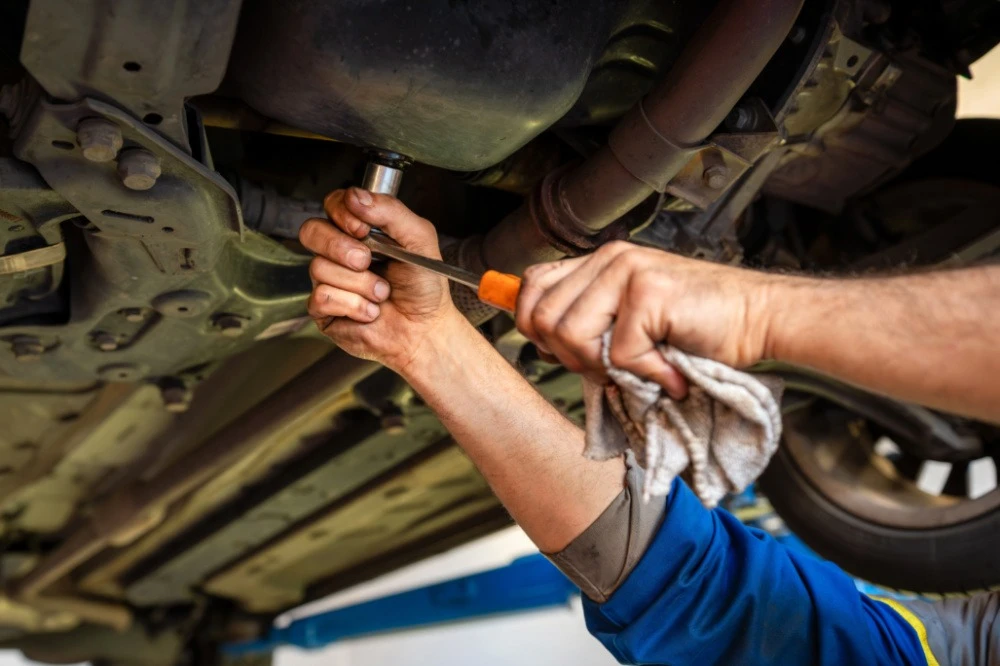
The Heat Factor
Ambient temperatures in Dubai reach 45–48°C in summer, and under-bonnet temperatures in a running engine can exceed 120°C even in normal driving. At these temperatures, oil oxidises faster – a chemical process that thickens the oil, reduces its lubricating ability, and causes it to form varnish and sludge deposits on internal engine surfaces. Full synthetic oil is significantly more resistant to oxidation than conventional or semi-synthetic oil, which is why it is the only rational choice for UAE conditions.
The Traffic Factor
Dubai’s road network mixes long high-speed highway runs on Sheikh Zayed Road with dense stop-and-go traffic around Business Bay, Downtown, and the Mall of the Emirates interchange. Frequent short trips and stop-start driving are particularly hard on engine oil because the engine never fully reaches operating temperature, causing fuel and moisture to contaminate the oil more quickly. Many Dubai residents make multiple short journeys per day – supermarket runs, school drop-offs, short office commutes – and this pattern degrades oil faster than the mileage counter alone suggests.
The Dust Factor
Desert dust particles are extremely fine and abrasive. While a functioning air filter catches the majority of airborne contaminants, some fine particulate matter still enters the engine and accumulates in the oil over time. This is especially relevant for vehicles that spend time on unpaved surfaces, construction zone roads, or areas near desert margins. Dusty conditions effectively shorten the useful life of engine oil regardless of the mileage covered.
Recommended Oil Change Intervals for Dubai Drivers 2026
The following intervals are based on UAE driving conditions and represent what experienced mechanics in Dubai’s Al Quoz workshops recommend in practice – not what the owner’s manual says for European markets.
- Full synthetic oil, petrol engine: every 7,500–10,000 km or 3–4 months – check condition at 7,500 km in summer months
- Full synthetic oil, turbocharged engine: every 7,000–8,000 km – turbo heat cycles are harder on oil
- Semi-synthetic oil: every 6,000–7,500 km or 3 months maximum
- Conventional mineral oil: every 4,000–5,000 km or 2–3 months – not recommended for Dubai conditions
- Diesel engine (any oil type): every 7,000–7,500 km – soot accumulation is faster in UAE heat
- High-mileage vehicles (150,000 km+): reduce interval by 15–20% regardless of oil type
- Vehicles used primarily for short trips under 5 km: consider time-based interval of every 2–3 months regardless of mileage
The golden rule: use whichever threshold – distance or time – arrives first. A car that has been sitting for four months has degraded oil even if it has only driven 2,000 km.
Choosing the Right Engine Oil Grade for the UAE
Oil viscosity is expressed as two numbers – for example, 5W-40. The first number (5W) indicates the oil’s flow characteristics at cold start temperatures (the W stands for winter). The second number (40) indicates viscosity at operating temperature. For Dubai, the second number matters most.
SAE 5W-40 – The Standard Choice for Most Dubai Vehicles
5W-40 full synthetic is the most widely recommended oil grade for passenger vehicles in the UAE. It provides excellent high-temperature stability, good cold-start protection (relevant for air-conditioned parking environments where engines can start cold), and is approved by the majority of European and Japanese manufacturers. If your owner’s manual recommends 5W-30 or 5W-40 and you are driving in Dubai, 5W-40 is the safer choice for high ambient temperatures.
SAE 5W-50 – For Performance, Turbocharged, and Track Use
Vehicles with high-output engines, turbochargers, or those driven hard in UAE summer conditions benefit from 5W-50. The higher viscosity at operating temperature provides better film strength under sustained load. BMW M-Sport models, Porsche engines, AMG vehicles, and any turbocharged engine used regularly on UAE highways are good candidates for 5W-50 specification.
Manufacturer-Specific Approvals – Do Not Ignore Them
BMW requires oil carrying the LL-01 or LL-04 approval. Volkswagen Group vehicles specify VW 502.00, 504.00, or 507.00. Mercedes-Benz requires MB 229.3 or 229.5 approval. Porsche specifies Porsche A40. Using oil that does not carry the correct manufacturer approval – even if the viscosity grade matches – can cause timing chain issues, turbo failures, and warranty complications. Always check both the viscosity grade and the approval codes when selecting oil for a European vehicle.
What Happens When You Skip Oil Changes in Dubai
The consequences of overdue oil changes in Dubai develop faster than in cooler climates and follow a predictable progression.
Stage 1 – Sludge Formation (5,000–8,000 km overdue)
Oxidised oil begins forming thick, tar-like deposits on internal engine surfaces – particularly in oil passages, around the variable valve timing components, and under the valve cover. These deposits restrict oil flow to critical components, causing localised overheating and increased wear on cam lobes, lifters, and timing chain guides.
Stage 2 – Accelerated Wear (8,000–15,000 km overdue)
With reduced oil flow and degraded lubricating properties, metal-to-metal contact increases throughout the engine. Bearings show accelerated wear. Cylinder walls develop micro-scoring. Turbocharger bearings – which depend entirely on clean, pressurised oil – begin to fail. At this stage, a complete oil flush and change can partially reverse the damage, but wear is already accumulating.
Stage 3 – Component Failure (severely overdue)
Timing chain stretch and tensioner failure are the most common catastrophic outcomes of neglected oil changes in Dubai. On affected engines – particularly BMW N47 and N57 diesels, and various turbocharged petrols – timing chain failure results in engine damage that can cost AED 8,000–25,000 to repair. Turbocharger seizure is the other common failure point, with replacement costs of AED 3,000–9,000 depending on the vehicle.
How to Check If Your Oil Needs Changing Right Now
- Pull the dipstick when the engine is cold. Fresh oil is amber and translucent. Dark brown oil is used but may still be serviceable. Black, gritty, or thick oil needs changing immediately.
- Check the level: below the minimum mark means either consumption or a leak – top up and investigate.
- Smell the oil on the dipstick: a sharp, burnt smell indicates significant oxidation and overdue service.
- Check the mileage since last change and the date – if either threshold has passed, book a service.
- Listen for engine ticking on cold start: this is often the first audible sign of oil starvation to the valve train.
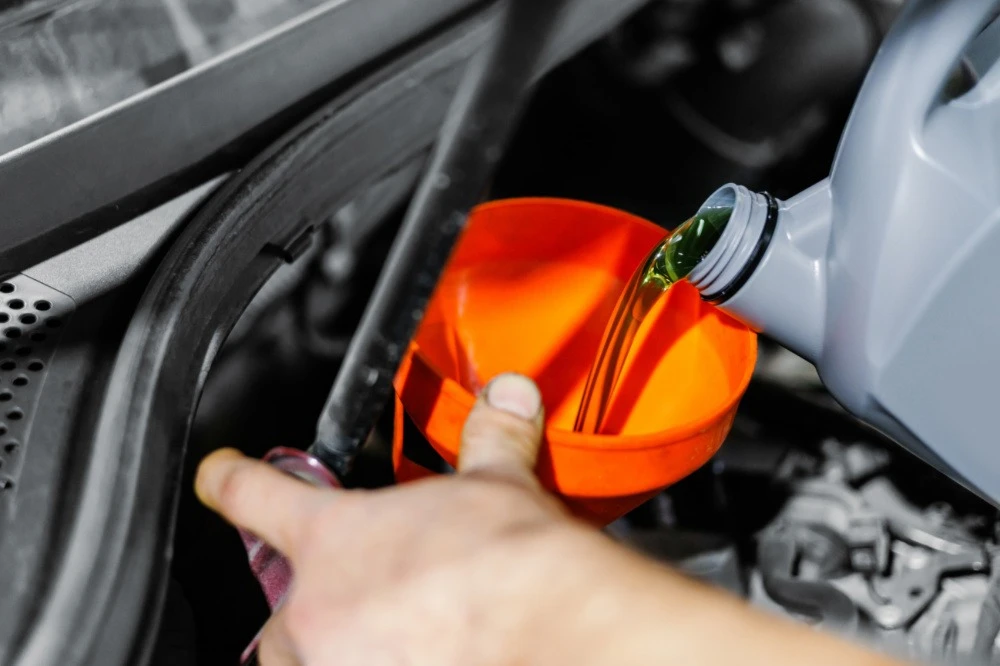
Car Oil Change Pricing in Dubai 2026 (AED)
- Conventional oil change (not recommended for Dubai): 80–150
- Semi-synthetic oil change: 150–250
- Full synthetic oil change, standard vehicles: 180–320 at independent garage / 350–600 at dealership
- Full synthetic + manufacturer-approved oil (BMW LL-01, MB 229.5 etc.): 250–420 independent / 500–900 dealership
- Oil change + filter + full vehicle inspection: 200–380 independent / 400–700 dealership
- Timing chain replacement (consequence of neglect): 5,000–18,000 depending on engine
For a professional car oil change in Dubai with the correct manufacturer-approved oil for your specific vehicle, Golden Horse in Al Quoz provides same-day service with full OEM-grade oils, filter replacement, and a comprehensive vehicle check – at significantly lower cost than authorised dealerships.
FAQs
How often should I change my oil in Dubai?
For full synthetic oil in Dubai, every 7,500–10,000 km or every 3–4 months – whichever comes first. During summer months, check the oil condition at 7,500 km and change if it looks dark or shows any signs of degradation. For semi-synthetic, every 6,000–7,500 km. For diesel engines, every 7,000–7,500 km regardless of oil type.
What is the best engine oil for Dubai’s heat?
Full synthetic SAE 5W-40 is the baseline recommendation for most passenger vehicles in Dubai. For turbocharged, high-performance, or M/AMG/Sport specification vehicles, full synthetic SAE 5W-50 provides better protection at sustained high temperatures. Always verify that the oil carries the manufacturer-required approval codes for your specific vehicle.
Can I use 5W-30 oil in Dubai?
5W-30 is approved by many manufacturers and is technically usable in Dubai. However, its lower high-temperature viscosity means thinner oil film at operating temperature compared to 5W-40. For vehicles that specify 5W-30, using a high-quality full synthetic 5W-30 with the correct manufacturer approval is fine. If your vehicle allows either 5W-30 or 5W-40, choose 5W-40 for UAE summer driving.
Is it worth paying more for full synthetic oil in the UAE?
Unambiguously yes. In Dubai’s climate, full synthetic oil outperforms conventional and semi-synthetic oil in every relevant way: higher thermal stability, better oxidation resistance, longer effective service life, and superior protection on cold starts. The price premium over semi-synthetic is typically AED 80–150 per oil change – a negligible cost compared to the engine wear it prevents.
My car has 150,000 km on it – should I still use full synthetic?
Yes, and arguably it matters more. High-mileage engines have more worn internal surfaces and tighter tolerances, meaning they depend more heavily on oil quality than a new engine does. Use a full synthetic with a high-mileage or engine-protection additive package if available for your vehicle. Also reduce your oil change interval by 15–20% to account for higher consumption and contamination rates in a higher-mileage engine.
What is the cheapest responsible oil change option in Dubai?
A full synthetic oil change at a reputable independent garage in Al Quoz – typically AED 180–280 depending on the vehicle – is the most cost-effective responsible option. Avoid the cheapest possible services using conventional or unbranded oil, as the false economy of saving AED 50–80 on an oil change versus using the right product can cost thousands in accelerated engine wear over time.