
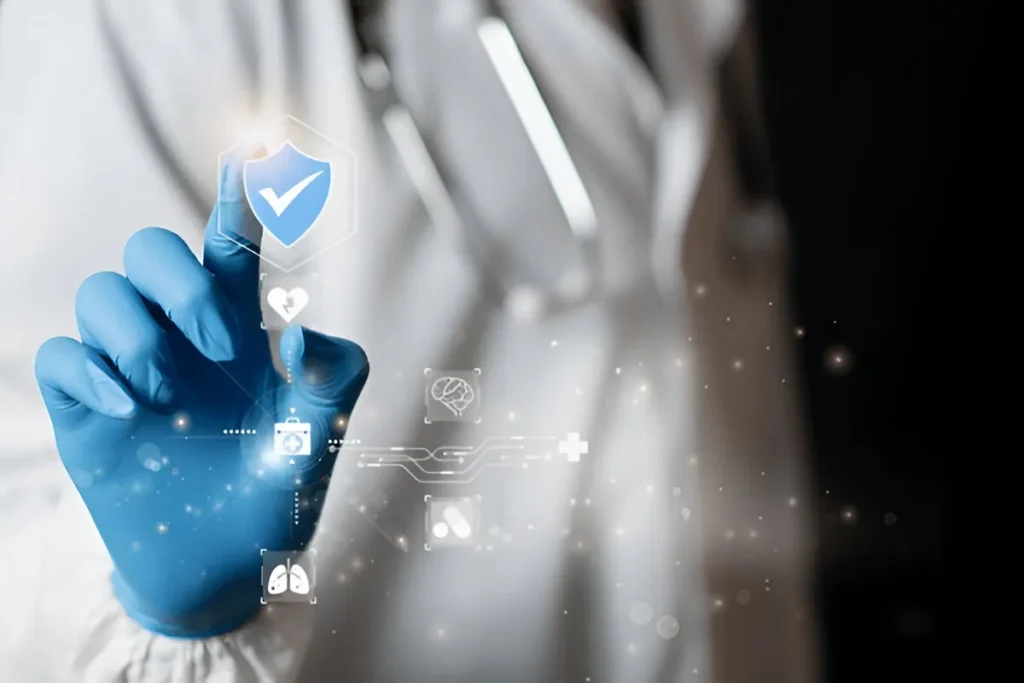
The last couple of years have seen a tremendous change in the healthcare system that has resulted in digital innovation and improved patient experience. Whereas the doctor used to be the only place to be contacted when a majority of the medical issues were raised, nowadays, patients communicate with their medical practitioners in many places without even stepping a foot in a clinic. This change is not just convenient; it is transforming the health system and the management of conditions, as well as how the patients can be updated on their health information.
- Online Solutions Are Narrowing the Distance between Appointments
- EHRS Are Enhancing Quality and Productivity
- Telehealth is growing access to quality healthcare services
- Predictive Tools and Artificial Intelligence Are Enhancing Patient Care
- Technology empowers the human aspect of medicine
- Final Thoughts on the integration of new technologies in healthcare
Online Solutions Are Narrowing the Distance between Appointments
Care used to occur in brief and sporadic visits with patients on their own between the consultations. That has been closed with health technologies. Patient portals, secure messaging applications, and telehealth platforms are some of the tools that enable one to ask questions, request refills, and view lab results without having to wait several weeks to see an office. Wearable devices, which monitor heart rate, sleep, oxygen saturation, and physical activity, are providing patients and health providers with real-time insight into health trends that has never been more proactive than it is now in terms of prevention.
Moreover, it has been observed practically that clinics like Treasure Valley Family Medicine in Meridian have adopted this model of modern healthcare services. Phone: 208-895-0050.
The clinic is pioneering in the combination of family medicine based on relations and technology-assisted patient care and communication. Their strategy shows how technology can be used to complement the physician-patient relationship of a local doctor.
EHRS Are Enhancing Quality and Productivity
The globalization of electronic health records (EHRs) has been one of the most significant innovations in digital health and patient data management. Rather than paper charts and inter-office communications, health care teams now communicate in real time, enhancing the impact of technology on patient care.
With one mouse click, all the patient data, including allergies, medications, chronic diseases, past treatments, and imaging findings, are available to healthcare professionals. This does not only decrease the number of medical errors, but it also permits the coordination of healthcare services and healthcare information between the primary care physician, specialists, and ancillary services.
In patients with complicated medical conditions, EHRs can remove redundant documentation and assist in keeping treatment plans in tandem with more than one physician, improving patient care. The providers will have the capacity to monitor long-term patterns, including changes in blood pressure or lab trends or changes in symptoms, which will make it possible to make better-informed and individualized diagnoses.
Telehealth is growing access to quality healthcare services
Telemedicine has developed rapidly to become more of a convenience than a core of contemporary healthcare. Follow-ups, medication checks, checking test results, or treatment of chronic conditions is better when done via virtual visits, enhancing the overall patient experience. Virtual access to a doctor removes many of the barriers to care for the individual patient who has mobility problems, busy schedules, low access to transportation, and impacts the healthcare institutions positively.
There are also several hybrid models that are used in many family medicine clinics nowadays, and there the patient can decide whether to see them in person or use the online visit option based on the circumstances. This adaptable system assists in cutting down the time wastage during the treatment and motivates patients to be loyal to their healthcare plans.
Predictive Tools and Artificial Intelligence Are Enhancing Patient Care
Predictive tools and Artificial Intelligence are enhancing patient care and expanding treatment options for healthcare providers through advanced healthcare technologies. Similarly, like Machine learning and artificial intelligence (AI) are starting to make a significant contribution towards diagnostic decision-making by predicting risks before they escalate into severe states.
Big data can be analyzed by algorithms to identify trends that may not have been identified without the use of new technologies. AI-powered notifications can assist in pointing out unusual patterns, reminding when it is time to take a screening, or proposing early intervention for chronic diseases such as diabetes or hypertension.
Although AI does not eliminate the clinical judgment of a doctor, it improves on the accuracy of diagnoses and assists the physician in making a more effective and quicker diagnosis, particularly in the primary care environment when time is frequently short.
Remote monitors improve the management of chronic diseases, showcasing the potential benefits of digital health technology and wearable technology in patient care.
In the case of people with long-term illnesses, monitoring devices that are used at home, including heart rhythm watches, glucose monitors, and blood pressure cuffs, enhance healthcare outcomes and safety. Devices are able to send medical information straight away to a provider, where earlier intervention can be made in case something appears to be wrong. This saves visits to the hospital, enhances medication alterations, and gives tranquility to those patients who would like to have greater control over their health through mobile health solutions and medical technology.
In the management of conditions such as hypertension, asthma, diabetes, and sleep apnea, remote monitoring has been particularly powerful, as in all these cases, early detection of signs of worsening can be used to avoid complications.
Technology empowers the human aspect of medicine
The most fascinating part of this digital health technology development is that it does not reduce the importance of a personal doctor-patient relationship; on the contrary, it enhances it through improved healthcare information. By making communication easier, ensuring superior quality data, and having more collaborative tools. So, at the end of the day, primary care providers will be able to provide healthcare services that are more personalized, more efficient, and more responsive.
Moreover, patients previously experiencing a sense of hurry or disconnection now have increased contacts in their health system, fostering a better clinician-patient relationship. Digital automation and structured working processes allow clinicians to devote time to meaningful conversations instead of administrative duties in the healthcare industry.
Final Thoughts on the integration of new technologies in healthcare
With health care growing more interconnected with information technology, patients get access to more treatment options, understand more, and get more accurate care. Modern innovations are enabling physicians to provide holistic, coordinated, and patient-centered care, a diversity of wearable devices and remote monitoring, AI-driven tools, and telemedicine platforms.
To individuals who want to find a doctor who can adopt the latest technologies and at the same time offer the benefits of traditional family medicine, the tech-forward practices demonstrate how tomorrow’s healthcare can be both innovative and caring.
The last couple of years have seen a tremendous change in the healthcare scene that has resulted in digital innovation. Whereas healthcare providers used to be the only place to be contacted when a majority of the medical issues were raised, technology also facilitates easier access to medical information. Nowadays, patients communicate with their medical practitioners in many places without even stepping a foot in a clinic. This change is not just convenient; it is transforming the care delivery process and the management of conditions, as well as how the patients can be updated on their healthcare information.




A little discussion goes a long way.
Ask a question, share your experience, or help someone find an answer.
There is room for your perspective.
No discussions match this view yet.
Your voice belongs here
Keep it useful. Keep it kind.