
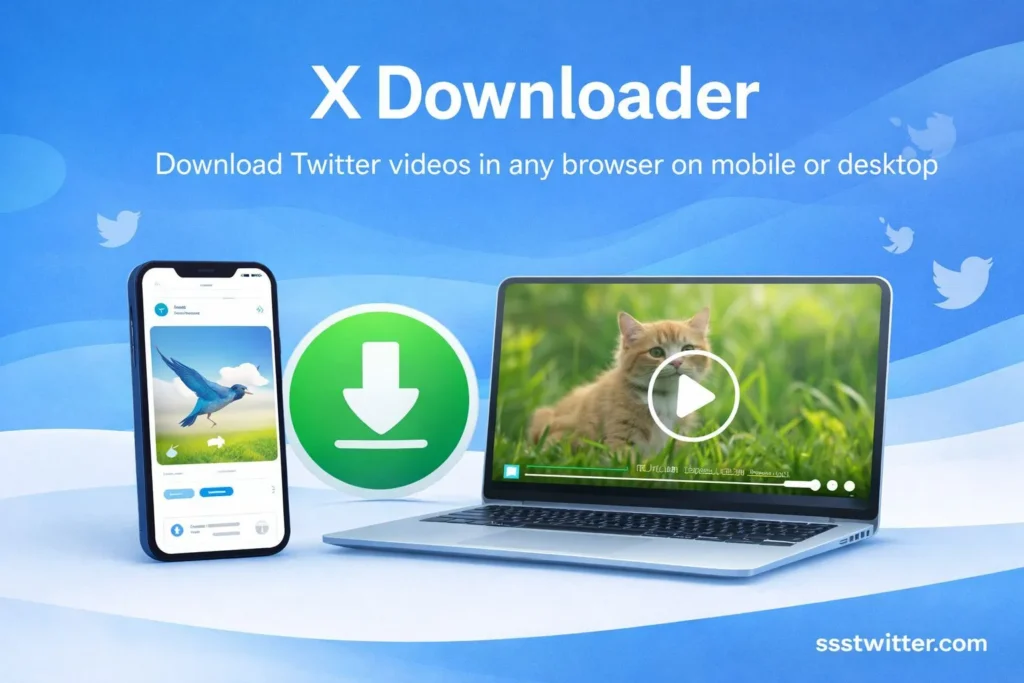
Twitter, rebranded as X, is widely used for sharing short-form media, including videos, images, GIFs, and audio clips. While the platform enables easy content discovery, it does not provide native options for downloading media files. As a result, users often rely on third-party tools to preserve and reuse publicly available content.
This article on EduIndex discusses how Twitter and X downloaders function and outlines the importance of format support and processing speed when saving media files.
Definition of a Twitter or X Downloader
A Twitter or X downloader is a web-based or application-based tool that retrieves media files from public posts using their URLs. These tools extract embedded media and convert it into downloadable formats without requiring access credentials or technical expertise.
Most downloaders follow a standardized workflow:
- A user copies the public URL of a Twitter or X post
- The URL is processed by the downloader
- Available media formats and quality options are presented
- The selected file is saved locally
Modern tools typically support multiple output formats, such as MP4 for video, MP3 for audio, and image formats for photos and GIFs.
Supported Formats and Conversion Options
Media format availability is a key feature of effective download tools. MP4 remains the most widely supported video format due to its compatibility with editing software and playback devices. Audio extraction, commonly referred to as X to MP3 conversion, is frequently used for interviews, discussions, and spoken-word content.
Image and GIF downloads are relevant for documentation, presentations, and social media reuse. A comprehensive X video downloader accommodates these diverse requirements, allowing users to select formats based on downstream usage.
Methods for Downloading Media from Twitter and X
Several approaches exist for saving media from Twitter and X, each with specific limitations. Browser extensions may offer convenience but often restrict format options and depend on frequent updates. Mobile applications can be device-dependent and may introduce performance or privacy concerns.
Screen recording is a universal workaround but results in variable quality and additional post-processing. In contrast, web-based download tools provide direct access to original media files, support multiple formats, and function across operating systems without installation.
Practical Applications of Downloaded Media
Downloaded Twitter and X media is used across multiple professional domains. Researchers collect video and image datasets for analytical studies. Educators incorporate media into instructional materials. Journalists archive original posts to preserve context and evidence.
Marketing teams analyze viral content, while content creators maintain personal archives for reference and portfolio development. Since social media content can be removed or altered, local copies ensure continuity and long-term accessibility.
Performance and Accessibility Considerations
Processing speed and usability significantly impact the effectiveness of download tools. Fast conversion is essential when handling multiple files or time-sensitive content. Tools that offer unlimited downloads without mandatory registration reduce friction and support frequent use.
Cross-device compatibility further enhances accessibility, allowing users to retrieve media from both desktop and mobile environments.
Summary
Twitter and X media downloaders serve as practical solutions for accessing and preserving publicly shared content. By offering multiple formats, efficient processing, and broad compatibility, these tools enable users to manage media assets reliably in professional and research-oriented contexts.




A little discussion goes a long way.
Ask a question, share your experience, or help someone find an answer.
There is room for your perspective.
No discussions match this view yet.
Your voice belongs here
Keep it useful. Keep it kind.