
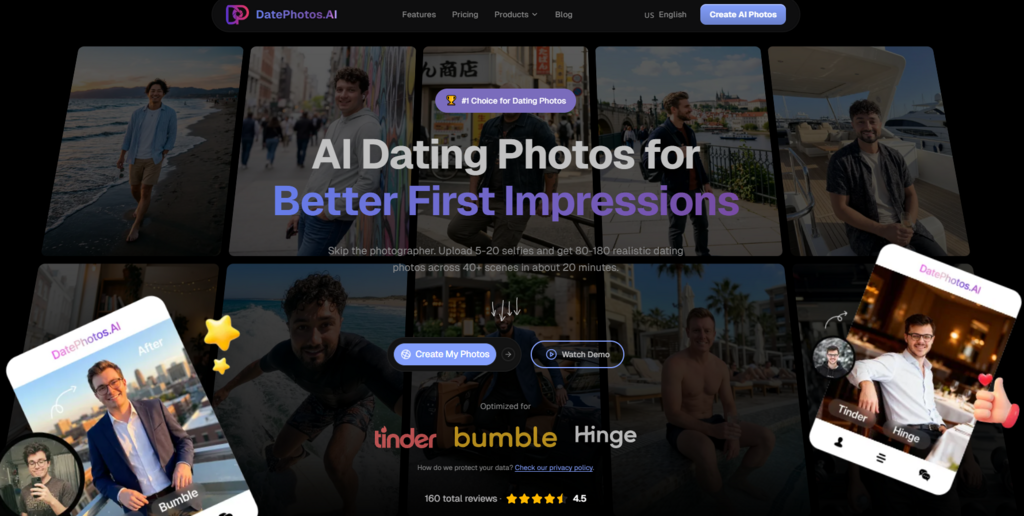
The average dating app user spends less than two seconds deciding whether to swipe right. In that blink of an eye, your photo communicates more than your bio ever will. And yet, most profiles fail not because the person is uninteresting, but because their photos tell the wrong story, or worse, no story at all. A single decent headshot might get you a look, but it will not get you a conversation.
What actually stops the scroll is a visual narrative: coffee shop moments that suggest approachability, outdoor shots that hint at adventure, professional settings that signal ambition. The problem is that assembling this kind of visual diversity traditionally requires either a photographer’s budget or a friend with exceptional patience and decent equipment.
Neither option is realistic for most people. This is exactly where ai dating app photos enters the conversation, not as a gimmick, but as a practical bridge between the photos you have and the profile you actually need.
The shift toward visual storytelling on dating platforms is not a trend, it is a structural change in how people evaluate potential matches. Profiles with three photos taken in the same bedroom communicate a very different message than profiles with six photos spread across beaches, city streets, and casual dining spots. The former suggests limited range.
The latter suggests a life worth knowing about. The challenge has always been production: creating that range requires either staging multiple shoots or spending years accumulating the right snapshots. Neither is practical for someone who wants to improve their profile this week. This is where the concept of AI-generated scene variety stops being abstract and starts being genuinely useful.
The Scene-by-Scene Approach to Profile Building
A dating profile is essentially a sequence of visual cues, each one telling a slightly different part of your story. The first photo needs to be approachable and clear, the kind of image that makes someone want to learn more. The second might show you in a social setting.
The third could reveal an interest or hobby. The fourth might demonstrate a different side of your personality entirely. Getting this sequence right is more art than science, but the raw material matters enormously. You cannot build a compelling sequence if every photo looks like it was taken in the same room on the same day.
Coffee Shops and Dining Scenes
The Casual Approachability Test
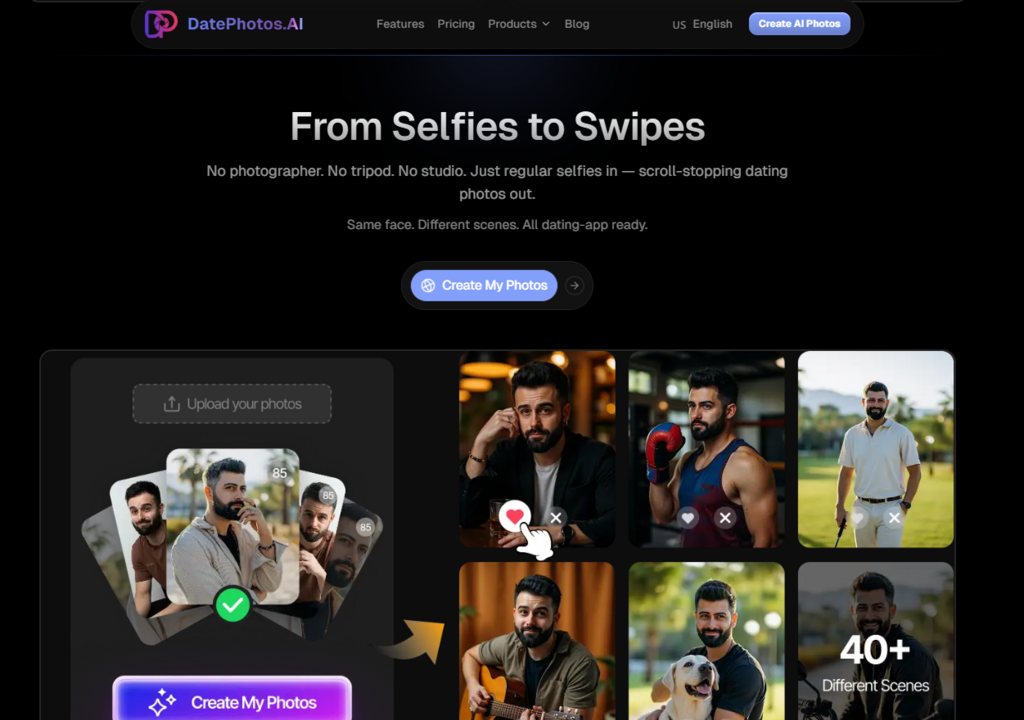
Coffee shop scenes are the workhorses of dating profiles. They signal that you are normal, approachable, and capable of holding a conversation over a drink. The platform generates multiple variations of these settings, each with different lighting conditions and angles. In testing, the coffee shop shots consistently scored above 85 on the realness scale, with many hitting the 90s. The lighting tends to be warm without being overly dramatic, which keeps the images feeling natural rather than staged.
One user noted that the coffee shop photos blended seamlessly with their existing profile pictures. Another mentioned that these shots got the most positive comments from matches. The key detail here is that the AI does not over-optimize the lighting to the point where it looks like a commercial. The images retain a slightly casual feel, which is exactly what you want for a dating app.
What Makes These Work
The dining and coffee shop scenes avoid the polished, overly professional look that can make AI-generated photos feel inauthentic. The backgrounds are varied enough to suggest different locations without being distracting. The poses are relaxed, holding a cup, looking slightly off-camera, engaging with something in the frame. These small choices add up to images that feel like they were taken by a friend who happens to have a good eye, not by a professional photographer who staged everything.
Beach and Outdoor Settings
The Adventure Signal
Outdoor scenes communicate something different than coffee shops. They suggest energy, activity, and a willingness to be outside. The beach and waterfront shots generated by the platform tend to have brighter, more open lighting. The poses are more dynamic, walking along the shore, looking out at the water, sitting on a beach blanket. These are the kinds of images that make a profile feel varied without feeling like you are trying too hard.
In user feedback, the outdoor shots were frequently mentioned as favorites. One user said they got enough solid ones to completely refresh their Hinge profile. Another noted that the variety across coffee shops, gyms, and outdoor settings gave their profile a completely different feel. The outdoor scenes do not always hit the same realness scores as the indoor ones but the ones that work tend to work very well.
Lighting and Realness Tradeoffs
The outdoor scenes sometimes have a slightly more polished look than the indoor ones. This is not necessarily a flaw, brighter, more vibrant images can stand out in a feed full of dimly lit selfies. But it is worth noting that some users mentioned a few photos looked a bit too polished. The realness score system helps filter these out, but if you are aiming for maximum naturalness, the outdoor shots may require a bit more curation.
Gym and Sports Environments
Showing Activity Without Showing Off
Gym and sports scenes are tricky because they can easily tip into showing off territory. The platform appears to handle this by keeping the focus on activity rather than physique. The poses suggest movement rather than static flexing. This makes the images feel more like documentation of an active lifestyle than a flex.
The gym shots scored well in user testing, with several users noting that they helped diversify their profiles without looking try-hard. One user specifically mentioned that the gym photos blended well with their real ones. The key seems to be that the AI keeps the gym background generic enough to be recognizable without being distracting.
Urban Streets and Professional Settings
The City and Career Narrative
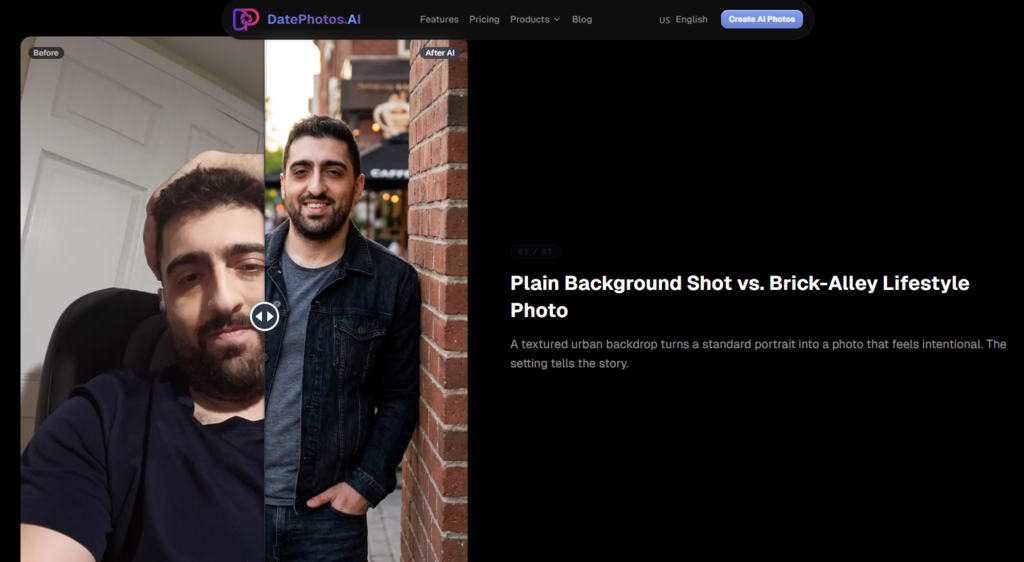
Urban street scenes add a layer of sophistication to a profile. They suggest that you live in a city, navigate its spaces comfortably, and have a certain level of style. The professional settings do something similar, signaling that you have your life together without needing to say it in words. These scenes tend to have cleaner lines and more structured compositions than the casual or outdoor shots.
In practice, these images work best as the second or third photo in a profile, they add depth without trying to carry the entire narrative. The platform generates enough variations that you can pick the ones that feel most aligned with your actual lifestyle. If you work in a creative field, you might lean toward the urban shots. If you work in a more traditional profession, the professional settings might feel more authentic.
How the Scene Generation Actually Works
The platform generates photos across forty-plus scenes, with each scene offering three to four different poses. This means you are not getting forty variations of the same angle, you are getting a genuine spread that can cover an entire profile from start to finish. The scenes are not randomly generated either. They appear to be curated based on what actually performs well on dating apps: coffee shops, beaches, gyms, urban streets, professional settings, and outdoor adventures.
From a practical user perspective, the scene diversity is what separates this service from simpler AI photo tools. Many competitors offer ten to twenty scenes, which sounds like a lot until you realize that half of them are variations of the same basic setup. Forty-plus scenes with distinct settings and multiple poses per scene means you have genuine options. You are not forced to use a coffee shop shot if it does not fit your vibe. You can pick and choose from a range that actually covers different aspects of your life.
The Quality Filter You Did Not Know You Needed
Every photo generated by the platform receives a realness score from zero to one hundred. The average score across all photos is ninety-two out of one hundred. This scoring system is not just a nice-to-have feature, it is a practical necessity when dealing with AI-generated images. Not every photo will look natural. Some angles will come out weird. A few will look slightly too polished. The score gives you a quick way to filter out the ones that do not meet your personal standard.
Multiple users highlighted the realness score as a standout feature. One user noted that they only used photos above eighty and they looked natural on Tinder. Another set their bar at eighty-five and found the results consistently usable. The score is not a guarantee of quality, it is a data point that helps you make better decisions faster. Instead of manually inspecting every single image, you can sort by score and focus your attention on the ones most likely to work.
What the Numbers Actually Say
The platform provides a clear comparison against traditional photography and other AI tools. Traditional photography costs between two hundred fifty and five hundred dollars, delivers fifteen to thirty photos, takes one to two weeks, offers no platform optimization, provides no quality scoring, limits you to one or two scenes, and requires scheduling and travel.
Other AI tools cost twenty-nine to seventy-nine dollars, deliver sixty to one hundred twenty photos, take twenty-four to forty-eight hours, offer generic optimization, provide no quality check, give you ten to twenty scenes, and require upload and wait.
This service costs the same as other AI tools, delivers eighty to one hundred eighty photos, takes twenty to thirty minutes, optimizes for Tinder, Bumble, and Hinge, provides a zero-to-one-hundred realness score per photo, offers twenty-five to forty-five scenes, and gets you from upload to done in under half an hour. The math is straightforward. The value proposition is not about being the cheapest option, it is about delivering more photos, more scenes, and faster results than anything else in the same price range.
Real User Experiences with Scene Selection
The user testimonials paint a consistent picture. One user reported that the AI-generated photos blended well with their real ones. Another noted that after the second batch, they got excellent photos. A third user mentioned that the variety is really good and that they got enough solid ones to completely refresh their Hinge profile.
Several users emphasized the practical value. One described it as the best forty-nine dollars they had spent on dating apps, noting that photographers were charging three hundred-plus for a fraction of the photos. Another said they got one hundred twenty photos and about thirty of them were actually usable. A third user went from about five likes a week to over twenty after updating their profile.
The feedback is not uniformly perfect. Multiple users noted that not all photos are usable. Some angles came out weird. A few photos looked a bit too polished. The consensus appears to be that you get enough solid options to completely refresh your profile, even if every single image does not work. The ai dating photo generator gives you volume and variety, and the realness score helps you sort through it efficiently.
Practical Limitations in Scene Generation
The scene generation is not flawless. The quality of output depends heavily on the quality of input. Users who uploaded high-quality images reported better results. Blurry or poorly lit selfies will not magically transform into professional-grade photos. The AI has limits, and those limits show up most clearly in the outdoor and gym scenes, where lighting conditions are harder to control.
Some scenes may require multiple attempts. The platform offers five to twenty free regenerations per project, which suggests that the first pass does not always nail every image. One user noted that after the second batch, they got excellent photos. This is not a one-click miracle, it is a tool that benefits from some curation and iteration on your end.
The results may vary from one project to the next. The platform does not guarantee identical outcomes for every user, and the realness scores reflect that variability. The average is high, but individual photos can fall below the threshold that feels natural to you.
Who Benefits Most from Scene Variety
The scene diversity makes the most sense for people who want to build a complete dating profile from scratch or significantly upgrade an existing one. If you already have a few good photos but lack variety, this service can fill the gaps without requiring you to stage multiple shoots. It is particularly useful for people who have tried dating apps and felt that their photos were holding them back.
The service is less suitable for someone who expects every single generated image to be perfect. The realness score system exists precisely because some photos do not meet the bar. If you are the type of person who needs a flawless set with zero curation effort, you will likely be frustrated.
The sweet spot appears to be users who are willing to upload good images, review the scored results, and select the best ones while regenerating a few that miss the mark. The process requires maybe ten minutes of active effort plus the twenty-to-thirty-minute generation window. That is a low barrier to entry for what can be a meaningful improvement to your dating app experience.
The platform optimization for Tinder, Bumble, and Hinge is worth highlighting. These three apps have different visual conventions and user expectations. A photo that works on Tinder might feel out of place on Hinge. The service appears to account for these differences, which is a level of detail that most generic AI photo tools do not address. The scenes are not just random, they are selected and composed with specific platforms in mind.



A little discussion goes a long way.
Ask a question, share your experience, or help someone find an answer.
There is room for your perspective.
No discussions match this view yet.
Your voice belongs here
Keep it useful. Keep it kind.