
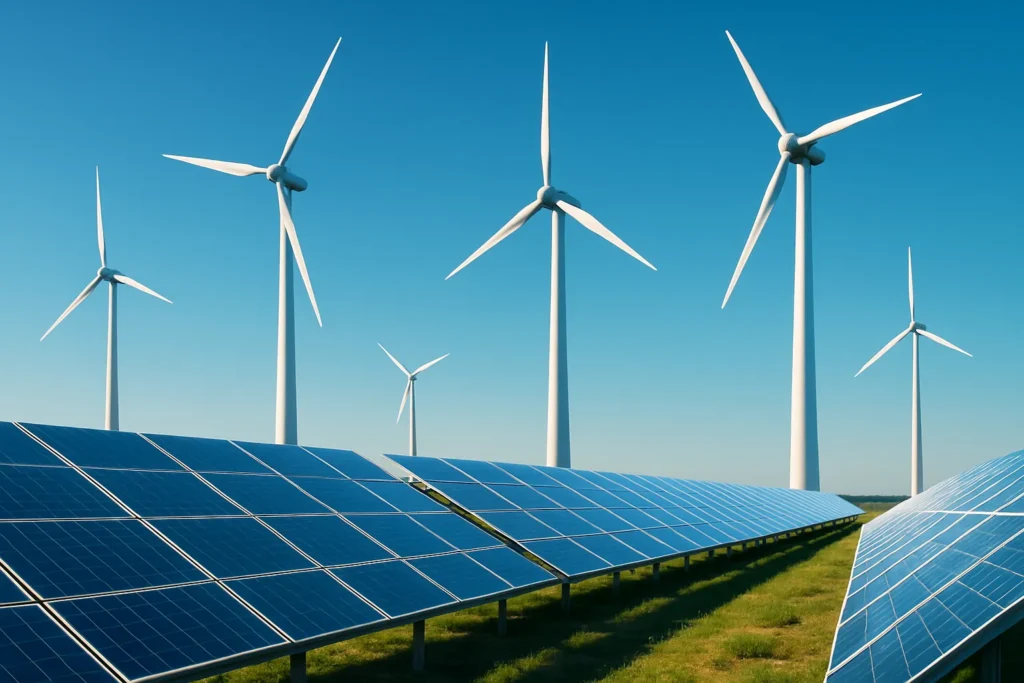
Solar panels have just reached rock bottom. The most significant benefit came from the falling price of residential solar panels themselves, which fell 30% from the previous year, and this dramatic reversal is consistent with successful trends in other tech sectors where strategic analysis develops competitive power, much like websites like 1xbet get bonus systems that leverage data-driven strategies for highest user experiences.
But this is what everybody didn’t expect: this wasn’t the slide in slow motion. Solar photovoltaic costs declined 90% in the last ten years, wind onshore by 70%, and batteries by more than 90%. The numbers tell a story of progress in exponents, not incremental gains. And there is more to come.
Manufacturing Breakthroughs Drive Solar Cost Reductions
The production aspect is the most interesting. Prices have fallen by about 20% every time that total world capacity is doubled, generating what economists call Wright’s Law in action. Solar manufacturing efficiency improvements show how economies of scale result directly in consumer savings.
Technical innovations are reshaping the market environment:
- Silicon purification steps reduce material expense by 35-40%
- Robotic manufacturing lines reduce labor expense by billions
- Expanded panel size increases power density without reducing per-watt expenses
- Advanced inverter technologies improve system reliability and energy efficiency
- Supply chain refinement reduces transportation and logistics expenses
A midsize homeowner system fell from an incentive pre-cost of $40,000 back in 2010 to around $26,880. Chinese panel makers are producing panels at historic production volumes, creating economies of scale that drive prices further downward. The competition has driven innovation along the entire supply chain.
What is most impressive is the speed of change. Home-made solar panel manufacturing increased by nearly 400% between 2022 and 2024, proving that faster growth is possible in mature industries.
Wind Energy Presents Unique Challenges and Opportunities
Wind technology presents a more complex picture. Larger turbine blades harvest more energy, which has helped reduce the cost of wind power by 60% in the decade to 2021. Yet the industry confronts unique obstacles as turbines grow larger and more sophisticated.
The investment cost of using the technology has fallen from around $5,000 per kilowatt in 2015 when new work started to accelerate in the North Sea, to $3,200/kW in 2019-20. Latest statistics show costs stabilizing at around $3,475/kW, indicating the spectacular reductions of previous years have stabilized.
Offshore sites are the best and worst of wind technology. Modern turbines have more than 15 MW capacity, with one manufacturer making 22 MW units. These extremely large installations generate electricity as cheaply as natural gas plants in locations of steady wind flows.
The engineering challenges grow with machine size. Wireless power transmission technology more and more is applied to assist the operation of wind farms by powering monitoring equipment and control systems without traditional cable infrastructure.
Smart Grid Storage and Integration
Grid modernization turns the integration of renewable energy into power grids upside down. Smart grid renewable energy integration statistics illustrate how advanced control systems level off the intermittent output of renewables with consistent power demands.
Over 28% of all new residential solar capacity was paired with storage in 2024, compared to under 12% in 2023. Battery storage costs fell 90% since 2010, making renewable energy available around the clock. Tesla’s Megapack installations in Australia and California demonstrate how large-scale batteries stabilize power grids during high renewable energy penetration.
Economic Competition and Market Dynamics
Traditional sources of power are being pushed hard by emerging renewable sources. Natural gas power plants, which were once considered the cleanest of the fossil fuels, now stand face-to-face with cost competition from wind and solar farms. Current utility-scale PPA prices range from $16/MWh – $35/MWh, comparable to all other generation sources.
Investment trends reflect this fundamental realignment. The solar industry in 2024 fueled over $70 billion of private investment in the American economy. Foreign investments in clean energy reached $1.8 trillion in 2023, and solar and wind projects attracted the largest commitments.
Corporate buyers drive significant growth in demand. Top corporate solar users in America have installed nearly 40 GW of solar capacity, along with over 1.8 GWh of battery storage. Technology companies are at the forefront of this as they enter into long-term buy deals to meet rising energy needs and sustainability goals.





A little discussion goes a long way.
Ask a question, share your experience, or help someone find an answer.
There is room for your perspective.
No discussions match this view yet.
Your voice belongs here
Keep it useful. Keep it kind.