
If you walked into my garage right now, you would see a spin bike pushed into the corner covered in dust. Next to it is a tangled mess of resistance bands I bought after watching an ad last year, but never actually used. For a long time, I blamed the equipment for being boring, but deep down, I knew the issue was actually my own lack of direction.
When you work out at home with traditional iron, there is no one to tell you your back is arching. There is no one to shout when you cheat the last rep. You are mostly just guessing, hoping you feel the burn in the right place, but usually just ending up with a sore lower back.
That is why the Strength Mirror AEKE K1 AI Powered Smart Home Gym caught my attention. It pitches itself not just as another piece of AEKE home gym equipment, but as an “AI Coach.” The promise? Real-time correction, data-driven plans, and zero guesswork. Naturally, I was skeptical. Can a smart mirror really replace a human trainer? I spent a few weeks testing it to find out.
Why My Old Home Workouts Failed (The Feedback Loop)
The biggest issue with standard home workouts is the lack of feedback. When I go to a traditional gym, I might catch a glimpse of my form in the mirror, but mostly, I’m flying blind. This leads to two things: injury and stagnation. I’m not getting stronger because I’m not training progressively. I’m just moving weight from point A to point B.
The AEKE philosophy, “tired of guessing,” really resonated with me. I wanted to stop wondering if I was doing a deadlift correctly and actually know.
Meeting the Machine: How AEKE K1 Works
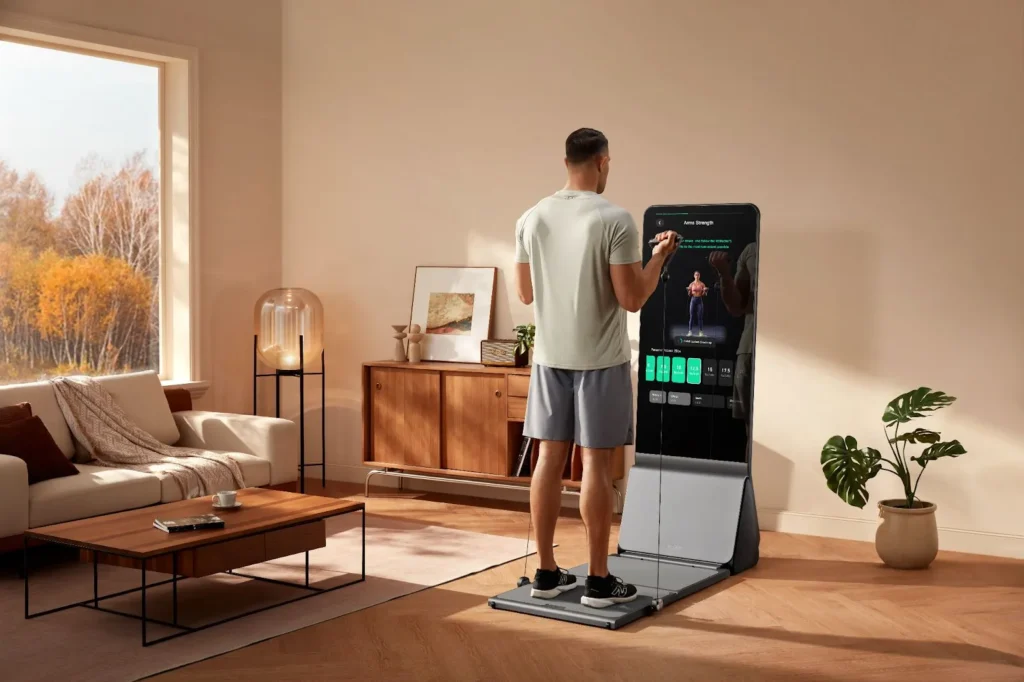
Setting up the AEKE smart home gym was surprisingly pleasant. As versatile home gym equipment, it’s compact, taking up about 0.3 square meters (roughly the size of a doormat), and looks sleek enough to leave in the living room without it looking like a locker room. The 43-inch 4K screen is gorgeous, but the real magic is hidden inside: a digital weight system that offers up to 220 lbs of resistance.
But the “brain” of the operation is the camera system. It uses what they call a 6D fitness assessment. Instead of just asking my weight and height, it actually scanned my posture, tested my flexibility, and analyzed my cardio baseline before I ever lifted a pound. It felt like that initial consultation you get from a high-end personal trainer.
The “Hands-On” Experience: Does the AI Actually Correct You?
Here is where the rubber meets the road. I loaded up a strength program (I paired it with the AEKE B1 Fitness Bench for bench presses) and started a set.
On my third rep, I got lazy. My knees caved in slightly, a bad habit I’ve had for years. Almost instantly (the spec sheet says 0.5 seconds, and I believe it), the screen flashed a visual cue, and a voice corrected my stance.
It wasn’t a generic “keep going!” cheer. It was specific: “Keep your knees aligned with your toes.”
This is the game-changer. With standard video classes such as Peloton or YouTube, the instructor talking to a general audience. They don’t know if you’re slumping on the couch, arched over while performing a squat or actually working out. The AEKE K1 is watching. It tracks 42 skeletal points, meaning it knows exactly where your elbows, knees, and spine are at all times.
AI vs. Human Trainer vs. Dumbbells
So, how does it stack up against the competition?
Traditional Equipment: My old dumbbells are dead weight. The AEKE fitness equipment is “alive.” The digital motor adjusts resistance smoothly. If I’m struggling at the bottom of a rep, it can sense the fatigue. Plus, the sheer variety, over 320 movements, means I’m not stuck doing bicep curls forever.
Human Personal Trainers: Nothing beats a human for empathy. The AI doesn’t care if I had a bad day at work; it just wants me to hit my reps. However, a human trainer costs $80 an hour and has a schedule. The AEKE K1 is available at 2 AM or 2 PM. Plus, and this is huge, there are no monthly subscription fees. Most smart gyms hook you with the hardware and bleed you dry with a $40/month membership. AEKE gives you the content for free, forever. That value proposition alone puts it ahead of the pack.
Efficiency and Safety: The Data Difference
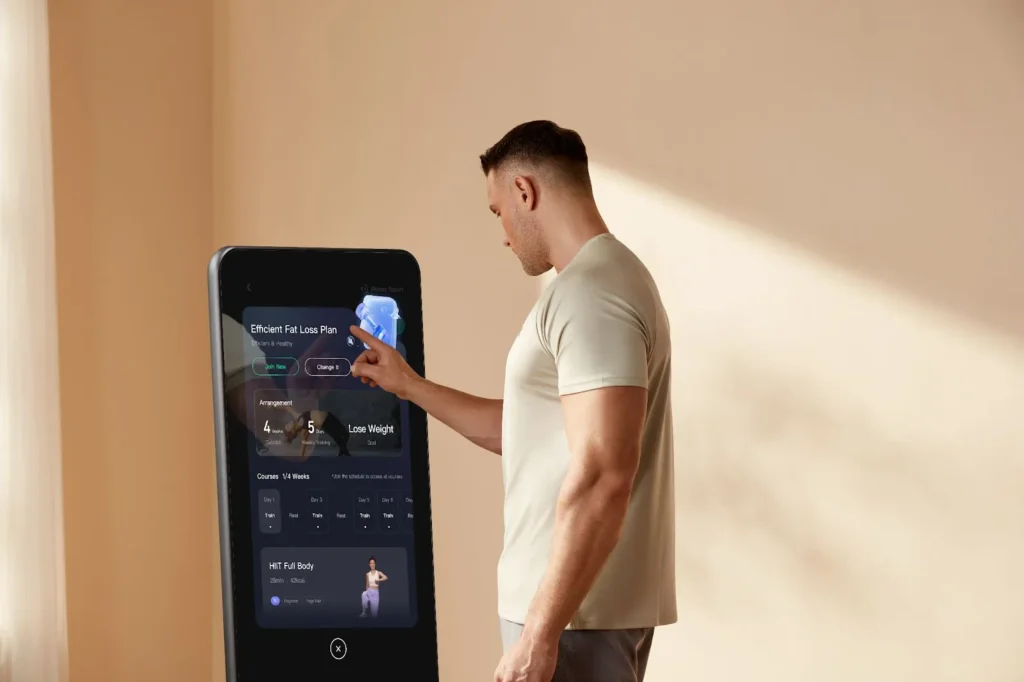
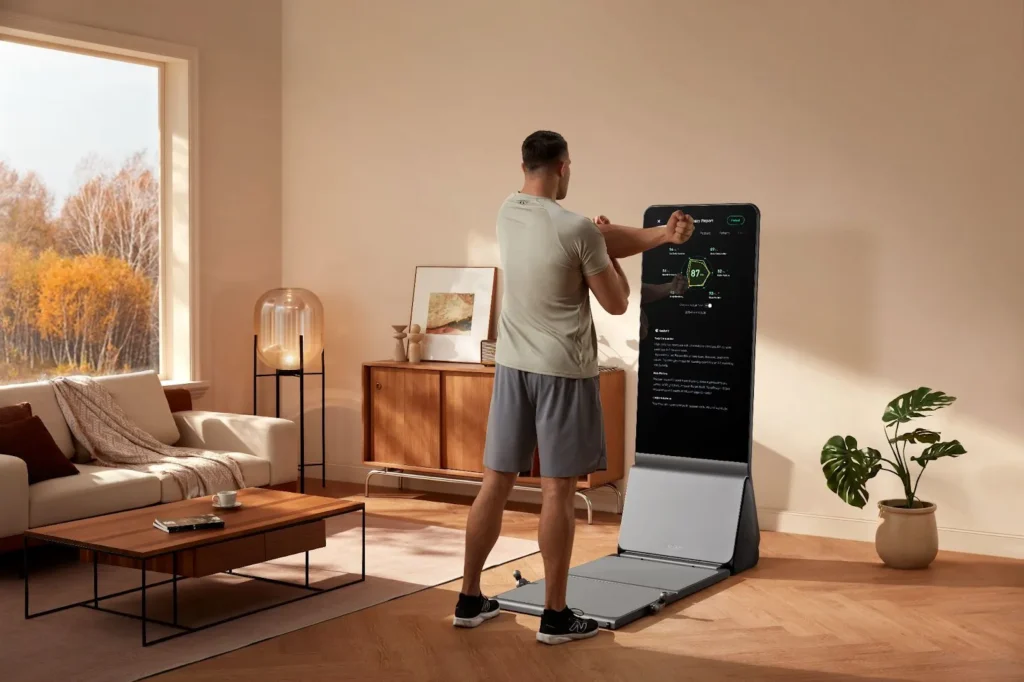
I am a data nerd (and apparently, so is 68% of their user base). I love seeing the numbers go up. The AEKE workout equipment provides a detailed post-workout analysis that shows exactly where I improved.
It also feels safer than free weights. There is a feature called “auto-release.” If the machine detects that I can’t lift the weight, it kills the resistance instantly. For a solo home exerciser, that peace of mind allows me to push harder than I normally would.
Who Is This Actually For?
After living with it, I see why this project raised over $1.4 million on Kickstarter. It isn’t for the old-school bodybuilder who loves the smell of rusty iron.
It is for the efficiency-obsessed. It’s for the busy parent who has 20 minutes between Zoom calls and wants a hyper-efficient, scientifically backed workout. It’s for the person who loves the idea of a personal trainer but hates the cost and the scheduling.
I also found my kids messing around with the fitness games on the weekend. Seeing them jump around in front of the AEKE home exercise equipment instead of sitting on the couch with a tablet was a nice bonus.
The Verdict
Is the robot takeover of fitness here? Not entirely. But the AEKE K1 gets extremely close. It bridges the gap between the convenience of home workouts and the accountability of a pro trainer. It fixed my squat form, saved me subscription fees, and actually got me to look forward to leg day.
If you are tired of guessing your way through workouts, this might just be the smartest investment you can make for your health.




A little discussion goes a long way.
Ask a question, share your experience, or help someone find an answer.
There is room for your perspective.
No discussions match this view yet.
Your voice belongs here
Keep it useful. Keep it kind.