
People already have more face photos than they have time to film. A still from last weekend, a clear selfie from a hallway, or two pictures taken on different days often sit in the same camera roll. The useful question is not whether a second shoot can be booked. It is what kind of short performance can be built from those stills, and whether the mouth in the file will follow the line once the sound is on.
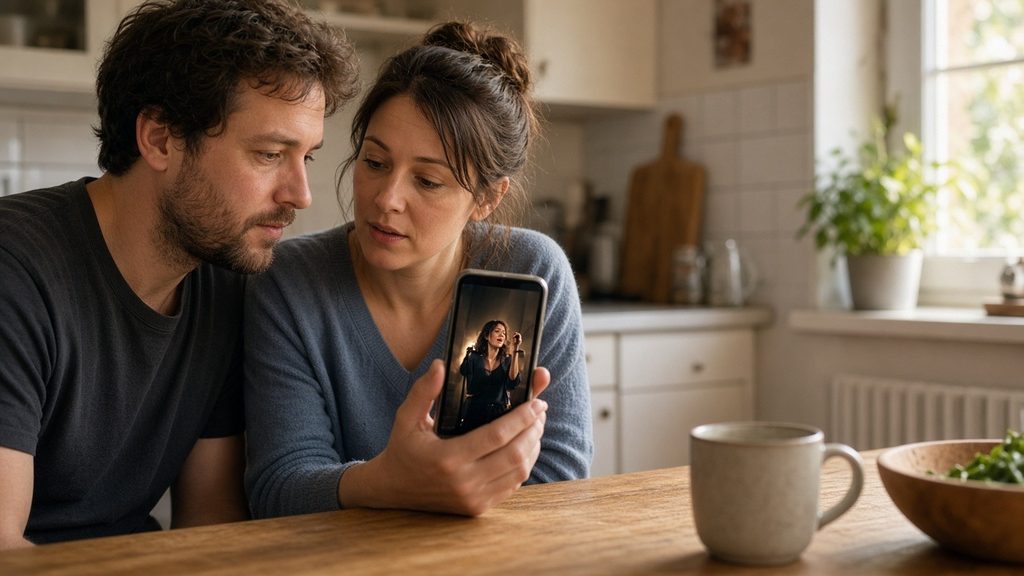
A filmed take of the same people can look fine in the room and fall apart in playback. The mouth does not land on the words. Sending everyone back is a reshoot, and repairing the mouth later is an editing job. A path that starts from photos is built for the days when the faces already exist and nobody is free to stand in front of a camera again.
Start with stills that actually show a face
The input is narrower than a shoot, and it is also more flexible than a rule that every clip must begin with two files. You can upload one clear, front-facing photo, or two if both people should appear in the same short performance. Two photos are an option, not a precondition. If only one person will appear, one sharp still is enough. The pictures do not have to be taken in the same room or on the same day.
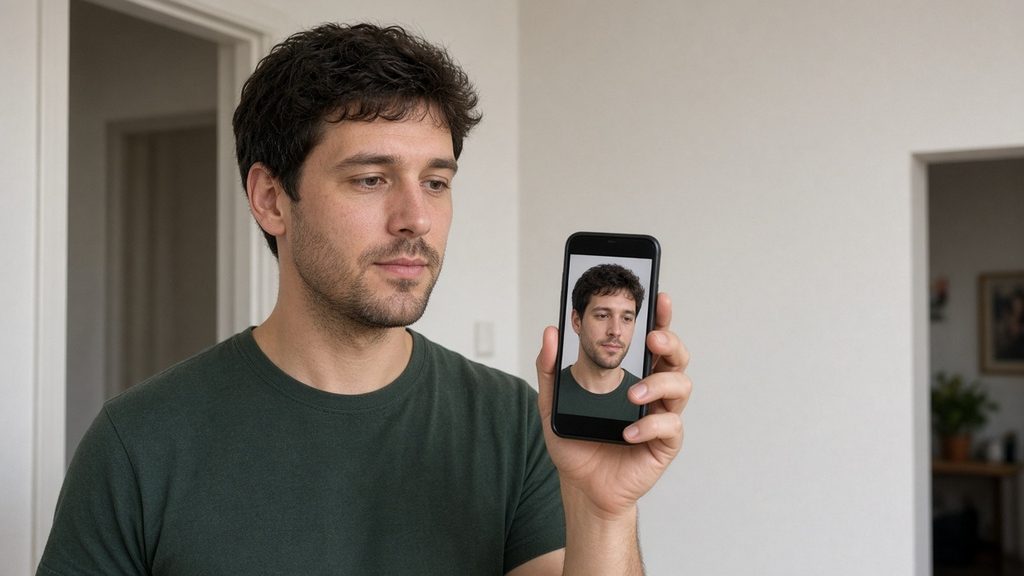
Each photo should show a face you can actually read: enough light to see the eyes and the mouth, no sunglasses, no mask, and no heavy filter that smears the mouth. Ordinary selfies can work. A matching background and a camera operator are not required. What is required is a visible face, because the performance is built on that face rather than on a body filmed in motion.
Use a photo only with the person’s permission. Do not include a minor unless a guardian has agreed, and do not build a clip that impersonates a celebrity or that is meant to deceive or harass someone. Those conditions belong to the photos before they are uploaded. They are not a second product.
An ai rap video starts from those stills rather than from a filming day. You add a short theme if the rap should name a person, a place, or a reason. If you leave the theme thin, the clip leans toward a general hype song. If you type a line, the rap should follow the language of that line. Keep the line short. A clip of about five to fifteen seconds, with ten as a sensible default, can carry a name and a reason. It cannot carry a full script.
What the file actually is
The useful output is a short vertical file, in the 9:16 frame already used by TikTok, Instagram Reels, and YouTube Shorts. The song is an original rap, not a copyrighted track dropped under the faces. Vocals, a beat, and mouth movement are generated together in that render, so the line and the lips belong to the same pass. There is no separate recording session to schedule between the photos and the clip, and there is no separate audio file to line up by hand.
On Hookai, the current path is a photo, or two photos, plus a short theme. Lyrics and a track you bring yourself are planned. The mouth movement is generated and approximate, so watch the clip before you post it. If a render fails, you are not charged for that attempt. The length is not locked at a single number; five, eight, ten, twelve, or fifteen seconds can all be a reasonable choice, depending on how much the line needs to say.
This is not a motion-control tool, and it is not a substitute for a real filmed session when you need the room, the hands, or the work itself on camera. It is a short performance that can sit next to those stills when the faces are already in the roll and the day will not open up for another take.
The theme is the job, not a second shoot
The photos decide whose faces appear. The theme decides what the clip is for. A birthday greeting and a short note for a group chat can use the same two faces. They cannot use the same sentence. If the line only celebrates the people on camera, viewers will remember a pair of names and still not know why the file was posted. If the line names a reason—the gathering, the place, or the one thing you want someone to do—the short runtime has a job it can finish.
Do not paste a long speech into the theme and hope the clip will hold it. Write one sentence in a note, then upload. If the only sentences you have are inside jokes that will not make sense to anyone else, you are not ready to post. A general hype song is fine when you want energy and nothing more. It is the wrong choice when the file has to name a person or a reason.
Two people do not have to be in the same place for both faces to appear. That is one reason a photo path exists. It is also why consent still matters for each still. A picture taken for a private album is not automatically a picture cleared for a public rap.
A birthday line can be a short greeting. It should stay a greeting, not turn into a separate custom song product, and it should not be asked to do the work of a longer filmed toast. If the occasion needs a speech, film the speech. If it needs a few seconds of faces and a line people can actually hear, a short rap clip is the right size.
Watch the mouth before you share the file
Because the lips are generated with the clip, they will not match a live take in every frame. That is expected. What you are checking is whether a viewer can follow the line with the sound on, and whether each face still looks like the person who agreed to appear. If the mouth is unreadable, or a face looks unlike the still you uploaded, do not post the first export as if it were a finished performance. Generate again, or choose a clearer photo, rather than hoping a caption will repair the clip.
A clean front-facing still is doing most of the work before the render starts. A dark, cropped, or heavily filtered photo leaves the mouth with nothing stable to follow. Replacing that file is cheaper than arguing with the export. If you are using two photos, check both faces, not only the one you care about more. One sharp still and one unreadable still will still give you an uneven clip.
When the clip is ready, export the vertical file and post it where a short original performance already belongs. Keep it next to real footage when the real footage is the point. The stills and the rap can sit beside a photo of the day; they should not pretend to be the day.
What a short answer can actually hold
The statement that holds is simple. One clear face photo can start the path, and two can share the same short performance when both people should appear. The output is a short vertical rap, original rather than a commercial recording, with generated vocals, a beat, and approximate lip-sync. The useful length is about five to fifteen seconds. Watch the mouth before you post. If a render fails, you are not charged for that attempt.
A reader who arrived wanting a filmed session, a known song, or a long edit can be pointed back to those facts. The photos define who appears. The theme defines the job. The render defines the performance. That is enough to know whether this path is the one to open, and whether the stills you already have are clear enough to try.



A little discussion goes a long way.
Ask a question, share your experience, or help someone find an answer.
There is room for your perspective.
No discussions match this view yet.
Your voice belongs here
Keep it useful. Keep it kind.