
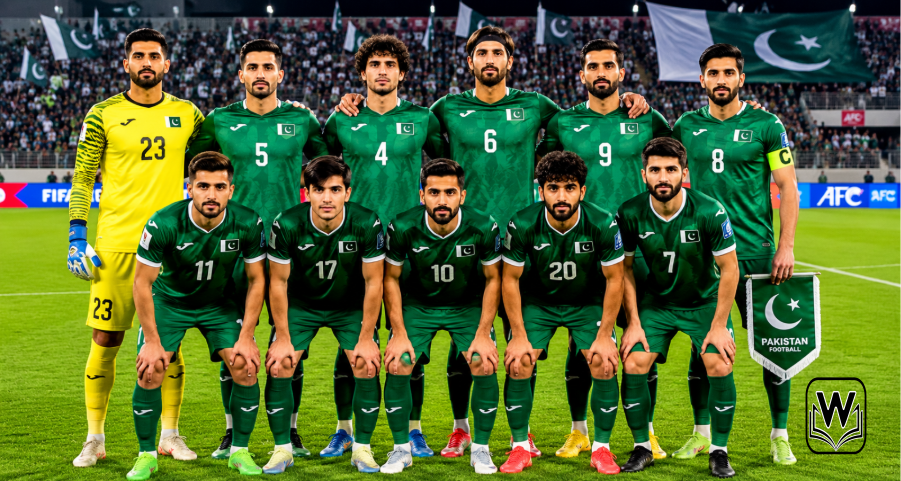
The Pakistan National Football Team represents Pakistan in men’s international football and is governed by the Pakistan Football Federation (PFF). As a member of both FIFA and the Asian Football Confederation (AFC), the team competes in international tournaments, including FIFA World Cup qualifiers, AFC Asian Cup qualification, and the South Asian Football Federation (SAFF) Championship. Fans who closely follow international football often use a variety of online resources to stay updated with match schedules, team news, and football-related entertainment, including platforms such as https://sikkaro.bet/
Although cricket remains Pakistan’s most popular sport, football has steadily gained attention across the country. Interest has grown through grassroots participation, local football communities, overseas Pakistani players, and renewed efforts to improve the national game.
Known as the Shaheens or the Men in Green, the Pakistan National Football Team has faced many challenges since its formation after the country’s independence in 1947. Administrative problems, limited domestic competition, and a lack of regular international fixtures have often slowed progress. However, the team continues to represent a passionate football culture with strong potential for future growth.
This article explores the history of the Pakistan National Football Team, its FIFA ranking, key players, international performances, home venues, fan support, and future prospects.
- History
- Major Milestones
- Pakistan National Football Team at a Glance
- Pakistan Football Federation
- FIFA Ranking of Pakistan
- What Influences Pakistan’s Ranking?
- Current Squad
- Best Pakistan Football Players
- Pakistan in International Competitions
- FIFA World Cup Qualification
- AFC Asian Cup Qualification
- SAFF Championship
- Home Stadium and Fan Support
- Future Prospects
- Conclusion
- Frequently Asked Questions
- What is the current FIFA ranking of the Pakistan National Football Team?
- Has Pakistan ever qualified for the FIFA World Cup?
- Who is the captain of the Pakistan National Football Team?
- Who is the head coach of the Pakistan National Football Team?
- Who are the most famous Pakistan football players?
- Where does the Pakistan Team play its home matches?
History
The history of the Pakistan National Football Team began shortly after the country gained independence in 1947. Football was already popular in several regions during the British colonial era, particularly in Karachi, Lahore, Quetta, and among military institutions. After independence, Pakistan established its own national football structure to organize domestic competitions and represent the country on the international stage.
Pakistan became a member of FIFA in 1948, just one year after independence, and joined the Asian Football Confederation (AFC) in 1954 as one of its founding members. These milestones allowed the national team to participate in official international tournaments and qualifiers, helping Pakistan become part of the growing football community in Asia.
During its early years, the national team regularly competed against neighboring countries and participated in regional competitions. Although financial and organizational limitations affected the team’s development, football continued to attract talented players from across the country.
Major Milestones
The Pakistan National Football Team has experienced periods of both progress and setbacks throughout its history. While the team has never qualified for the FIFA World Cup or the AFC Asian Cup final tournament, it has remained an active participant in international football for decades.
Some of the most notable milestones include:
- Becoming a FIFA member in 1948.
- Joining the Asian Football Confederation in 1954.
- Competing in multiple FIFA World Cup qualification campaigns.
- Participating regularly in the SAFF Championship.
- Rebuilding the national team following administrative reforms supported by FIFA.
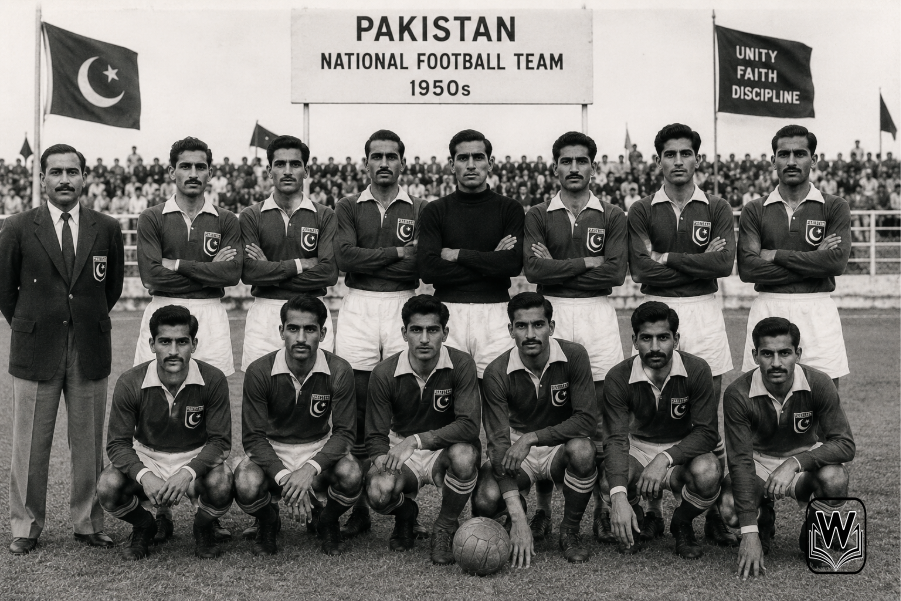
One of Pakistan’s strongest periods came during the 1950s and 1960s, when football enjoyed greater popularity and the national team was competitive within South Asia. In later decades, however, governance issues, interruptions to domestic football, and limited international match opportunities slowed the team’s progress.
Despite these challenges, Pakistan has continued to produce talented footballers, including players who have developed their careers in Europe and other international leagues. In recent years, the inclusion of overseas-based players and renewed investment in football development have provided new optimism for the future of the national team.
Pakistan National Football Team at a Glance
The team is the official men’s football representative of Pakistan in international competitions. Managed by the Pakistan Football Federation (PFF), the team competes in FIFA and AFC tournaments, as well as regional events in South Asia.
| Category | Details |
| Official name | Pakistan National Football Team |
| Nickname | Shaheens (Falcons), Men in Green |
| Governing body | Pakistan Football Federation (PFF) |
| FIFA affiliation | 1948 |
| AFC affiliation | 1954 |
| Regional association | South Asian Football Federation (SAFF) |
| Home stadium | Jinnah Sports Stadium, Islamabad |
| Team colors | Green and White |
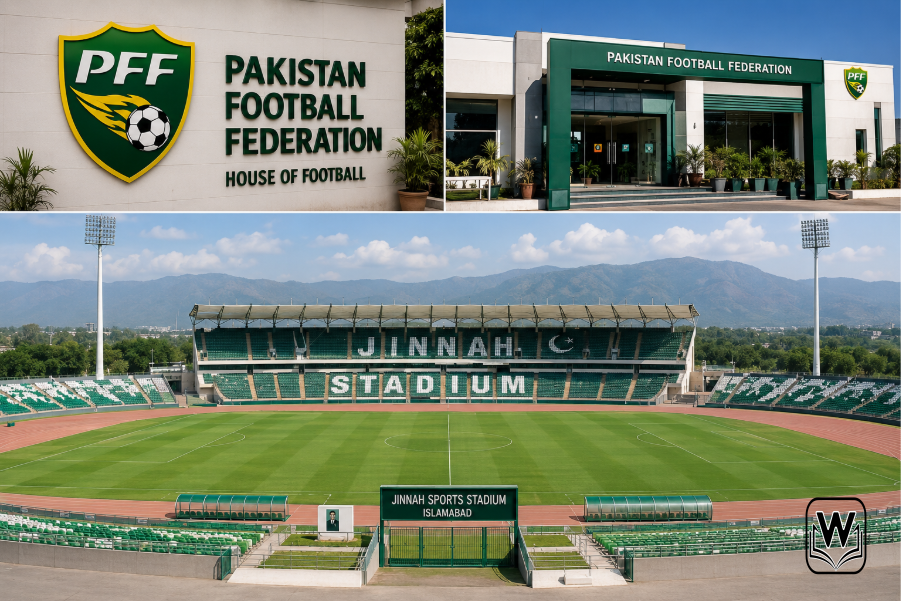
The national team primarily plays its home matches at Jinnah Sports Stadium in Islamabad, although other stadiums have also hosted international fixtures.
The team regularly participates in:
- FIFA World Cup qualification.
- AFC Asian Cup qualification.
- SAFF Championship.
- International friendly matches.
Pakistan Football Federation
The Pakistan Football Federation (PFF) is the governing body responsible for organizing and promoting football in Pakistan. Founded in 1947, shortly after the country’s independence, the federation oversees the national teams, domestic competitions, referee development, coaching programs, and grassroots initiatives.
Its primary responsibilities include:
- Managing the Pakistan National Football Team.
- Organizing domestic football competitions.
- Developing youth and grassroots football programs.
- Supporting coaching and referee education.
- Coordinating Pakistan’s participation in FIFA and AFC competitions.
Over the years, the federation has faced several administrative and governance challenges that affected the growth of football in the country. Internal disputes and periods of suspension by FIFA resulted in fewer international matches and interruptions to domestic competitions.
In recent years, however, the Pakistan Football Federation has worked closely with FIFA and the AFC to restore stability and strengthen football governance. New leadership, updated regulations, and a renewed focus on transparency have helped the federation rebuild its operations and restart domestic football activities.
FIFA Ranking of Pakistan
The FIFA World Ranking reflects a national team’s performances in official international matches. Pakistan’s position has fluctuated over the years because of limited international fixtures and periods of inactivity. Current FIFA Ranking is 198th.
What Influences Pakistan’s Ranking?
Several factors have affected Pakistan’s FIFA ranking:
- Limited international matches.
- Interruptions to domestic football competitions.
- Administrative disputes.
- Limited FIFA-sanctioned fixtures.
- Ongoing rebuilding of youth football.
Positive developments include:
- More regular participation in World Cup qualification.
- Overseas-based professional players.
- Improved cooperation with FIFA and the AFC.
- Greater investment in grassroots football.
- Continued development of the domestic game.
Current Squad
The Pakistan National Football Team combines experienced domestic players with footballers competing in professional leagues abroad.
The squad consists of:
- Goalkeepers
- Defenders
- Midfielders
- Forwards
Some notable players include:
| Player | Position |
| Easah Suliman | Defender |
| Otis Khan | Winger |
| Harun Hamid | Midfielder |
| Abdullah Iqbal | Defender |
| Rashid Mahmood | Goalkeeper |
The increasing number of overseas-based players has strengthened the squad and improved the team’s competitiveness in international football.
Best Pakistan Football Players
Pakistan has produced several players who have made significant contributions to the national team.
- Muhammad Essa
Widely regarded as one of Pakistan’s greatest footballers, Muhammad Essa was known for his goal-scoring ability, leadership, and technical skill.
- Kaleemullah Khan
One of Pakistan’s best modern strikers, Kaleemullah Khan earned recognition through successful performances both domestically and abroad.
- Hassan Bashir
Born in Denmark, Hassan Bashir represented Pakistan internationally and became an important attacking player thanks to his strength and finishing ability.
- Otis Khan
Having developed his career in English football, Otis Khan has added creativity, pace, and versatility to Pakistan’s attack.
- Easah Suliman
The experienced central defender has brought leadership and professionalism to Pakistan’s defense after playing in European football.
- Harun Hamid
Harun Hamid represents the next generation of Pakistani footballers and is considered one of the country’s most promising midfielders.

Pakistan in International Competitions
The Pakistan National Football Team regularly competes in international qualification tournaments and regional championships.
FIFA World Cup Qualification
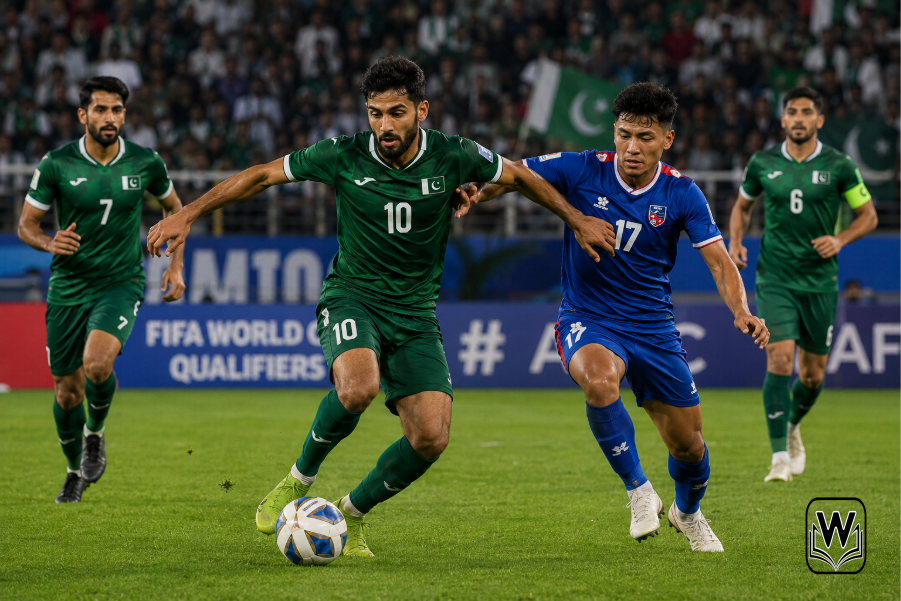
Pakistan has participated in numerous FIFA World Cup qualification campaigns but has never qualified for the final tournament.
These campaigns help the team:
- Gain international experience.
- Improve its FIFA ranking.
- Develop younger players.
- Compete against stronger opponents.
AFC Asian Cup Qualification
Pakistan regularly enters the qualification process for the AFC Asian Cup, gaining valuable experience against teams from across Asia.
SAFF Championship
The SAFF Championship is Pakistan’s most important regional tournament.
The team has competed against:
- India
- Bangladesh
- Nepal
- Maldives
- Sri Lanka
- Bhutan
Participation in the SAFF Championship plays an important role in the team’s long-term development.
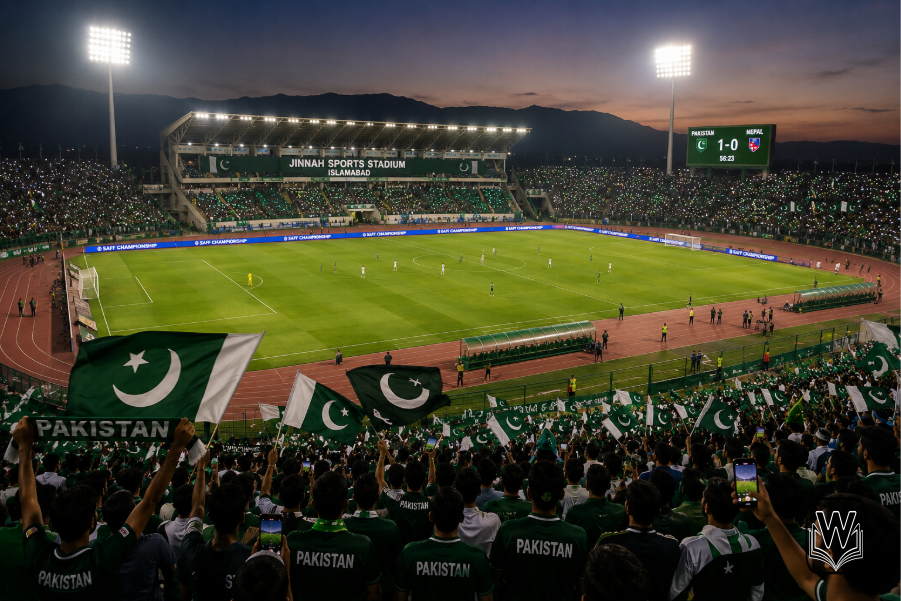
Home Stadium and Fan Support
Jinnah Sports Stadium in Islamabad serves as Pakistan’s primary venue for international football.
Other important venues include:
| Stadium | City | Primary Use |
| Jinnah Sports Stadium | Islamabad | International matches |
| Punjab Stadium | Lahore | Domestic and international football |
| Peoples Football Stadium | Karachi | Domestic competitions |
Football continues to grow in popularity across Pakistan thanks to:
- Increased media coverage.
- Overseas-based players.
- Grassroots football programs.
- Local football communities.
- Improvements in domestic competitions.
Support from the Pakistani diaspora has also strengthened the national team’s fan base around the world.
Future Prospects
The future of the Pakistan National Football Team appears increasingly promising.
Several factors could support long-term growth:
- Investment in youth academies.
- Stronger domestic leagues.
- Improved coaching education.
- Better football infrastructure.
- Continued cooperation with FIFA and the AFC.
- Expanding the scouting network for overseas talent.
Although qualifying for the FIFA World Cup or AFC Asian Cup remains a long-term objective, Pakistan continues to build a stronger foundation for future success through better governance, youth development, and increased international experience.
Conclusion
The Pakistan National Football Team has experienced a unique journey since its formation in 1947. Despite decades of administrative challenges, limited international fixtures, and periods of slow development, the team has remained an important part of Pakistan’s sporting landscape.
Recent years have brought renewed optimism through improved football governance, stronger cooperation with FIFA and the AFC, and the arrival of talented overseas-based players. These developments have increased the team’s competitiveness and created opportunities for future growth.
While Pakistan has yet to qualify for the FIFA World Cup or AFC Asian Cup finals, continued investment in player development, domestic football, and infrastructure provides a solid foundation for long-term progress.
As football continues to gain popularity across the country, the Pakistan National Football Team has the potential to become an increasingly competitive force in South Asian and Asian football.
Frequently Asked Questions
What is the current FIFA ranking of the Pakistan National Football Team?
Pakistan’s FIFA ranking changes regularly based on official international matches. Check the latest FIFA World Ranking before publication.
Has Pakistan ever qualified for the FIFA World Cup?
No. Pakistan has participated in qualification campaigns but has never reached the FIFA World Cup finals.
Who is the captain of the Pakistan National Football Team?
The captain may change depending on the current squad and coaching decisions. Refer to the Pakistan Football Federation for the latest information.
Who is the head coach of the Pakistan National Football Team?
The head coach may change over time. Check the latest official announcement from the Pakistan Football Federation.
Who are the most famous Pakistan football players?
Some of the best-known players include Muhammad Essa, Kaleemullah Khan, Hassan Bashir, Easah Suliman, Otis Khan, and Harun Hamid.
Where does the Pakistan Team play its home matches?
The team’s primary home venue is Jinnah Sports Stadium in Islamabad, although other stadiums also host international fixtures.





A little discussion goes a long way.
Ask a question, share your experience, or help someone find an answer.
There is room for your perspective.
No discussions match this view yet.
Your voice belongs here
Keep it useful. Keep it kind.