
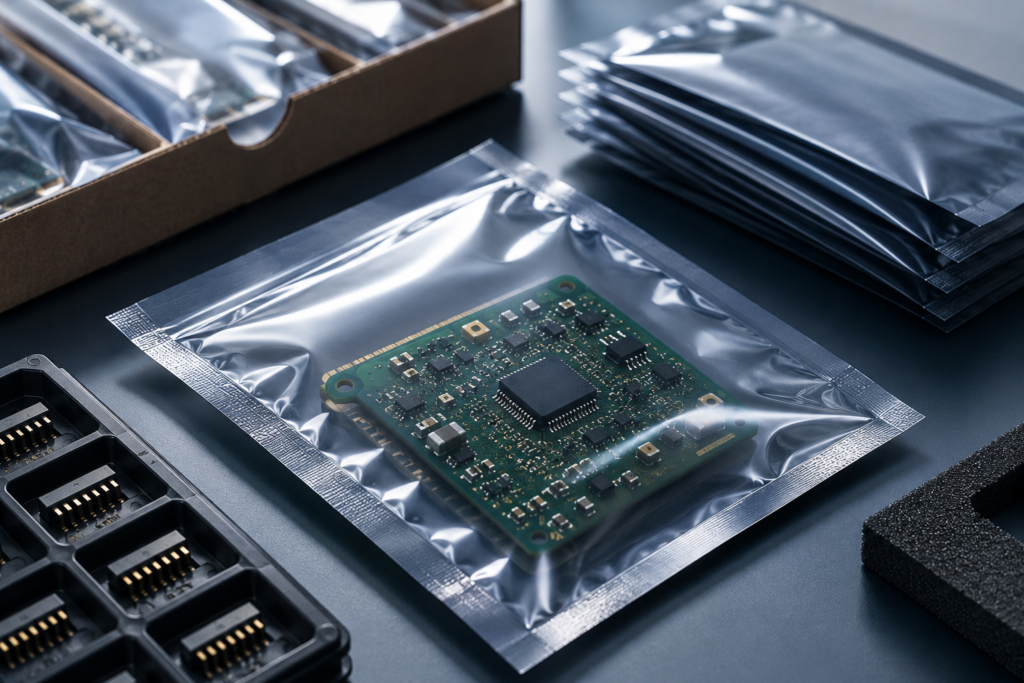
Modern electronics are heading in a clear direction. Devices are getting smaller, faster, and more advanced with every generation. But there’s a catch.
As performance improves, components become more sensitive.
Even something minor like a bit of moisture, a small static charge, or light pressure during shipping can affect how a product performs. Sometimes the damage doesn’t show up right away, either, which makes it even harder to deal with later.
This is something manufacturers are paying closer attention to. Companies like EONSEN Pack, a leading custom flexible packaging manufacturer in China, are seeing how protection requirements are changing as electronics become more complex.
Now think about how these components move. They don’t just go from point A to point B. They pass through warehouses, shipping hubs, and multiple handling stages before they ever reach the end user.
At each step, the risk increases.
That’s why packaging isn’t just a final step anymore. It’s part of how product quality is maintained from the beginning.
- What Makes Electronic Components So Vulnerable?
- The Biggest Threats Electronics Face During Handling and Transport
- How Flexible Packaging Is Designed to Handle These Challenges
- Why Flexible Packaging Is a Better Fit for Modern Electronics
- Choosing the Right Packaging for Your Electronics
- Packaging Is Part of the Product, Not an Afterthought
What Makes Electronic Components So Vulnerable?
At a glance, electronic components might seem durable. They’re neatly assembled, sealed, and built with precision. But inside, it’s a different story.
Semiconductors, circuit boards, and connectors rely on extremely fine structures to work properly. These structures are designed for accuracy, not for handling stress or environmental exposure.
It doesn’t take much to cause issues.
A slight increase in humidity can lead to corrosion. A bit of static can interfere with electrical performance. Even small vibrations during transport can create internal stress over time.
What makes this tricky is that problems don’t always show up immediately. A component might pass inspection, only to fail later when it’s actually in use.
So the real concern isn’t just damage. It’s delayed damage.
And that’s where understanding the risks becomes important.
The Biggest Threats Electronics Face During Handling and Transport
Most of the risks electronics face aren’t dramatic. They’re subtle, and that’s exactly why they’re dangerous.
Moisture is a good example.
It doesn’t take a major leak or exposure to water. Just normal humidity during storage or long-distance shipping can slowly affect components. Over time, this can lead to corrosion or reduced performance. The problem is, you often don’t see it happening.
Static electricity is another hidden issue.
It’s easy to overlook because you can’t see it. But electrostatic discharge, or ESD, can damage components instantly. Static builds up during handling and then releases in a split second. Even a small discharge is enough to affect sensitive parts like chips and circuit boards.
Dust and contamination are just as important.
Tiny particles can enter during handling or storage. On their own, they don’t seem like a big deal. But for precision electronics, even small contamination can interfere with performance or reduce reliability over time.
Then there’s physical stress.
Products are moved, stacked, and transported across different environments. Along the way, they’re exposed to pressure, vibration, and occasional impact. Even if the outer packaging looks fine, internal damage can still happen.
Put all of this together, and it’s clear that protection needs to cover more than just one type of risk.
How Flexible Packaging Is Designed to Handle These Challenges
So how do you deal with all of these risks at once?
This is where flexible packaging starts to make a real difference. It’s not just about wrapping a product. It’s about building protection into the packaging itself.
Start with moisture control.
Flexible packaging often uses multi-layer film structures designed to block humidity. Each layer has a role, whether it’s adding strength or improving barrier performance. But materials alone aren’t enough. A proper seal is what keeps that protection consistent throughout storage and transport.
Static control is another key part.
Anti-static and ESD-safe materials are used to manage electrical charges. Instead of allowing static to build up, these materials help dissipate it safely. That reduces the chances of sudden discharge during handling.
This is an area where manufacturers like EONSEN Pack put a lot of focus, especially when working with electronics that require a higher level of protection.
Then there’s strength.
Flexible packaging can handle pressure, punctures, and movement without adding unnecessary weight. That makes it easier to protect products while still keeping logistics efficient.
Cleanliness also plays a role.
Airtight packaging helps keep out dust and other contaminants. For sensitive components, maintaining a clean environment from start to finish can make a noticeable difference in performance.
Why Flexible Packaging Is a Better Fit for Modern Electronics
Traditional rigid packaging still has its place. But it doesn’t always match the needs of modern electronics.
Flexible packaging offers more adaptability. It can be designed to fit specific shapes and sizes, which helps reduce empty space and limit movement during transit. Less movement usually means less risk.
It also makes things easier across the supply chain. Lighter materials reduce shipping weight, and more compact packaging improves storage efficiency.
More importantly, it gives manufacturers more control over how protection is applied. That’s why many companies, including EONSEN Pack, are leaning toward flexible solutions as electronics continue to evolve.
Choosing the Right Packaging for Your Electronics
Not all flexible packaging performs the same way. The details matter.
Different products have different needs. Some require stronger moisture barriers. Others need better static control or more durability for long-distance transport.
Environmental conditions, handling methods, and storage time all come into play.
That’s why it helps to look beyond standard options and focus on what the product actually requires. The goal isn’t just to package it. The goal is to protect its performance all the way through.
Packaging Is Part of the Product, Not an Afterthought
It’s easy to treat packaging as something separate from the product itself. But in electronics, the two are closely connected.
How a component is protected during storage and transport directly affects how it performs later on. This becomes even more important when dealing with high-value or sensitive parts.
Better packaging doesn’t just reduce damage. It helps create more consistent outcomes, fewer issues in the field, and smoother operations overall.
In the end, packaging isn’t just there to carry the product. It helps ensure the product works the way it’s supposed to.




A little discussion goes a long way.
Ask a question, share your experience, or help someone find an answer.
There is room for your perspective.
No discussions match this view yet.
Your voice belongs here
Keep it useful. Keep it kind.