
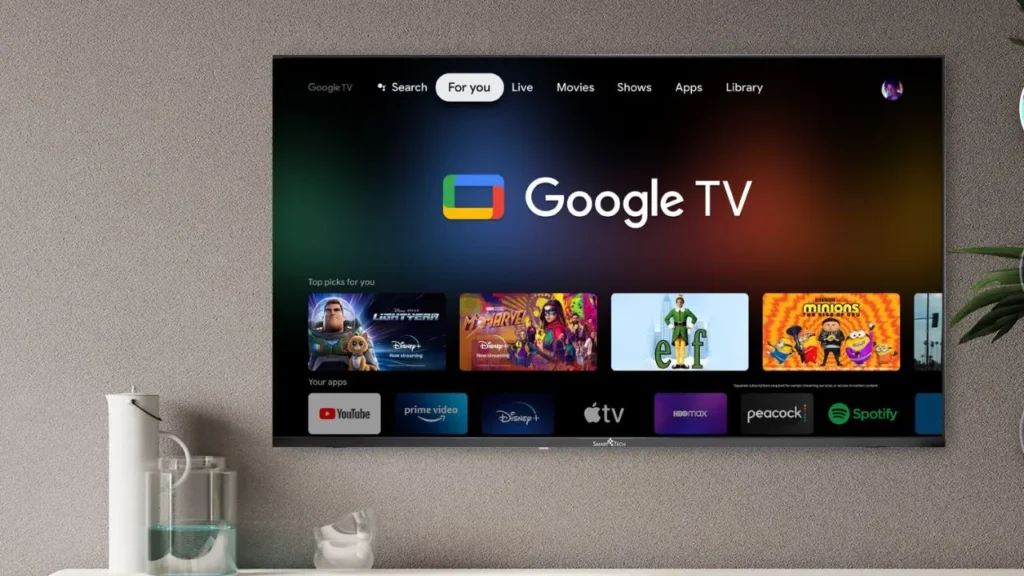
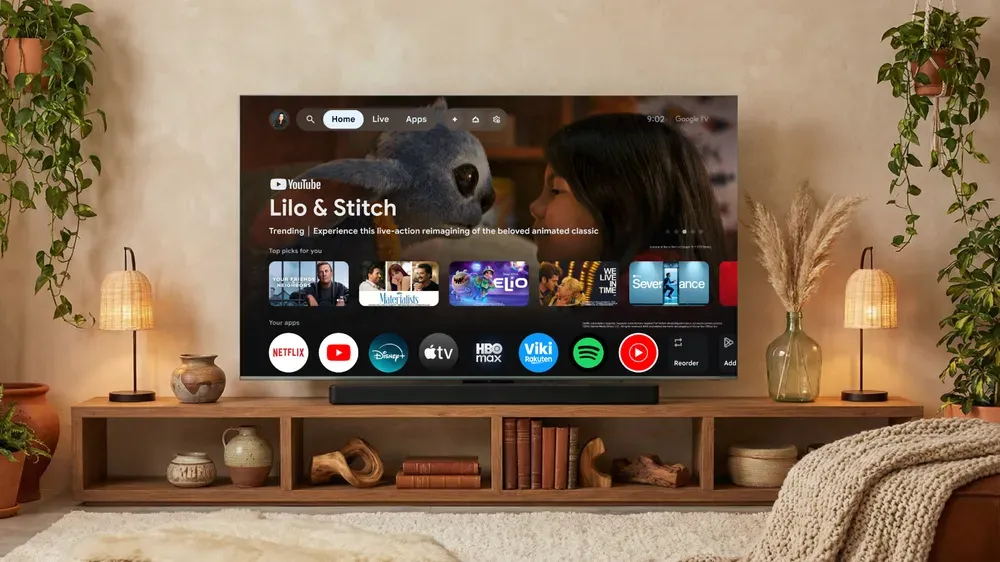
If you have ever paused a movie because the dialogue was too quiet? Google says it has a fix. At CES 2026, the company announced new Gemini features for Google TV that let you adjust settings, search for photos, and ask questions using simple voice commands.
Google is offering Google TV as something more than a place to watch shows. It wants the television to be an AI helper that sits in the living room.
Four new features built around voice
The first feature focuses on everyday controls. You can say things like, the screen is too dim, or, the dialogue is difficult to hear. Gemini then adjusts the brightness or audio as the show continues playing without opening menus or guessing on what option to open.
The second feature is more related to Google Photos. You can ask for memories by name, person, or year, like show photos from John’s graduation, or our photos from trips in 2019. You can also remix photos with Watercolor or Art Deco, and convert moments into short cinematic slides. According to Google, its Nano Banana and Veo models will also allow users to create AI images and videos on the TV.
For families, Google is also adding what it calls Deep dives. Ask about a complex topic, and the TV will reply with an interactive, narrated explanation that feels more visual than a web article.
The fourth change gives a new look to search answers. Results now combine images, videos, and live sports updates instead of long text blocks that feel awkward on a big screen.
Competing with Samsung and LG
Google is competing with Samsung and LG, which are also pushing AI along their TV lines this year.
Samsung is expanding its Vision AI Companion to millions of SmartThings users. It is integrating both Bixby, Perplexity, and Microsoft Copilot into televisions and promoting features like AI Soccer Mode Pro before the FIFA World Cup 2026.
LG is taking a different route. It is also working on new display tech like micro RGB LCD and premium OLED panels. In short, less focus on assistants, more focus on screens.
Google’s advantage is its ecosystem. The new features depend on Google Photos, Search, and generative AI. They will arrive first on select TCL televisions with Android TV OS version 14 or above. Rivals would need third-party services to match many of these tricks.
What it could mean for viewers
The big question is reliability. If voice control is fast and accurate, users may stop digging through menus completely. If it fails, users will go back to the remote and ignore the feature.
Either way, Google is clearly betting that the TV is the next place where AI will be integrated into daily life.



A little discussion goes a long way.
Ask a question, share your experience, or help someone find an answer.
There is room for your perspective.
No discussions match this view yet.
Your voice belongs here
Keep it useful. Keep it kind.