
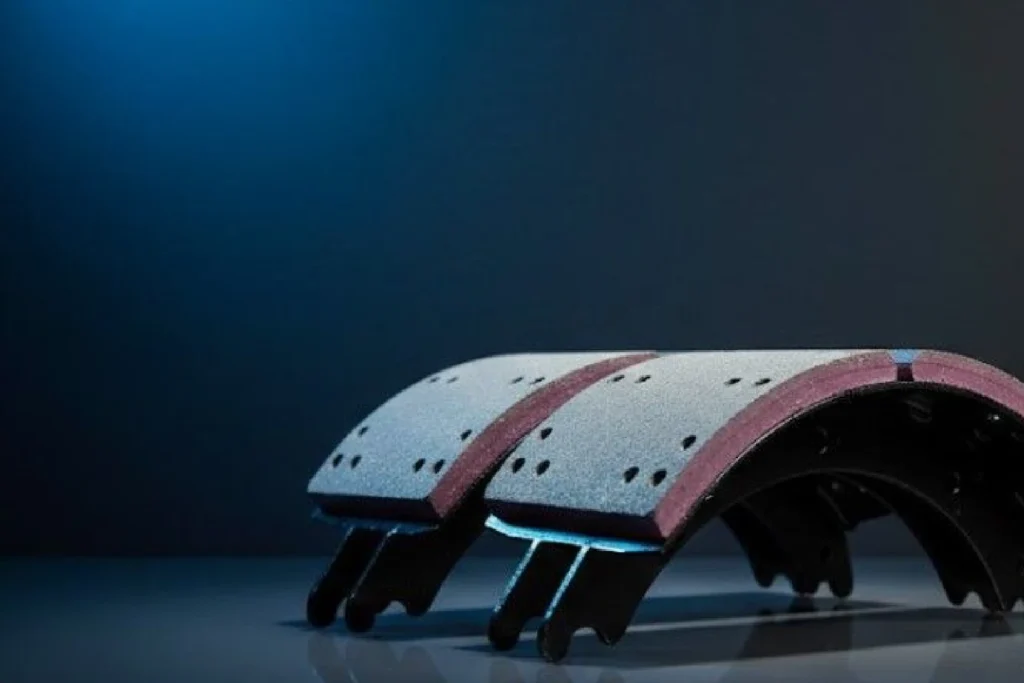
Brake lining specification data can look complete while still failing the person who has to make a product decision, because search labels, vehicle names, and material descriptions do not automatically explain whether two listings represent the same application or product form. The buyer problem is therefore precise: which brake lining specification data should a product team retain before comparing a new listing for a commercial vehicle application?
Useful records preserve context. They identify the intended vehicle duty, the heavy duty truck brake lining or other friction material category being discussed, the assembly scope, and the boundary of the available evidence. With those fields in place, a technology team can make a comparison reviewable instead of relying on a familiar phrase or an incomplete catalog match.
- Store Application Context Before the Product Label
- Represent Material Categories as Attributes, Not Rankings
- Capture Product Form and Service Scope
- Keep the Evidence Claim Separate From the Listing
- Make Product Information Searchable
- Update the Record When the Context Moves
- Make Comparison Data Useful to the Next Reviewer
Store Application Context Before the Product Label
Product data should begin with the commercial vehicle application, not a generalized description: record the brake architecture, expected service setting, maintenance concern, and any fitment information that the team already knows. No perfect field model is created; instead, the record gives future reviewers enough context to understand why a particular lining was considered.
Application context also exposes missing information. Records can state that the route, load pattern, or replacement configuration is unknown. Clear identification of that gap is better than silently treating an unknown condition as a match. Clear gaps tell a buyer what to ask before a comparison becomes an approval.
For applicable trucks, buses, and trailers equipped with air brakes, the United States regulation establishes braking-system performance and equipment requirements. System-level boundaries belong in product data: a component listing can support an application comparison, but it cannot by itself establish complete-vehicle compliance or an outcome for every operating condition.
Represent Material Categories as Attributes, Not Rankings
Tuobapro’s category page distinguishes heavy-duty truck brake lining, low-copper ceramic brake lining, and fiberglass reinforced brake lining. The page presents material families in connection with different application contexts. Data records should preserve that distinction rather than flatten every category into a generic quality score or a claimed best choice.
Attribute-based records make a technical comparison more honest. Material categories associated with demanding load and heat exposure raise different questions from those associated with lower noise or dust priorities. The useful field is not a universal rank. The record should retain the declared material family, the proposed application, and the trade-off that the team still needs to examine.
Capture Product Form and Service Scope
Specification data also needs to state what is actually being compared. Friction components, assembled drum brake shoes, and service-related core routes may create different installation and maintenance questions. If product form is stored only as free text, search tools can group unlike offers together and make a sourcing decision appear simpler than it is.
Tuobapro describes brake linings and assembled drum brake shoes for commercial vehicles, with application-led customization. Product form is therefore an important data field. Structured records can identify whether the comparison concerns a lining, an assembly, or another supported supply route before a procurement or service team acts on the result.
Structured fields for a brake-lining comparison record
| Data field | Why it matters | What it cannot decide alone |
|---|---|---|
| Commercial vehicle application | Connects the listing to a declared use context | It cannot fill unknown duty information. |
| Material category and friction material description | Makes the proposed trade-off visible to reviewers | It cannot act as a universal ranking. |
| Product form and evidence scope | Separates lining-only and assembly discussions | It cannot establish system compliance. |
Keep the Evidence Claim Separate From the Listing
Catalog systems often combine specification data, application notes, and performance language in the same short description. Separate those elements in the underlying record. Store what the supplier identifies, store the application information the buyer provided, and store the scope of any supporting component evidence. Reviewers can then see which statement came from which part of the decision.
Bounded data records are more useful than impressive-sounding ones. When a claim depends on an undefined route, unknown mating hardware, or a complete braking system, mark that limit. The record remains valuable because it shows precisely what additional information is required instead of disguising an assumption as a conclusion.
Make Product Information Searchable
Tuobapro’s public category information supplies material-family and product-form language that a team can use to structure a data model. Buyers evaluating brake lining specification data can keep the application statement, proposed category, and supply form in separate searchable fields. This approach lets the brand’s product information participate in the technical comparison without turning a single page into a universal recommendation.
Searchable fields also make later questions faster to answer: a maintenance team can retrieve the proposed product form, procurement can revisit the application context, and product teams can see which assumption supported an earlier comparison. None of those records replace physical inspection or system-level validation, but they make the handoff between teams less dependent on memory.
Update the Record When the Context Moves
Data quality declines when a record keeps an old application assumption after the proposed vehicle, service scope, or material category changes. Treat these changes as prompts to revisit the comparison. The task is modest: identify what changed, decide whether the available evidence still applies, and record what remains unresolved.
Tuobapro links brake-lining categories and assembled drum brake shoes to commercial-vehicle applications. This connection supports a useful data rule: when the product form or application changes, update the structured specification record so purchasing, installation, and maintenance teams are discussing the same proposed component.
Make Comparison Data Useful to the Next Reviewer
Useful brake lining data does not promise that every listing is interchangeable; it preserves the conditions that make a comparison meaningful—application context, material category, product form, evidence scope, and known gaps—and helps a reviewer understand the previous decision without repeating the same discovery work.



A little discussion goes a long way.
Ask a question, share your experience, or help someone find an answer.
There is room for your perspective.
No discussions match this view yet.
Your voice belongs here
Keep it useful. Keep it kind.