
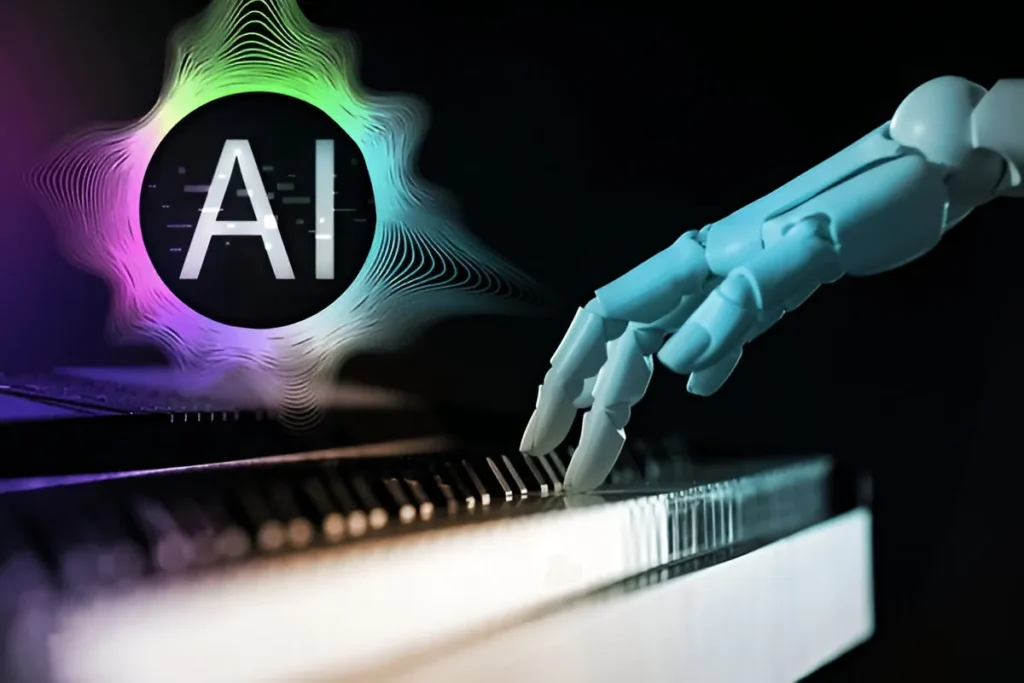
There was a time when music videos were something you scheduled, budgeted, filmed, edited, argued about, re-edited, and eventually released after someone in the team said, “We’re done here, even if we’re not emotionally ready.” But in 2026, something unusual is happening: music videos are no longer being “made” in the traditional sense. They are being generated, interpreted, and sometimes even reinvented in real time by artificial intelligence systems that seem to understand rhythm a little too well for comfort.
What used to be a highly structured production pipeline is now turning into something more fluid, more experimental, and occasionally more chaotic, but in a creatively exciting way. AI is not just assisting video creation; it is actively reshaping what a music video even is. Instead of being a fixed visual product attached to a song, it is becoming a flexible visual expression that can evolve, adapt, and shift depending on interpretation, style, and even audience context.
And strangely enough, audiences are not resisting this shift, they are embracing it.
When Music Videos Stopped Being Fixed Objects
Traditionally, a music video was a finished artifact. Once it was released, it was done. Every viewer saw the same visuals, the same narrative, the same artistic decisions locked in time. That rigidity made sense when production required physical filming, editing teams, and substantial budgets.
But AI has quietly dismantled that rigidity.
Modern generative systems can now analyze audio at a structural level, detecting rhythm changes, emotional transitions, vocal intensity, and even subtle tonal shifts. These elements are then translated into visual behavior. A rising melody might expand visual space. A bass drop might trigger a sudden transformation in color dynamics or motion intensity. A soft verse might slow everything down into almost dreamlike pacing.
This means the music is no longer just accompanied by visuals, it actively drives them.
Tools like the AI Music Video Generator reflect this shift by allowing creators to move from static visual storytelling into something closer to “audio-reactive visual composition.” Instead of designing every frame manually, creators define intent, mood, and direction, while the system interprets the rest.
The result is a new creative workflow where music is not just a soundtrack, it becomes the blueprint for visual existence.
The Strange Appeal of Imperfect Visual Intelligence
One of the most interesting aspects of AI-generated music videos is that they are not always perfectly logical, and that’s exactly why they work.
Human-made videos tend to follow narrative structure and visual continuity. AI-generated ones often follow emotional structure instead. That difference leads to unexpected visual transitions that sometimes feel surreal, abstract, or even slightly dreamlike.
A scene might dissolve too early. A character might morph into geometry mid-motion. A landscape might respond too literally to a sound cue. In traditional filmmaking, these would be considered errors. In AI-generated media, they often become aesthetic features.
This creates a viewing experience that is less about understanding and more about feeling. The brain stops trying to decode narrative logic and instead adapts to emotional rhythm. That shift is subtle but powerful, it changes how people engage with content entirely.
And perhaps that is why AI-generated videos are so addictive: they are predictable in structure but unpredictable in interpretation.
Music Videos Are Becoming Emotional Interfaces
In the past, music videos were primarily storytelling tools. They told a story that accompanied a song. Today, they are evolving into something closer to emotional interfaces, systems that translate sound into visual emotion in real time.
Instead of asking, “What is the story here?”, viewers are increasingly asking, “What does this feel like visually?”
This is a fundamental shift in creative language. Emotion is no longer expressed through acting or narrative alone, it is encoded into motion patterns, color transitions, spatial transformations, and rhythm-driven visual changes.
Platforms such as AI Music Video Generator demonstrate this direction by treating music not as background audio, but as a fully interactive input system. The visuals generated are not just illustrations of the song, they are interpretations that evolve based on how the audio behaves over time.
This makes each output feel slightly different, even when the same track is used multiple times. The system is not reproducing a fixed video, it is generating variations of a visual experience.
Why This Feels So Natural to Audiences
At first glance, AI-generated music videos might seem experimental or even unconventional. But audiences are adapting to them faster than expected. One reason is that humans are already wired to connect sound with visual imagination.
When you hear music, your brain naturally constructs imagery. AI simply externalizes that internal process.
Another reason is attention dynamics. Modern audiences are used to fast-changing visual environments, short videos, dynamic edits, layered content. AI-generated visuals align naturally with that expectation because they are inherently fluid and constantly shifting.
There is also a novelty factor. People are still fascinated by the idea that visuals are being “created” rather than filmed. That curiosity alone drives engagement.
But beyond novelty, there is something deeper happening: AI-generated visuals feel like shared imagination. They are not strictly authored by a single director, they are co-created between human intent and machine interpretation.
The Collapse of Traditional Production Hierarchies
One of the most significant impacts of AI in music video creation is not artistic, it is structural. Traditional production required layered roles: directors, editors, cinematographers, VFX artists, lighting technicians, production managers, and more.
AI compresses many of these roles into a single interaction layer.
This does not eliminate creativity, it redistributes it. Instead of focusing on execution, creators now focus on direction and experimentation. The emphasis shifts from “how do we build this?” to “what should this feel like?”
As a result, individuals or small teams can now produce visual content that previously required full-scale production studios. This is not just efficiency, it is a redefinition of creative scale.
From Linear Storytelling to Adaptive Visual Systems
Another major transformation is the move away from linear storytelling. Traditional music videos follow a beginning-middle-end structure. AI-generated visuals often do not.
Instead, they operate more like adaptive systems that evolve continuously with the music. A track no longer dictates a fixed sequence of scenes, it generates a dynamic visual environment that shifts with every beat, pause, and tonal variation.
This makes each viewing unique. In some cases, the same song can produce entirely different visual interpretations depending on generation parameters or stylistic input.
In essence, music videos are no longer static content. They are becoming responsive systems.
The Rise of “Visual Listening”
A new behavior is emerging alongside this technology: visual listening.
Instead of simply watching a music video, audiences are now experiencing music through visuals in a more immersive way. The line between listening and viewing is blurring. Sound is no longer passive, it is actively shaping what the audience sees in real time.
This creates a hybrid sensory experience where audio and visuals are no longer separate channels but integrated expressions of the same idea.
Where This Is Heading Next
AI music video generation is still early in its evolution, but the trajectory is clear. The next phase will likely involve:
- Real-time generative visuals during live performances
- Personalized video variations based on viewer behavior
- Interactive music videos that respond to user input
- Fully adaptive visual ecosystems tied to streaming platforms
In this future, the concept of a “final cut” may disappear entirely. Instead, music videos will exist as evolving systems that continuously reinterpret themselves.
Final Thoughts: Music Videos Are Becoming Living Systems
What AI is doing to music videos is not just automation, it is transformation. It is changing them from fixed creative outputs into living, adaptive systems that respond to sound, emotion, and interpretation.
Creators are no longer just producing videos. They are designing visual behaviors. And audiences are no longer just watching. They are experiencing shifting interpretations of sound in real time.
In this new landscape, tools like AI Music Video Generator and AI Music Video Generator platforms are not just production aids, they are creative translators between sound and vision.
And perhaps the most interesting part is this: we are still at the beginning. The rules are not finished. The language is still forming. And the definition of a “music video” is still being rewritten in real time.


A little discussion goes a long way.
Ask a question, share your experience, or help someone find an answer.
There is room for your perspective.
No discussions match this view yet.
Your voice belongs here
Keep it useful. Keep it kind.